
Essential Hardware & Safety
Solar Equipment
Building a high-performance renewable setup requires the right Essential Hardware & Safety equipment to bridge the gap between energy generation and household consumption. While panels and batteries capture the headlines, the underlying infrastructure—the cables, connectors, inverters, and protection devices—determines the ultimate reliability of your installation. Gemshore provides the technical insight to help you select professional-grade components that ensure your 800W plug-in or whole-home fixed setup remains operational for decades.
Our guides focus on high-yield Essential Hardware & Safety components specifically designed for the UK climate. We prioritize hardware that meets the latest BS 7671 wiring standards, offering you a secure, optimized, and fully compliant pathway to energy independence. From precision monitoring to robust surge protection, we cover the technical essentials every homeowner needs to maintain a safe and efficient home power setup.
Investing in professional Essential Hardware & Safety components is a key step in building successful energy-efficient home upgrades.
The Buying Guide
Hardware & Safety: the parts that make solar reliable (and safe)
Solar systems are often judged by the big‑ticket items — panels, batteries, and inverters. But in real UK homes, it’s the “small” hardware that decides whether a system stays safe, tidy, and dependable for years.
Cables, connectors, protection devices, and monitoring don’t look exciting on a product page. Yet they’re the difference between a system you never think about (because it just works) and one that quietly degrades, trips, overheats, or becomes difficult to maintain.
This guide is a plain‑English buying and safety overview. It explains what actually matters, what’s good enough, what’s a false economy, and when it’s time to stop and bring in a professional.
If you want to go deeper, each section links to its own detailed guide:
The safety basics (in plain English)
DC and AC
aren’t the same thing
Solar panels produce DC electricity, while your home runs on AC electricity. The inverter sits between the two and makes the power usable.
Why does this matter? Because DC behaves differently when something is loose or poorly connected.
A bad DC connection can heat up slowly over time and, in extreme cases, arc. That’s why proper connectors, correct crimping, and strain relief matter so much — especially outdoors and on roofs.
Weather exposure is relentless
UK weather isn’t dramatic, but it is persistent. Moisture, wind‑driven rain, freeze–thaw cycles, and UV exposure all add up year after year.
Anything installed outdoors should be treated as if it will get wet and move slightly over time. Hardware that looks fine in summer can fail after a few winters if it isn’t designed and installed properly.
Plug‑in vs fixed systems: different rules of thinking
Plug‑in solar systems can be a sensible entry point. Fixed roof systems are permanent infrastructure.
As systems get larger and more permanent, expectations rise: safety margins increase, compliance matters more, and poor DIY work can affect warranties, insurance, and long‑term reliability.
Rule of thumb:
The bigger and more permanent the system, the more you should treat it like part of your home’s electrics — not like a portable gadget.
Lorem ipsum dolor sit amet, consectetur adipiscing elit. Ut elit tellus, luctus nec ullamcorper mattis, pulvinar dapibus leo.
A quick buying checklist (the non‑negotiables)
Before looking at brands or prices, make sure these basics are covered:
- Correct cable type and size, rated for outdoor solar use
- Matching, compatible connectors assembled properly
- Good strain relief so cables aren’t pulling on terminals
- A safe way to isolate or disconnect parts of the system
- Appropriate protection where needed (fuses, breakers, surge protection)
- Some form of monitoring so faults don’t stay hidden
If any of these are missing, the system isn’t finished — no matter how good it looks on paper.
| Hardware area | Plug‑in solar (<800W) | Fixed solar (>800W) | Off‑grid / backup systems |
|---|---|---|---|
| Cables & connectors | Must | Must | Must |
| Isolation / disconnect | Should | Must | Must |
| Surge protection | Nice to have | Should | Should |
| Monitoring / alerts | Nice to have | Should | Must |
| Installation environment | Should | Must | Must |
Four areas you must get right
1. Cables & Connectors (The Infrastructure)
The efficiency of your setup is only as good as the wiring that connects it. Choosing professional-grade Essential Hardware & Safety components, specifically MC4 cables and weather-sealed connectors, is vital for minimizing ‘voltage drop’ and preventing moisture-related faults. High-resistance wiring can lead to significant energy loss, which often goes unnoticed without proper testing.
Our guides highlight the importance of using 4mm² and 6mm² cross-section cables and professional crimping tools to ensure a perfect fit.
By ensuring your connections are secure and UV-rated, you protect your system from the harsh British climate while maintaining peak performance and fire safety for decades.
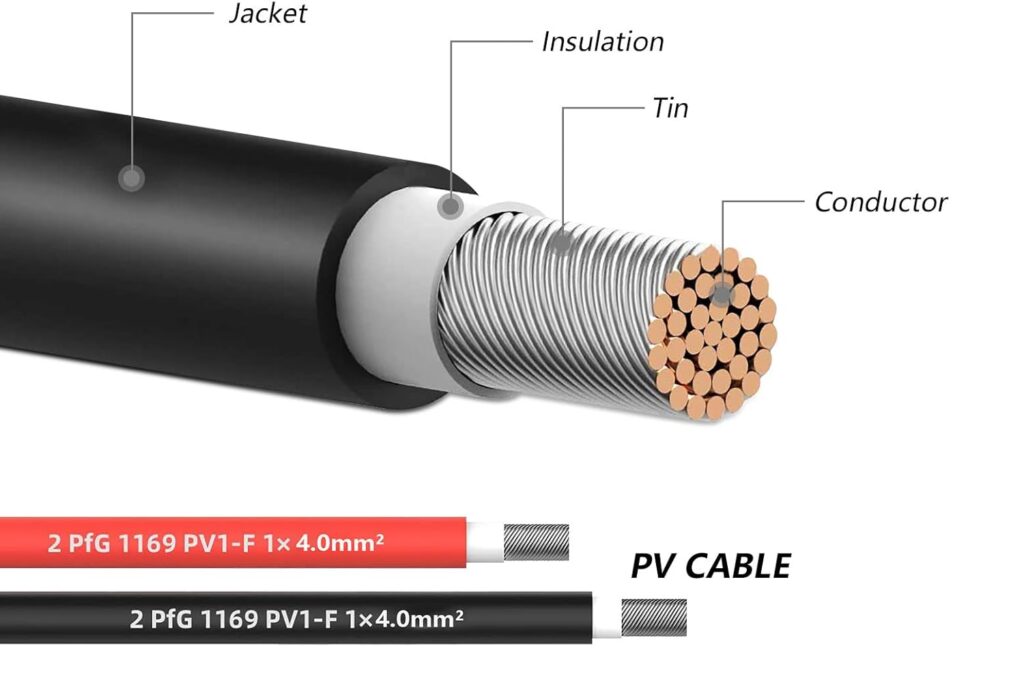
What good looks like:
Tidy routing, gentle curves, proper clips or trunking, connectors kept off the ground, and no strain pulling on terminations.
What to avoid:
Mixing “MC4‑compatible” parts, bargain connectors, thin cable on long runs, or leaving cables to flap in the wind.
2.Solar inverters and chargers
If panels are the engine, the inverter is the brain. It’s also the component most likely to be replaced during the life of a system.
Inverters and chargers serve as the technical ‘brain’ of your installation, transforming raw DC energy into the precise AC electricity required by your household appliances.
High-quality Essential Hardware & Safety in this category must prioritize efficiency and compliance, especially with UK G98 standards for the growing 800W plug-in market. By selecting smart MPPT chargers and certified micro-inverters, you ensure that every photon captured by your panels is utilized effectively, preventing waste and maximizing your financial return on investment.
We focus on units that offer robust thermal management and real-time app monitoring to keep your energy flow stable and safe throughout the day.
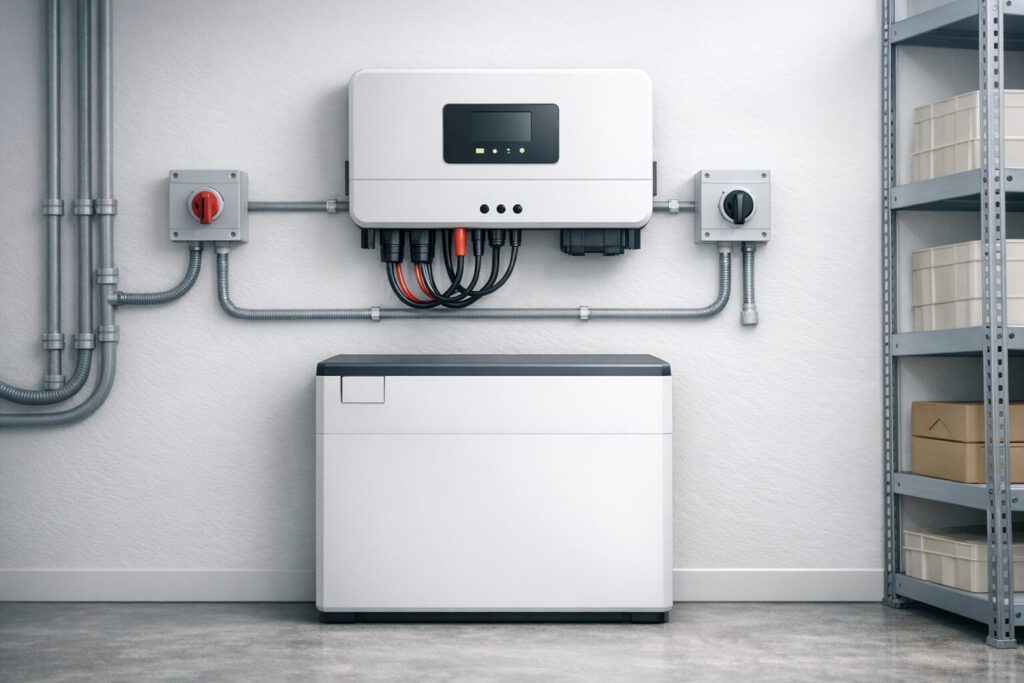
What good looks like:
A cool, ventilated location with clear access, tidy cable entry, enough space for airflow, and a sensible approach to future upgrades (such as adding a battery later).
What to avoid:
Cramped installs, poor ventilation, flood‑prone locations, or choosing hardware that locks you out of future expansion.
3.Solar surge protectors
Surges are brief voltage spikes caused by network switching events, faults, or nearby lightning activity.
Surge protection isn’t about perfection — it’s about reducing the risk that a one‑off event destroys expensive electronics like inverters or monitoring equipment.
Surge protectors act as an essential ‘hardware insurance policy’ for your entire property. In a residential environment, voltage spikes from the National Grid or atmospheric lightning strikes can cause catastrophic failure in sensitive electronics, particularly high-value battery management systems and micro-inverters.
Our technical guide on Essential Hardware & Safety focuses on heavy-duty protection with ratings between 1000J and 3250J. By providing a sacrificial barrier, these surge protectors ensure that unexpected electrical fluctuations are neutralized before they reach your primary energy components, safeguarding your energy security and protecting your long-term investment from expensive and avoidable hardware damage.

What good looks like:
Protection chosen as part of the system design, not added randomly afterwards.
What to avoid:
Assuming grounding alone is enough, or fitting generic devices without understanding whether they’re suitable for solar circuits.
4. Energy Monitors (The Visibility)
Monitoring isn’t just nice graphs. It prevents silent failure — when a system underperforms for months without anyone noticing.

Real-time visibility is the key to mastering your home’s power consumption.
Energy monitoring devices are a core part of our Essential Hardware & Safety recommendations, including smart plugs and dedicated wattage meters that allow you to track your generation and consumption directly on your smartphone.
This data is essential for ‘solar soaking’—the process of timing your washing machine or dishwasher use to coincide with your peak afternoon solar generation. By understanding your household’s ‘base load,’ you can make informed decisions about when to pull power from the grid and when to rely on your own storage, significantly speeding up the payback period of your renewable energy hardware.
What good looks like:
Clear daily visibility, alerts when something changes, and enough detail to spot faults early.
What to avoid:
No visibility at all, or monitoring that only shows lifetime totals without highlighting new problems.
Common buying mistakes (and what to do instead)
| Mistake | Better approach |
|---|---|
| Mixing “MC4‑compatible” connectors | Use matching connector systems and correct tools |
| Using thin cable on long runs | Size cable properly to reduce voltage drop and heat |
| No strain relief on cables | Support cables so connectors aren’t taking the load |
| Outdoor connections left exposed | Raise, shield, and weather‑protect all terminations |
| Inverters installed in hot, cramped spaces | Provide airflow, clearance, and access |
| No monitoring | Use monitoring to catch faults early |
When to stop and use a professional
Learning the basics is sensible. Doing everything yourself isn’t always.
Some work should be handled by a qualified installer or electrician — especially where mistakes have serious consequences.
| Situation | Why it matters | Best next step |
|---|---|---|
| Fixed, grid‑connected systems | Permanent infrastructure, safety and compliance expectations | MCS‑certified installer or qualified electrician |
| Consumer unit changes | Affects the whole home’s electrical safety | Qualified electrician |
| Roof penetrations | Structural integrity and long‑term weatherproofing | Professional installer |
| Surge protection decisions | Needs to match how the home is wired | Professional system design |