Meta Tracking Pixel

Power Stations

Portable power stations for UK home backup
Gemshore Power Guide

Portable Power Stations -
Silent Home Backup, Ready in Seconds

No fumes. No noise. No installation. Plug into the wall, charge in under an hour, and keep your home running when the grid goes down.

Browse All Power Stations ↓
Silent Operation
No Fumes. No Noise.
Safe indoors. No petrol, no exhaust, no CO risk.
Fast Charge
Full in 30-60 Minutes
Most units fully charged from the wall in under an hour.
Instant Switchover
UPS - Under 30ms
UPS models switch to battery before your devices notice.

What Are Portable Power Stations?

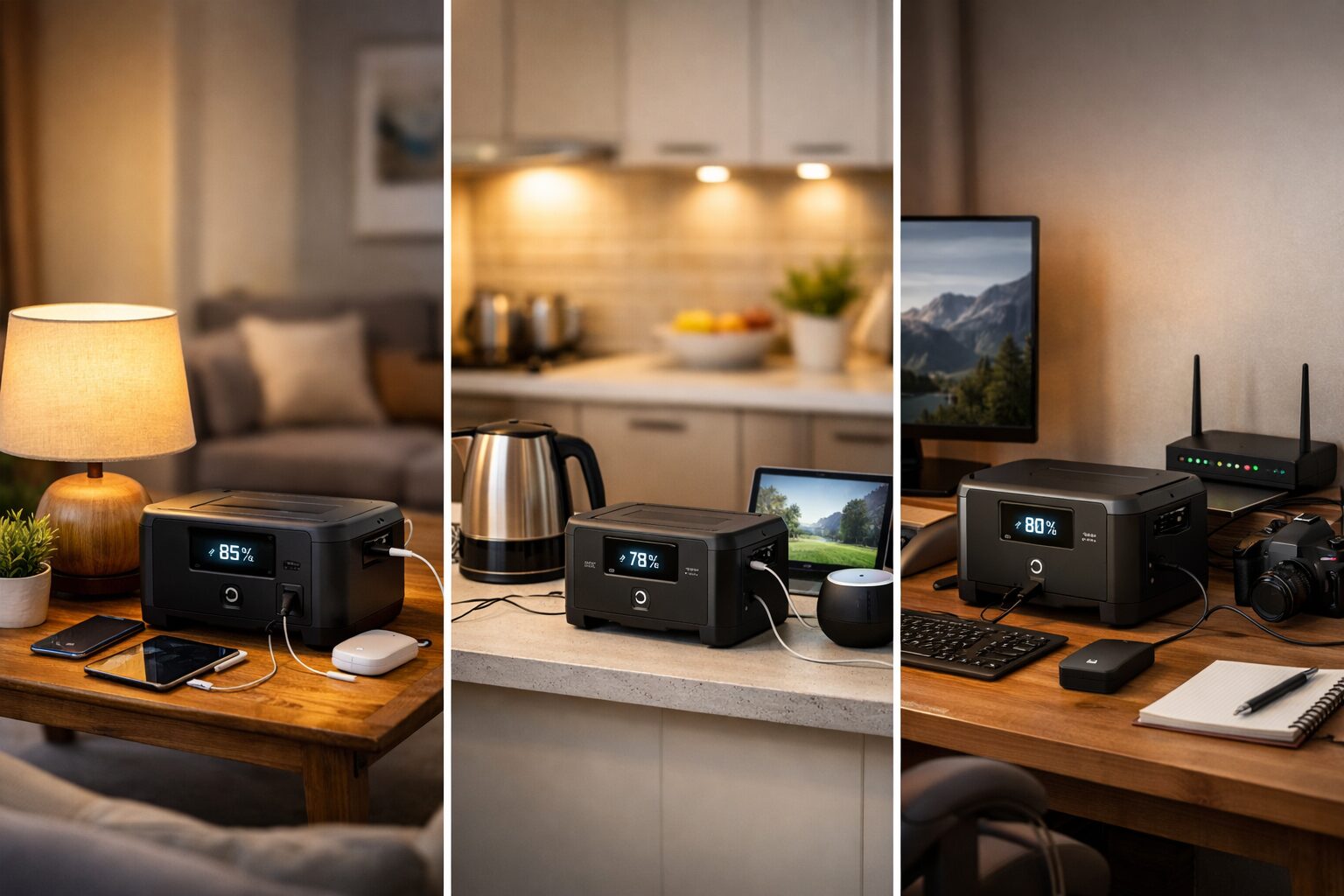
A portable power station is a large rechargeable battery with built-in AC sockets, USB ports and a pure sine wave inverter. You charge it from the wall like a phone - then plug your appliances directly into it when you need backup power. No installation, no electrician, no permissions required.

Unlike an inverter generator, a power station produces no fumes, no noise and no carbon monoxide. It can be used safely indoors, in a bedroom, kitchen or home office. The trade-off is capacity - a power station stores a fixed amount of energy and must be recharged, whereas a generator runs as long as you have fuel.

✅ Power Station Advantages
Silent. No fumes. Safe indoors. Instant on. Fast mains charge. Some models switch automatically when power cuts. Can also charge from solar. No maintenance. No fuel storage.
⚠️ Limitations to Know
Fixed capacity - when it's empty, you wait for it to recharge. High-draw appliances like kettles and electric heaters drain capacity quickly. Not a whole-home solution for extended outages without a large unit.
🏠 Best Use Case
Keeping essentials running during a power cut - WiFi, lights, phone charging, medical devices, fridge, boiler ignition. Also ideal for home offices, camping and van life where silence matters.

Mains Charging vs Solar Charging - The Key Difference

Every power station on this page can be charged from a standard UK wall socket. Most can also accept solar panel input as a secondary option. Understanding the difference helps you choose the right unit for your needs.

MethodCharge TimeBest ForNotes
Mains Wall Socket30 min - 1.5 hrsHome backup - charge overnight or during off-peakFastest and most reliable. Always available. Primary method for home backup.
Solar Panels4 -12 hrs (varies)Off-grid top-up, camping, reducing electricity costFree energy when available. UK output varies significantly with season and cloud cover.
Car / 12V DC4 - 8 hrsCamping, travel, van lifeSlow but useful on the road. Most units include a car charging cable.
This page vs our Solar Batteries page
Some products appear on both this page and our Solar Batteries page because they do both jobs well. On this page the focus is home backup via mains charging. On the Solar Batteries page the focus is solar generation and storage. Same product - different primary use case.

Capacity - What Does Wh Actually Mean?

Watt hours (Wh) tells you how much energy a power station can store. A 1,000Wh station stores 1kWh - enough to run a 100W device for 10 hours, or charge a phone approximately 80 times. The higher the Wh, the longer you can run your appliances before needing to recharge.

CapacityBest ForRuntime ExamplesTypical Weight
Under 300WhPhone charging, lights, WiFi router, CPAPPhone ×50, LED lamp 20hrs, laptop ×43-5kg
300–700WhFridge (short term), home office, campingMini fridge 8hrs, laptop all day, lights overnight6-9kg
1,000Wh+Fridge-freezer, boiler, multiple appliancesFridge-freezer 12-24hrs, boiler all day, full home office10-13kg
The Kettle Problem
A kettle draws 2,000–3,000W continuously. A 1,000Wh power station would run a kettle for approximately 20 minutes before it's empty. Power stations are not designed for high-draw resistive appliances like kettles, toasters and electric heaters - they will drain the battery very fast. Focus on essentials - fridge, lights, WiFi, phone, boiler ignition.

UPS - Uninterruptible Power Supply

UPS (Uninterruptible Power Supply) is the most important feature to look for if home backup is your primary use case. A power station with UPS mode sits between the wall and your appliances at all times - when the mains power cuts, it switches to battery power in milliseconds. Your devices never notice the interruption.

✅ With UPS
Power cuts happen - nothing restarts, nothing loses data, nothing crashes. Your router stays connected, your NAS keeps running, your medical device keeps operating. The switchover is invisible - typically under 30 milliseconds.
❌ Without UPS
You have to manually plug appliances into the power station after the cut. By then your router has already disconnected, your computer has lost unsaved work and anything requiring continuous power has failed. You need to be home and awake for it to work.

How to Set It Up - The Physical Connection

⚡ Normal Operation - Mains Power Available
🔌 Wall Socket
230V mains
🔋 Power Station
Charging + passing power through
💻 Your Devices
Router, laptop, medical device
The power station sits permanently plugged into the wall. It charges its internal battery while simultaneously passing mains power through to your devices. Your devices run on mains - the battery is just building up in the background.
⚠️ Power Cut - Mains Fails
🔌 Wall Socket
No power
🔋 Power Station
Switches to battery in <30ms
💻 Your Devices
Still running - uninterrupted
The switchover happens in under 30 milliseconds - faster than any device can detect. Your router stays connected, your laptop keeps running, your medical device never interrupts. You may not even notice the power has gone until you look at the lights.
✅ Power Restored - Mains Returns
🔌 Wall Socket
Mains restored
🔋 Power Station
Switches back + recharges automatically
💻 Your Devices
Still running - uninterrupted
When mains power returns, the station switches back automatically and begins recharging its battery - ready for the next outage. The whole cycle is completely hands-off. You never need to touch anything.
⚠️ Important - It Only Protects What's Plugged Into It
Most power stations have 1-3 AC sockets. Only the devices plugged into those sockets are protected. Plug your router, laptop and any critical medical device into the power station - everything else stays on mains. This is selective UPS - not whole-home backup. For whole-home automatic switchover you need an ATS-equipped generator.
Which products have UPS on this page?
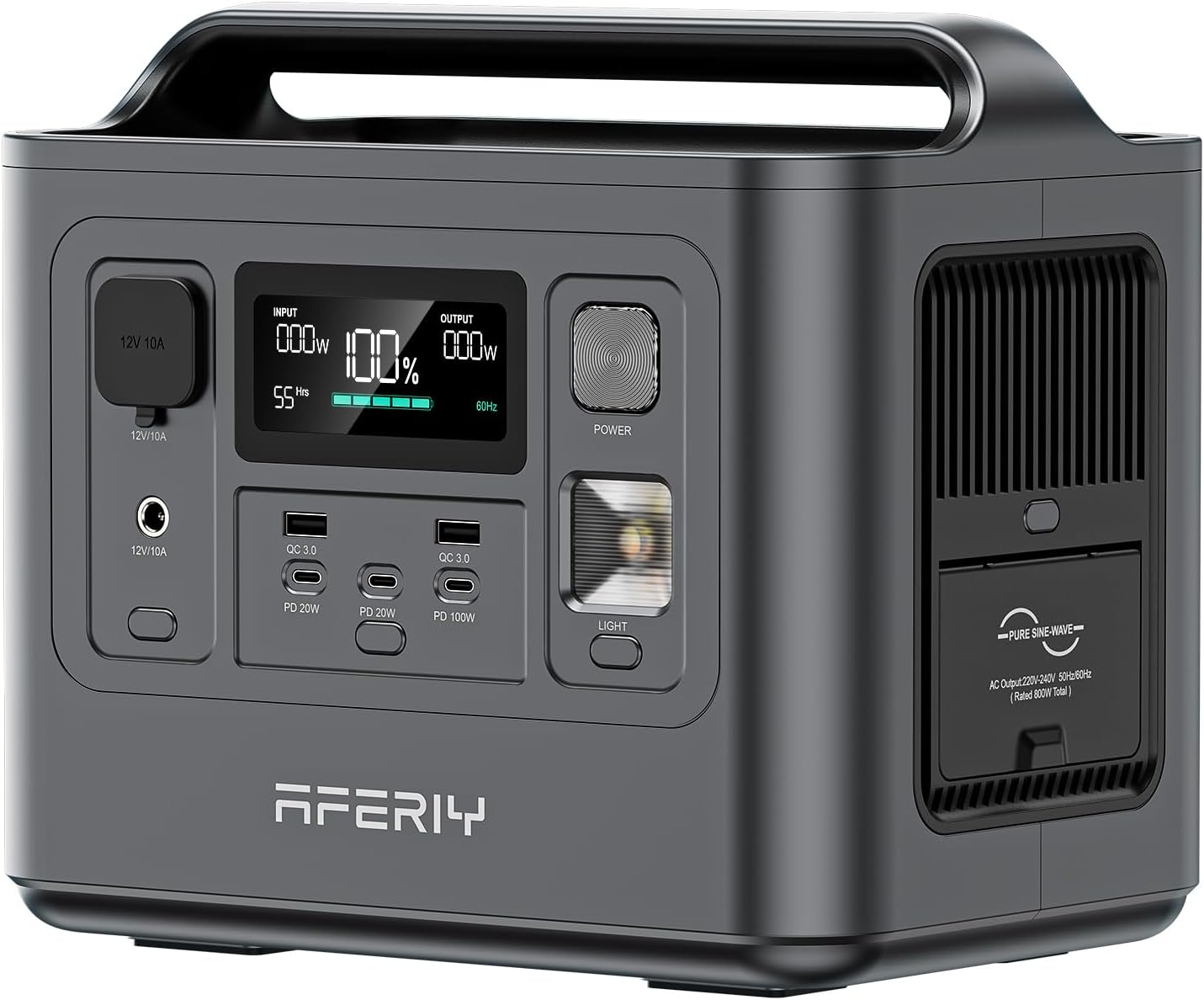
Jackery Explorer 240 v2, BLUETTI EB3A, BLUETTI Elite 30 V2, AFERIY 800W (both models), Anker SOLIX C1000 Gen 2, DJI Power 1000 V2, OUPES Mega 1, AFERIY P180Pro and EcoFlow DELTA 3 Classic all include UPS mode. These are flagged clearly on each product card.

AC Output - What Can You Actually Run?

AC output is measured in watts - this is the maximum power the station can deliver continuously to plugged-in appliances. Check the running wattage of your appliances against the station's AC output before buying. Exceeding the rated output trips the unit's protection circuit.

ApplianceRunning WMin AC Output NeededNotes
WiFi Router10-25W300W+Any station works
LED Lighting20-60W300W+Any station works
Laptop45-100W300W+Any station works
CPAP Machine30-60W300W+Pure sine wave essential
Fridge-Freezer150-300W600W+Allow for startup surge
Gas Boiler80-150W600W+Allow for startup surge
Microwave800-1,200W1,800W+High capacity units only
Kettle2,000-3,000W2,600W+DJI Power 1000 V2 only — drains fast

Charge Speed - Why It Matters for Home Backup

For home backup use, charge speed is critical. A power station that takes 8 hours to charge from the wall is not useful if the power cuts come back on for 2 hours between outages. The fastest units on this page charge fully in under an hour - meaning you can top up quickly whenever mains power is available.

30 min
Fastest
BLUETTI EB3A (0–80%)
36 min
Very Fast
OUPES Mega 1 & DJI Power 1000 V2
49 min
Fast
Anker SOLIX C1000 Gen 2
~1 hr
Standard Fast
EcoFlow RIVER 2, Jackery 240 v2, AFERIY P180Pro
1.5 hrs
Moderate
AFERIY 512Wh models, HOMCOM

The Brands on This Page

The portable power station market is dominated by a handful of specialist brands who have invested heavily in battery technology, fast charging and app connectivity. Here's an honest summary of each.

EcoFlow
China - Market Leader
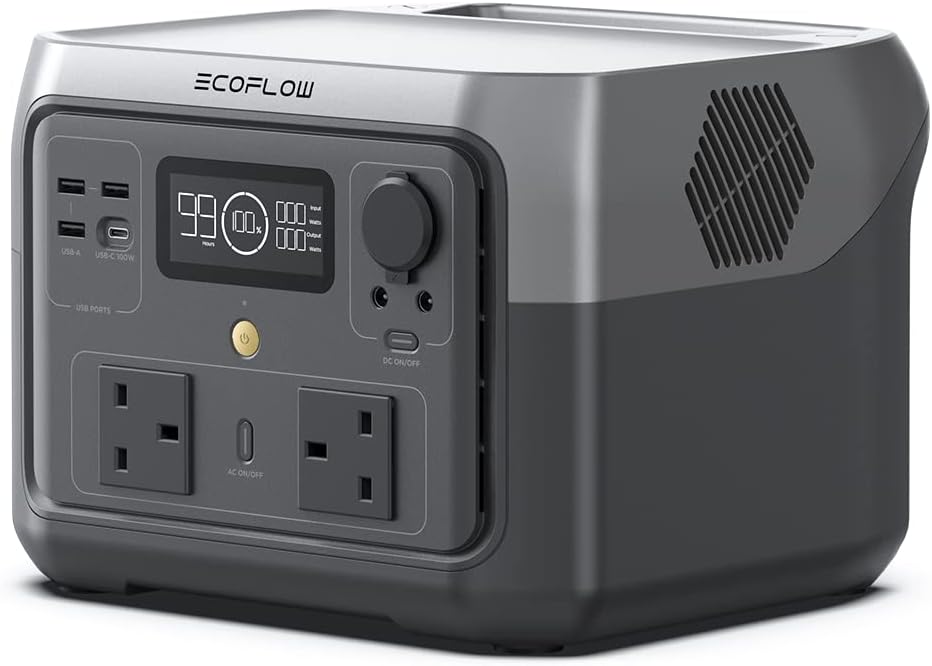
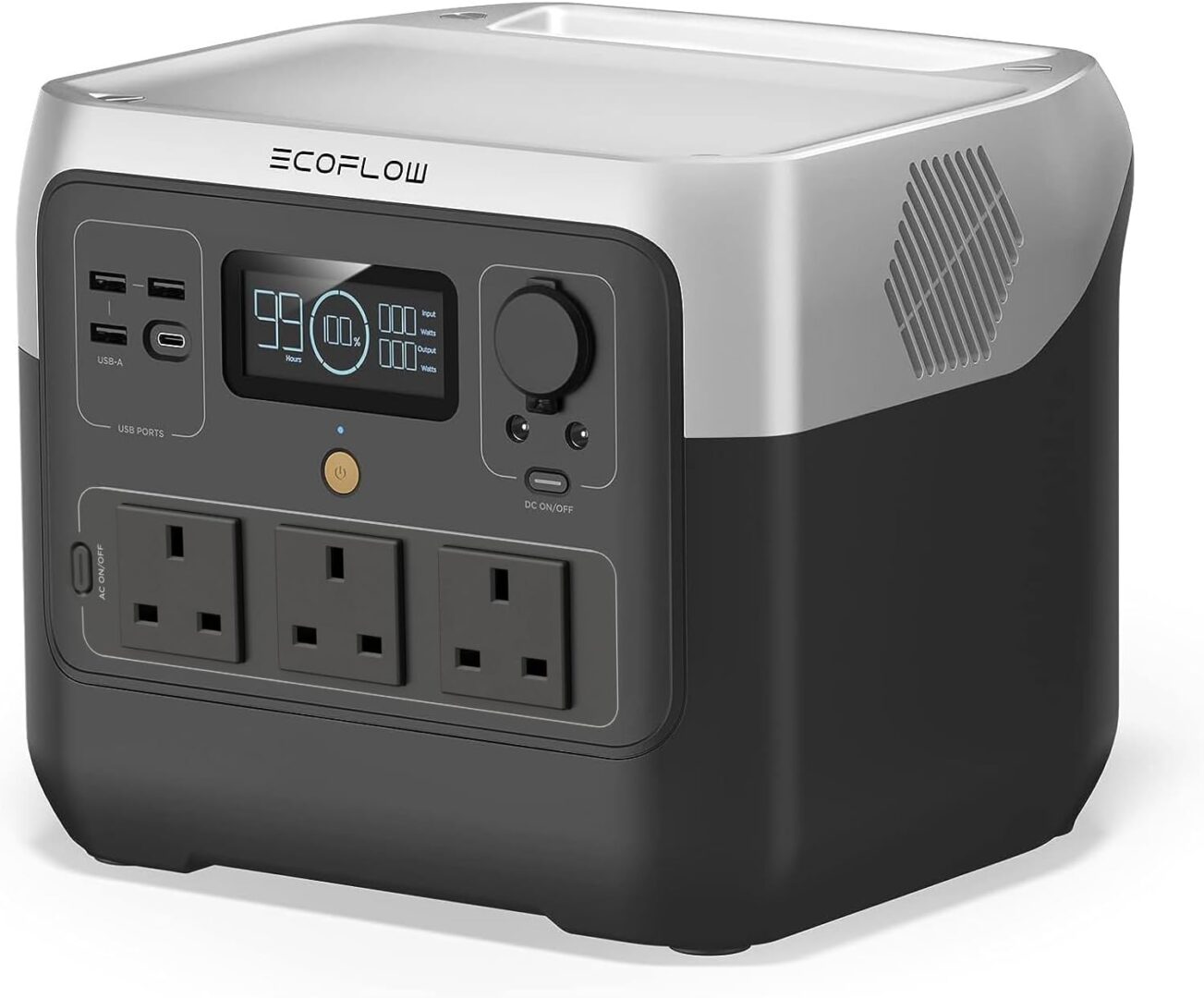
The most recognised name in the category. EcoFlow pioneered X-Stream fast charging and consistently leads on charge speed. Strong app ecosystem, expandable capacity on some models, excellent UK availability and after-sales support. The RIVER 2 and DELTA ranges are the benchmark others are measured against.
Anker SOLIX
USA/China - Premium Build
Anker's power station division. The C1000 Gen 2 is one of the best all-round units on the market - 2,000W output, 49-minute charge, UPS mode and 600W solar input at £499. Anker's reputation for build quality and customer support transfers well to the SOLIX range.
BLUETTI
China - Best Compact Options
BLUETTI dominates the compact end of the market. The EB3A charges to 80% in 30 minutes - faster than any comparable unit. The Elite 30 V2 adds UPS with 10ms switchover. Strong app integration and good UK availability. Power Lifting mode on some models boosts AC output significantly.
Jackery
China - Most Recognisable UK Brand
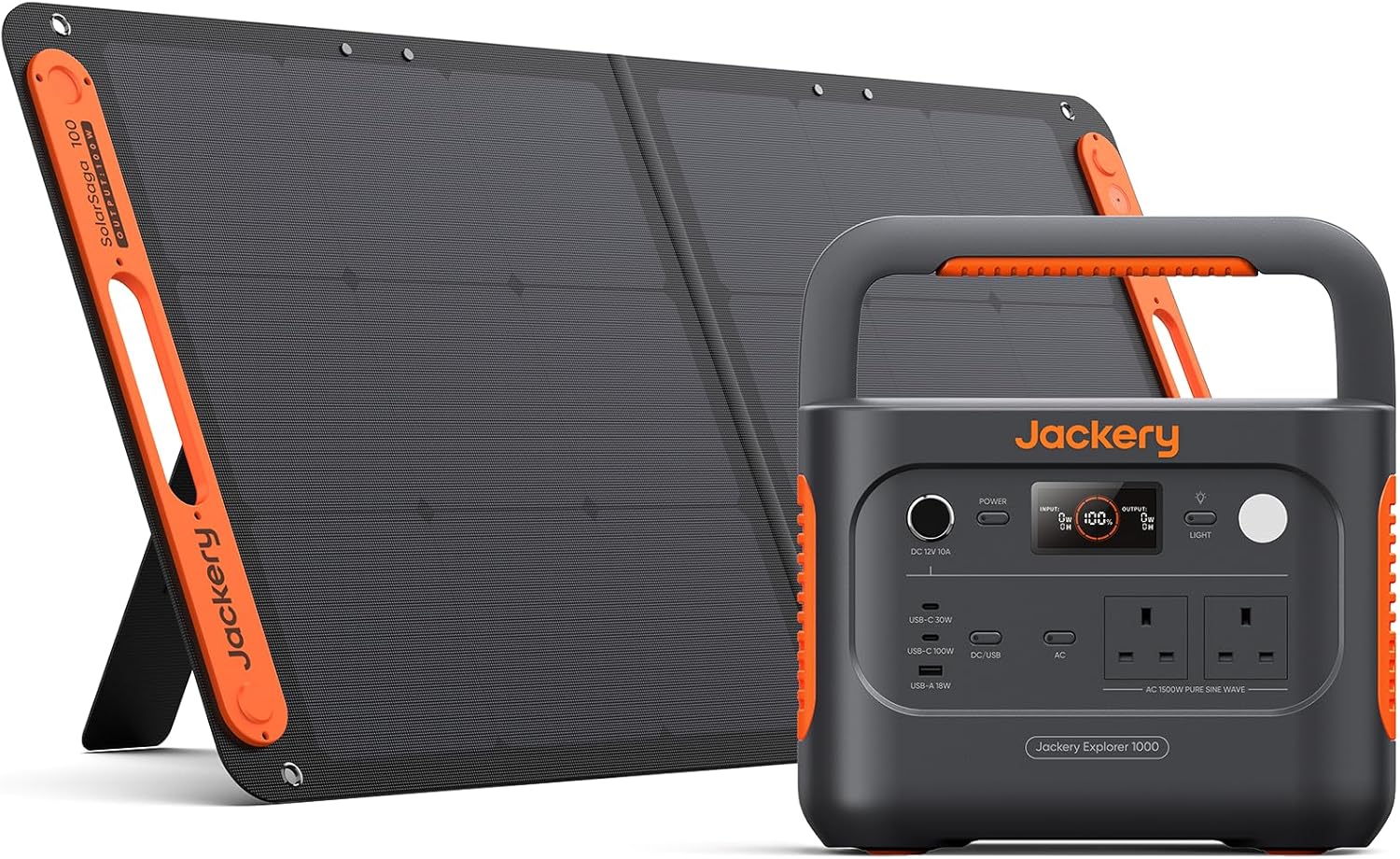
The most visible power station brand in UK retail - stocked in Halfords, Currys and John Lewis. The Explorer range is well-built, reliable and straightforward to use. The 240 v2 is an excellent entry-level UPS unit. The 1000 v2 offers 1,500W output in a 10.8kg package.
AFERIY
China - Best Warranty
Less well-known but genuinely impressive. The 512Wh 800W models offer UPS at a competitive price with 5-year and 7-year warranty options - the longest warranties on this page. The P180Pro expands to 5,120Wh with add-on batteries, making it a scalable home backup solution.
DJI & OUPES
China - Fastest Charge
DJI Power 1000 V2 delivers 2,600W output - the highest on the page - with 36-minute charge and UPS. OUPES Mega 1 matches the charge speed and adds expandable capacity to 5kWh. Both are compelling high-capacity options at competitive prices.

Safety - Are Power Stations Safe Indoors?

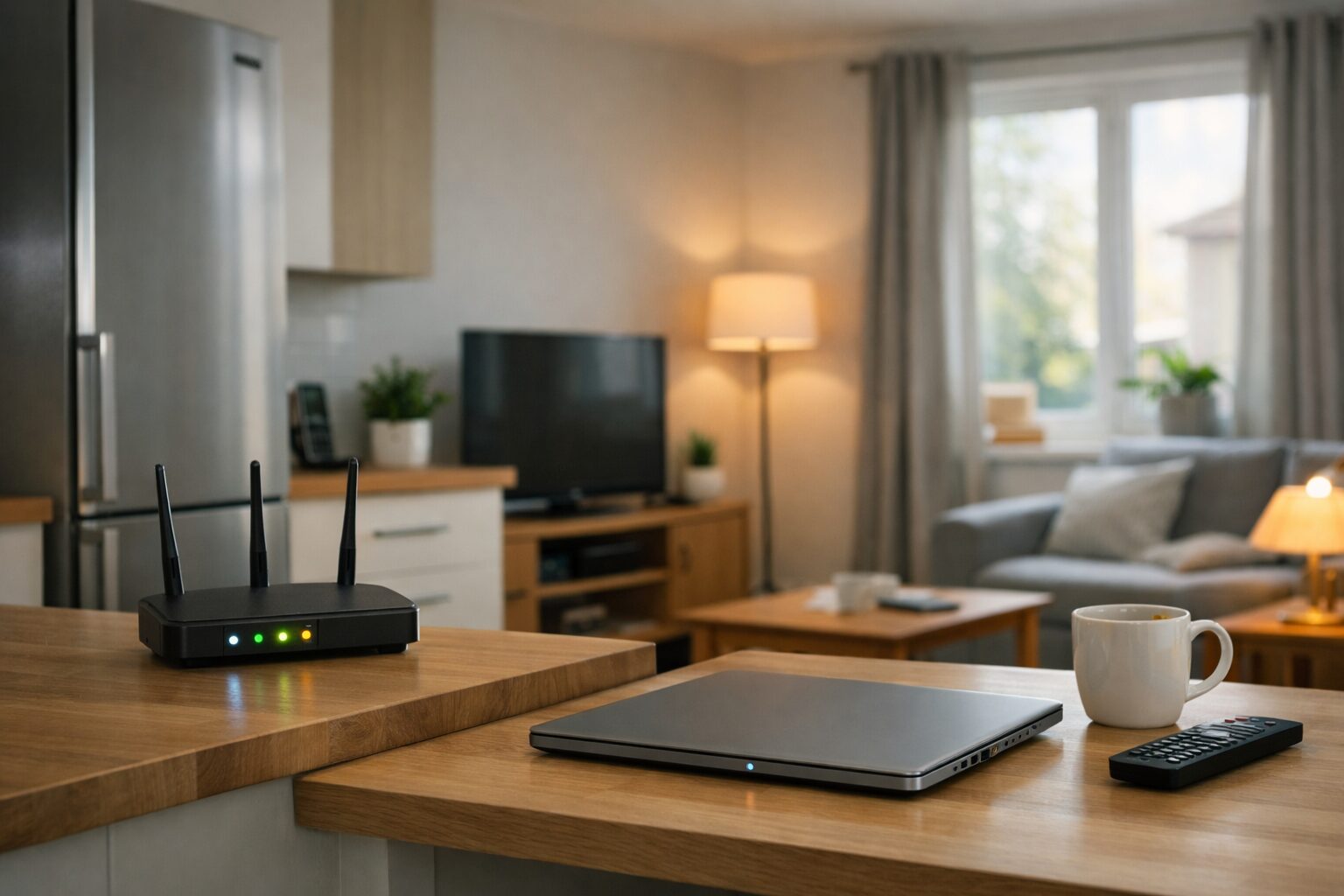
Yes - every unit on this page uses LiFePO4 (Lithium Iron Phosphate) chemistry, which is the safest lithium technology available. Unlike the NMC lithium-ion cells in laptops and smartphones, LiFePO4 does not undergo thermal runaway under normal operating conditions. It is safe to use indoors, in bedrooms, kitchens and living rooms.
✅ Safe for indoor use
No fumes, no CO, no combustion. LiFePO4 chemistry is thermally stable. Can be used in enclosed spaces without ventilation requirements. Safe near sleeping areas.
✅ No fire risk under normal use
LiFePO4 is non-flammable at operating temperatures. Every unit has a BMS that prevents overcharge, over-discharge and short circuits. Do not puncture, crush or expose to extreme heat.
⚠️ Use the correct charger
Always use the supplied charger or a charger specified by the manufacturer. Do not use third-party chargers not approved for the unit. Do not leave charging unattended for extended periods if the unit feels unusually warm.
⚠️ Storage temperature
Store at 10–30°C for long-term storage. Do not store fully charged or fully empty - 50–80% charge is optimal for extended storage. Avoid garages in extreme winter temperatures if possible.
Mid range power stations for home backup
Mid Range - 300Wh to 700Wh

Mid Range Power Stations - 300Wh to 700Wh

The sweet spot for home backup. Runs your fridge, router, TV and home office through an extended power cut. From £229.

Mid Range Power Stations - 300Wh to 700Wh

More capacity for extended outages. Handles a fridge-freezer, boiler ignition, home office and TV simultaneously. All under 9kg.
BLUETTI AC50B
BLUETTI

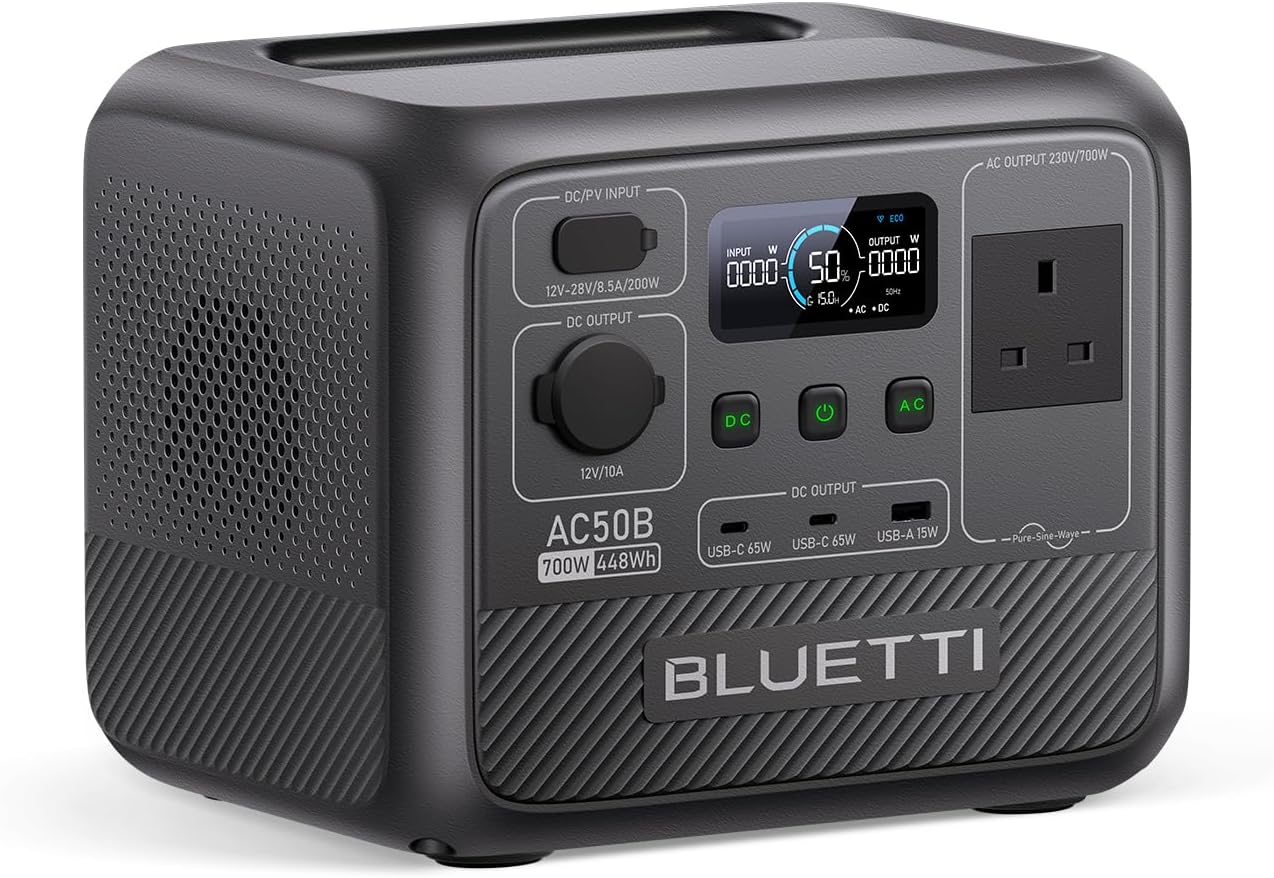
AC50B - 448Wh Fast Charge

448Wh, 700W AC output, 45-minute charge to 80%. No UPS but the fast charge means it tops up quickly between outages. Also on our Solar Batteries page for solar use.

Capacity
448Wh
AC Output
700W
UPS
No
Charge
45min
Weight
6.7kg
⚡ 45-minute charge to 80% - fast top-up between outages. Also on Solar Batteries page.
£299.00
Buy on Amazon
HOMCOM 481Wh
HOMCOM

481Wh Power Station

482Wh, 600W AC, 1.5-hour charge. No UPS but good all-round capacity at a competitive price. The HOMCOM brand is better known for furniture but this unit is a solid budget mid-range option.

Capacity
482Wh
AC Output
600W
UPS
No
Charge
1.5hrs
Weight
8.9kg
💰 Budget mid-range - good capacity at a competitive price point.
£283.00
Buy on Amazon
Editor's Pick
AFERIY 512Wh 5yr
AFERIY

800W 512Wh - UPS & 5yr Warranty

512Wh, 800W AC output, UPS mode and a 5-year warranty - the best warranty combination in this tier. 6.25kg. The 800W output is notably higher than most competitors at this capacity level.

Capacity
512Wh
AC Output
800W
UPS
✅ Yes
Charge
1.5hrs
Warranty
5 years
⭐ UPS + 800W output + 5-year warranty - best all-round mid-range choice.
£245.00
Buy on Amazon
AFERIY 512Wh 7yr
AFERIY

800W 512Wh - UPS & 7yr Warranty

Same specs as the 5-year model above but with a 7-year warranty - the longest on this page. The price difference over the 5-year model is modest. If long-term peace of mind matters more than saving £18, this is the one.

Capacity
512Wh
AC Output
800W
UPS
✅ Yes
Charge
1.5hrs
Warranty
7 years
🏆 Longest warranty on the page - 7 years. Only £18 more than the 5-year model.
£263.00
Buy on Amazon
EcoFlow RIVER 2 MAX
EcoFlow

RIVER 2 MAX - 1,000W Output

512Wh with 1,000W AC output - the highest output in this tier. 1-hour charge, LiFePO4. No UPS but the 1,000W output handles a fridge-freezer startup surge comfortably. Best if output matters more than automatic switchover.

Capacity
512Wh
AC Output
1,000W
UPS
No
Charge
1hr
Weight
6kg
⚡ 1,000W output - highest in this tier. Handles fridge startup surge with headroom.
£449.00
Buy on Amazon
EcoFlow RIVER 2 Pro
EcoFlow

RIVER 2 Pro - 768Wh

768Wh and 800W output - the largest capacity in this tier. 70-minute charge, LiFePO4. Also on our Solar Batteries page. No UPS but solid all-round performance with the most stored energy in the mid range.

Capacity
768Wh
AC Output
800W
UPS
No
Charge
70min
Weight
7.8kg
🔋 Most capacity in this tier at 768Wh. Also on our Solar Batteries page.
£499.00
Buy on Amazon

Prices correct at May 2026. Always check current price on Amazon before purchasing.
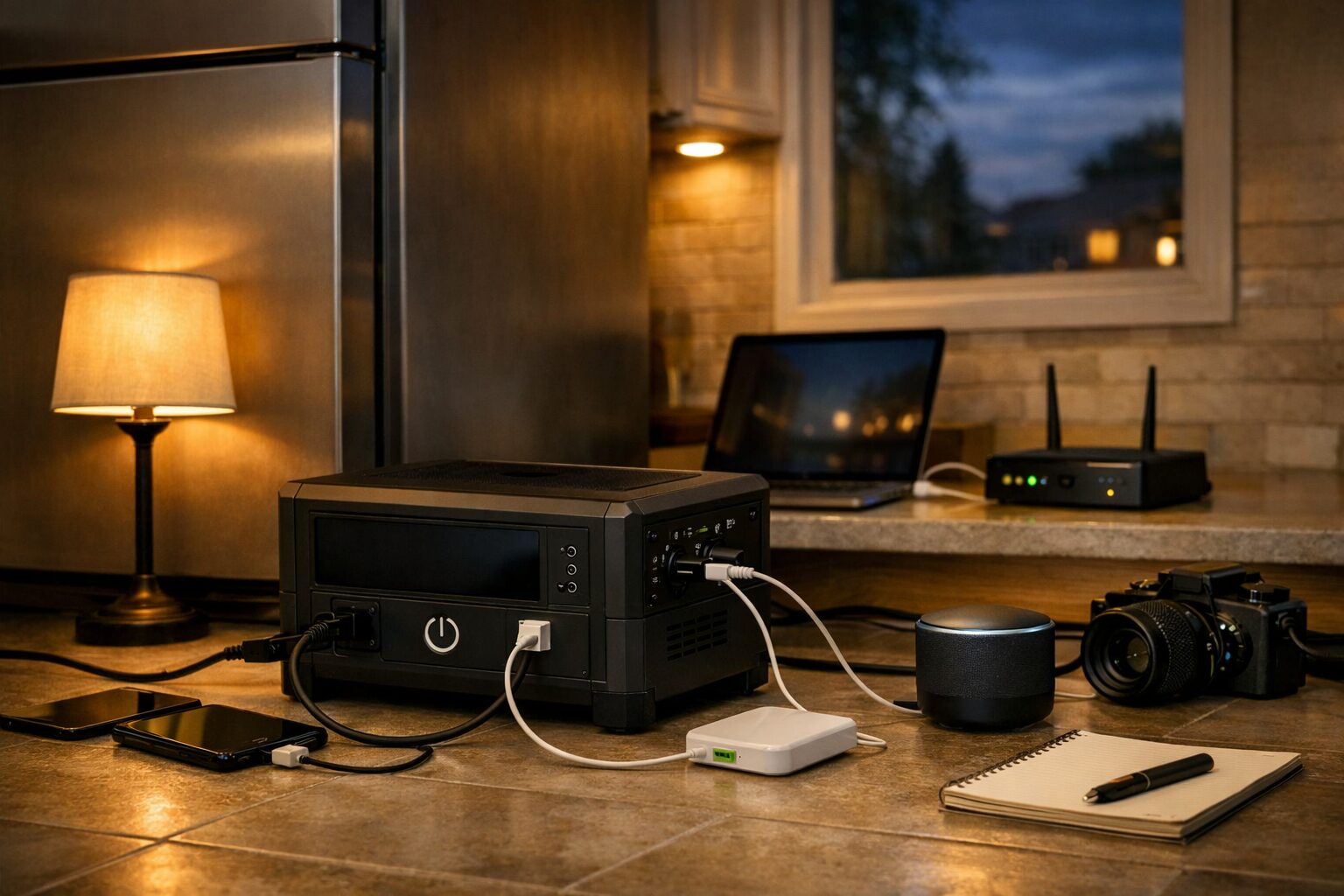
High capacity power stations for whole home backup
High Capacity - 1,000Wh+

High Capacity Power Stations - 1,000Wh+

Whole-home essentials covered. Fridge-freezer, boiler, home office and lighting - all running when the grid goes down. From £459.

High Capacity Power Stations - 1,000Wh+

1kWh and above - serious home backup. Runs fridge-freezer, boiler, home office and lighting simultaneously for extended outages. Some models expandable to 5kWh+.

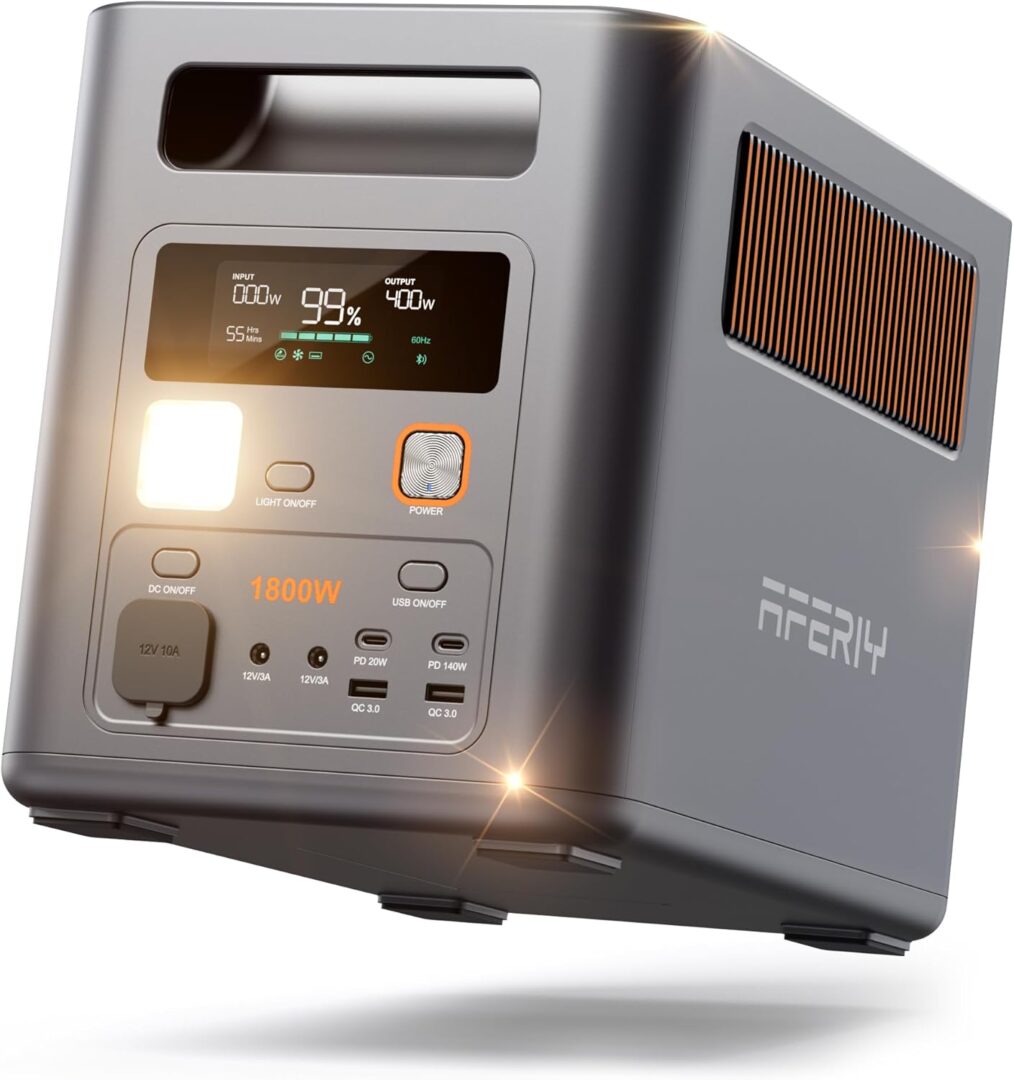
DJI Power 1000 V2
DJI

Power 1000 V2 - 2,600W Output

The highest AC output on the page at 2,600W - one of very few units that can actually run a kettle. 1,024Wh, 36-minute charge to 80%, UPS mode. DJI's engineering pedigree shows in the build quality.

Capacity
1,024Wh
AC Output
2,600W
UPS
✅ Yes
Charge
36min
⚡ 2,600W - highest output on the page. One of very few units that can run a kettle.
£459.00
Buy on Amazon
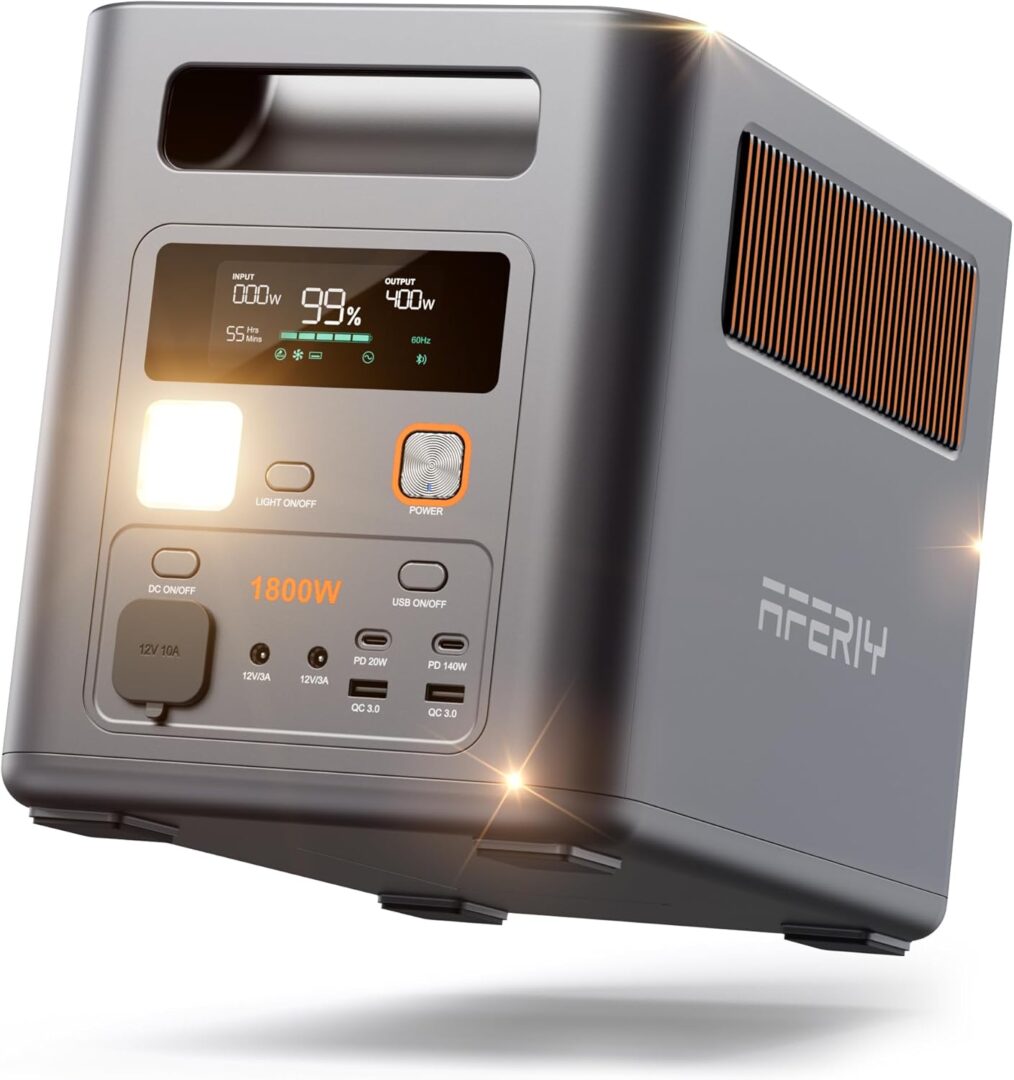
AFERIY P180Pro
AFERIY

P180Pro - Expandable to 5kWh

1,024Wh expandable to 5,120Wh with add-on batteries. 1,800W AC, UPS, 1-hour charge. The most scalable option on the page - start with 1kWh and expand as your needs grow.

Capacity
1,024Wh
AC Output
1,800W
UPS
✅ Yes
Expandable
5kWh
🔋 Expandable to 5,120Wh - start small, scale up as needed.
£465.00
Buy on Amazon
Jackery Explorer 1000 v2
Jackery

Explorer 1000 v2

1,070Wh, 1,500W AC, 1-hour charge. The most recognisable 1kWh unit in UK retail - stocked in Halfords and Currys. No UPS but Jackery's reliability and UK support make it a safe choice.

Capacity
1,070Wh
AC Output
1,500W
UPS
No
Charge
1hr
Weight
10.8kg
🏪 Available in Halfords and Currys - UK retail support and easy returns.
£479.00
Buy on Amazon
EcoFlow DELTA 3 Classic
EcoFlow

DELTA 3 Classic - UPS & Fast Charge

1,024Wh, 1,800W AC, UPS mode, 45-minute charge to 80%. The sweet spot in the DELTA range - fast charge, UPS and solid output at a competitive price.

Capacity
1,024Wh
AC Output
1,800W
UPS
✅ Yes
Charge
45min
Weight
12.1kg
✅ UPS + 45-minute fast charge + 1,800W - EcoFlow's best value 1kWh unit.
£499.00
Buy on Amazon
Editor's Pick
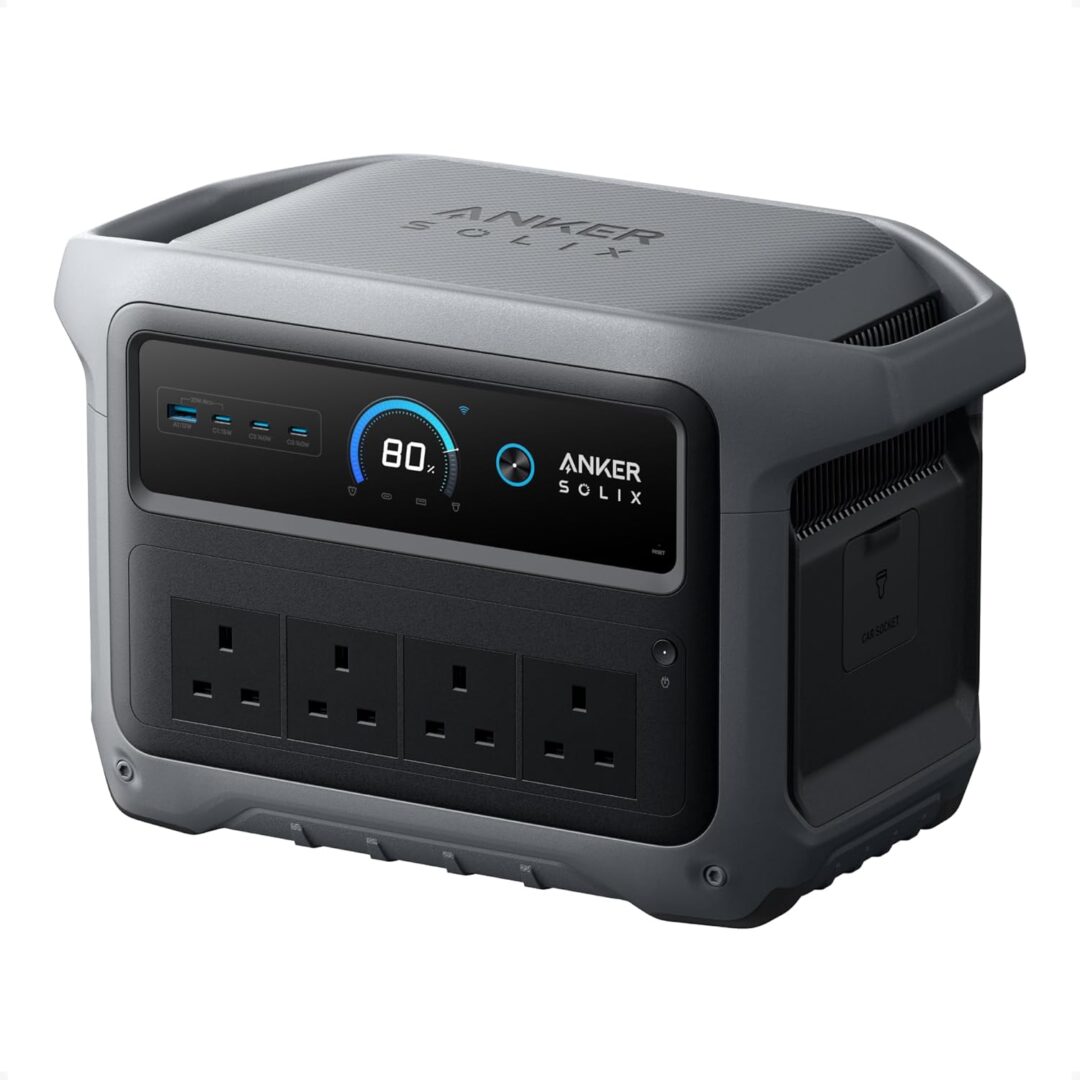
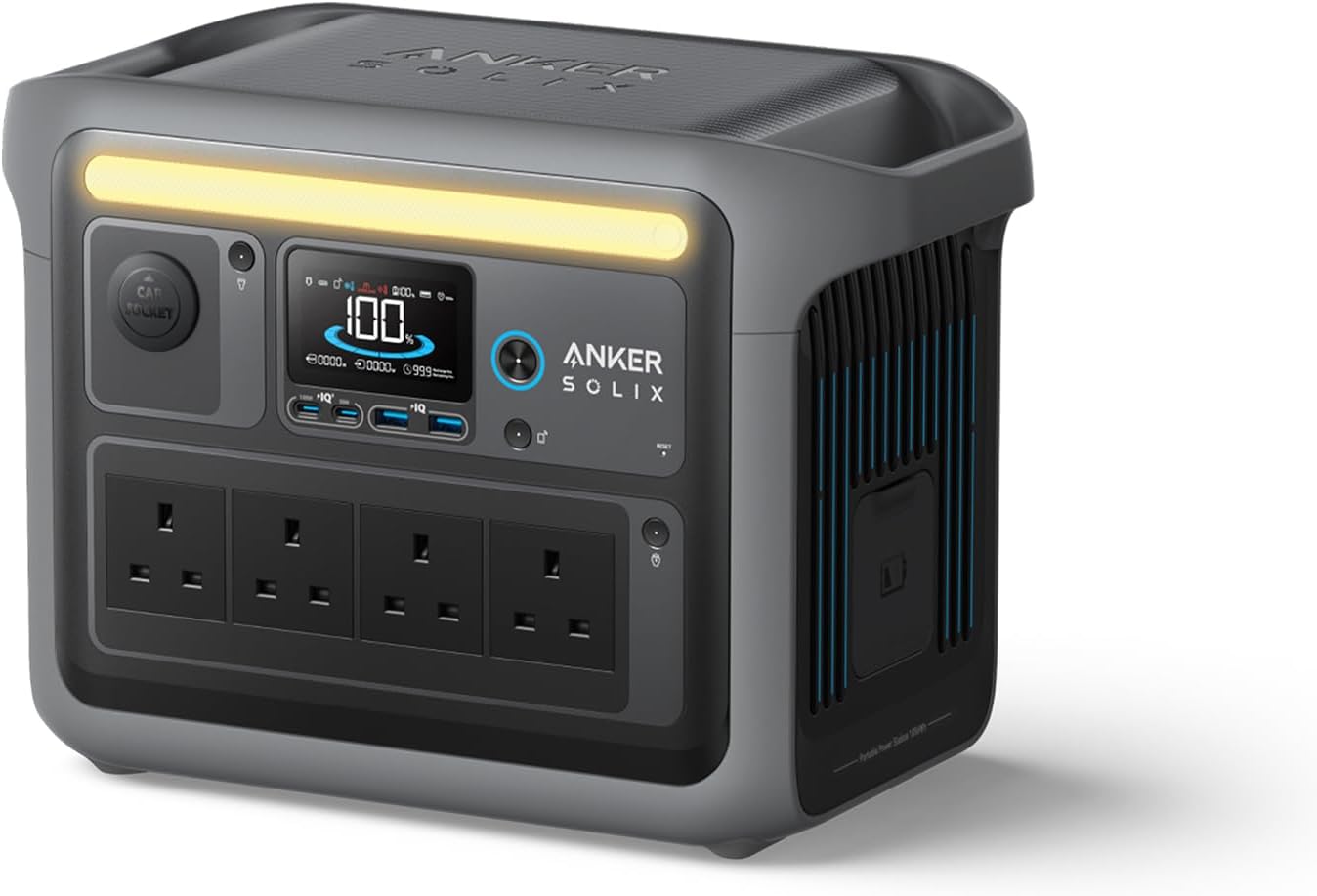
Anker SOLIX C1000 Gen 2
Anker SOLIX

C1000 Gen 2 - Best All-Round

The complete package - 1,024Wh, 2,000W AC, UPS with 10ms switchover, 49-minute charge and 600W solar input. Anker build quality, comprehensive app and the best combination of specs at this price point.

Capacity
1,024Wh
AC Output
2,000W
UPS
✅ 10ms
Charge
49min
Weight
11.3kg
⭐ Best all-round 1kWh - 2,000W output, 10ms UPS, 49-minute charge. Also on Solar Batteries page.
£499.00
Buy on Amazon
Anker SOLIX C1000
Anker SOLIX

C1000 - Original Model

1,056Wh, 1,800W AC, 58-minute charge. The original C1000 - no UPS mode unlike the Gen 2. Still a capable unit with Anker quality, but the Gen 2 is the better buy at the same price.

Capacity
1,056Wh
AC Output
1,800W
UPS
No
Charge
58min
Weight
12.5kg
⚠️ No UPS on this model. Consider the Gen 2 above for UPS capability at the same price.
£519.00
Buy on Amazon
OUPES Mega 1
OUPES

Mega 1 - Expandable to 5kWh

1,024Wh expandable to 5kWh, 2,000W AC, UPS, 36-minute charge. Matches the Anker Gen 2 on most specs but with faster charge speed and expandable capacity. Strong value.

Capacity
1,024Wh
AC Output
2,000W
UPS
✅ Yes
Charge
36min
Expandable
5kWh
🔋 36-minute charge + expandable to 5kWh + UPS - serious home backup potential.
£549.00
Buy on Amazon
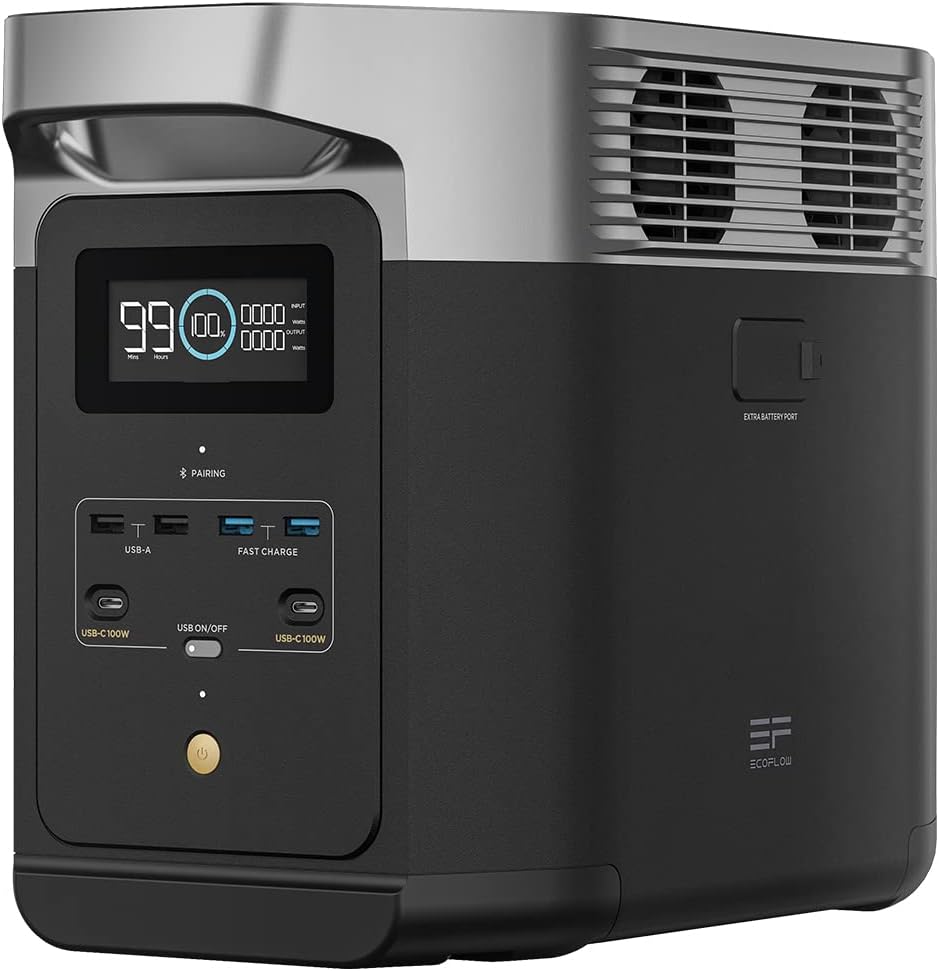
EcoFlow DELTA 2
EcoFlow

DELTA 2 - Expandable 1–3kWh

1,024Wh expandable to 3kWh with add-on battery. 1,800W AC, 48-minute charge. No UPS but EcoFlow's build quality and app ecosystem make this a compelling expandable option.

Capacity
1,024Wh
AC Output
1,800W
UPS
No
Charge
48min
Expandable
3kWh
🔋 Expandable to 3kWh - EcoFlow app ecosystem and strong UK availability.
£549.00
Buy on Amazon
EcoFlow DELTA 3 Plus
EcoFlow

DELTA 3 Plus - 2,400W Output

1,024Wh, 2,400W AC, 50-minute charge. Also available as a solar bundle on our Solar Batteries page. High output and fast charge - premium EcoFlow spec at a higher price point.

Capacity
1,024Wh
AC Output
2,400W
UPS
No
Charge
50min
☀️ Also available as a solar bundle - see our Solar Batteries page for the full kit.
£938.00
Buy on Amazon

Prices correct at May 2026. Always check current price on Amazon before purchasing.

Gemshore Power Guide

Which Power Station is Right for You?

Answer 5 questions - we'll match you to the right unit

If we can't match your exact budget, we'll show you our best picks closest to your target.

QUESTION 1 OF 5 0%

Power Station - Frequently Asked Questions

Everything you need to know before buying.

Can a power station run a kettle?

This is the most searched question about power stations in the UK - and the honest answer is: almost certainly not, and if it can, only very briefly.

A standard UK kettle draws 2,000–3,000W continuously. Most power stations on this page have AC outputs of 300W to 1,800W - well below what a kettle needs. The only unit on this page that can physically power a kettle is the DJI Power 1000 V2 at 2,600W output. However, even at 2,600W, a 1,024Wh battery would be completely empty in approximately 20–25 minutes of kettle use. That's enough for three or four boils.

For a power cut, a far better approach is a camping stove or gas hob for hot drinks, and save your power station battery for essentials - fridge, router, medical devices and phone charging - that genuinely need electricity.

What's the difference between a power station and a UPS?

A traditional UPS (Uninterruptible Power Supply) is a dedicated device - usually a heavy sealed lead acid unit - designed specifically to keep computers and servers running through brief power cuts. They typically provide 10–30 minutes of runtime and are not rechargeable from solar or car.

A portable power station with UPS mode does the same job but with far more capability. It has a larger LiFePO4 battery providing hours rather than minutes of runtime, can be recharged from mains, solar or car, is portable, and can power multiple devices simultaneously. For home use, a power station with UPS mode is almost always the better choice over a traditional UPS.

How long will a power station run my fridge?

A typical UK fridge-freezer draws 100–200W on average - but has a startup surge of 400–800W when the compressor kicks in. You need a power station with at least 600W AC output to handle the surge, and ideally 800W or more for comfort.

In terms of runtime, a 1,024Wh power station running a fridge-freezer averaging 150W would last approximately 6–7 hours. A 256Wh compact unit would last around 1.5 hours. For a full day of fridge operation during a power cut, you need 1,000Wh+ and ideally a unit with UPS so the fridge never loses power when the mains cuts.

Can I use a power station for my CPAP machine?

Yes - and a power station with UPS mode is ideal for CPAP users. A CPAP machine draws 30–60W depending on the pressure setting and whether humidification is used. Even a compact 256Wh unit would run a CPAP for 4–8 hours - enough for a full night.

UPS mode is important for CPAP users because it means the machine never loses power mid-night during a cut. The Jackery Explorer 240 v2 at £189 is the most affordable UPS unit on the page and is perfectly sized for CPAP backup. Also ensure the power station outputs pure sine wave AC - all units on this page do, which is essential for CPAP machines.

What is pure sine wave and why does it matter?

Mains electricity in the UK is delivered as a pure sine wave - a smooth, perfectly shaped alternating current. Sensitive electronics like CPAP machines, medical devices, variable speed motors and modern appliances are designed to run on pure sine wave power.

Cheaper power sources sometimes produce modified sine wave output - a stepped approximation that works for simple resistive loads like light bulbs and basic chargers but can damage or cause erratic behaviour in sensitive electronics. Every power station on this page produces pure sine wave output, making them safe for all appliances including medical equipment, laptops and precision electronics.

How do I set up UPS mode?

Setting up UPS mode is straightforward. Plug the power station's charging cable into the wall socket. Then plug your appliances - router, laptop, medical device - into the power station's AC outlets. Enable UPS mode in the unit's settings or app if required (some units enable it automatically, others need a menu toggle).

The power station now sits permanently between the wall and your devices. It charges its internal battery from the mains while simultaneously passing power through to your appliances. When the mains cuts, it switches to battery in under 30 milliseconds - invisible to your devices. When power returns, it switches back and recharges automatically. You never need to do anything manually.

Can I charge a power station from solar panels?

Yes - every unit on this page accepts solar panel input. The maximum solar input ranges from 100W on the Jackery Explorer 240 v2 up to 800W on the OUPES Mega 1. You connect solar panels directly to the power station's solar input port via an MC4 cable - no separate charge controller required as the power station has one built in.

In UK summer conditions, a 200W panel produces approximately 600–800Wh on a clear day - enough to fully recharge a 512Wh mid-range unit and partially recharge a 1,024Wh unit. In winter, output is significantly lower. Solar charging is a useful supplement to mains charging but not a reliable sole source for home backup in the UK.

Is it safe to leave a power station plugged in all the time?

Yes - all units on this page are designed for continuous mains connection as part of their UPS function. The built-in Battery Management System (BMS) prevents overcharging by stopping charge input once the battery reaches full capacity. Modern LiFePO4 batteries are not damaged by being kept at full charge in the way that older lithium-ion chemistries can be.

Most manufacturers recommend keeping the unit at 80–90% charge for long-term storage rather than 100% - some units have a storage mode in the app that does this automatically. For UPS use where the unit must always be ready, 100% is fine. The BMS manages this safely.

What can I run on a 1,000Wh power station?

A 1,024Wh power station - the most common size in the high capacity tier - can simultaneously run a WiFi router (15W), four LED lights (40W total), a laptop (65W) and keep a phone charged, while also powering a fridge-freezer (150W average). That combination draws approximately 270W, giving around 3.5 hours of runtime across all devices simultaneously.

Running the fridge alone at 150W average, a 1,024Wh station would last approximately 6.5 hours. Adding the router, lights and laptop reduces that to 3–4 hours. For extended outages, units with expandable capacity - the OUPES Mega 1, AFERIY P180Pro and EcoFlow DELTA 2 - can be connected to additional battery packs to multiply available energy.

Are power stations safe indoors?

Yes - all units on this page use LiFePO4 chemistry, which is the safest lithium technology available. Unlike the NMC lithium-ion cells in laptops and older portable electronics, LiFePO4 does not undergo thermal runaway under normal operating conditions and produces no fumes or gases during use or charging. Power stations are safe to use in bedrooms, living rooms, kitchens and home offices.

This is a fundamental advantage over petrol generators, which produce carbon monoxide and must never be used indoors. A power station is the only form of backup power that is completely safe to operate in an enclosed living space.

What's the difference between capacity (Wh) and output (W)?

Capacity (Wh - watt hours) tells you how much energy is stored - like the size of a fuel tank. Output (W - watts) tells you how much power can be delivered at any one moment - like the size of the engine. Both matter and a mismatch between them causes problems.

A unit with 1,000Wh capacity but only 300W output cannot run a fridge (which needs 600W+ for startup). A unit with 2,000W output but only 256Wh capacity can run a fridge but only for about 20 minutes before the battery is empty. For home backup, you need adequate capacity for runtime AND adequate output for the appliances you intend to run. Check both specs before buying.