
Plug and Play Solar Kits
The New UK Regulations Explained (BS 7671 Amendment 4)

A new generation of plug-in technology is coming.
📖 Quick Navigation Menu: What's Inside This Guide Click to Open
Plug and Play Solar: What is Changing?
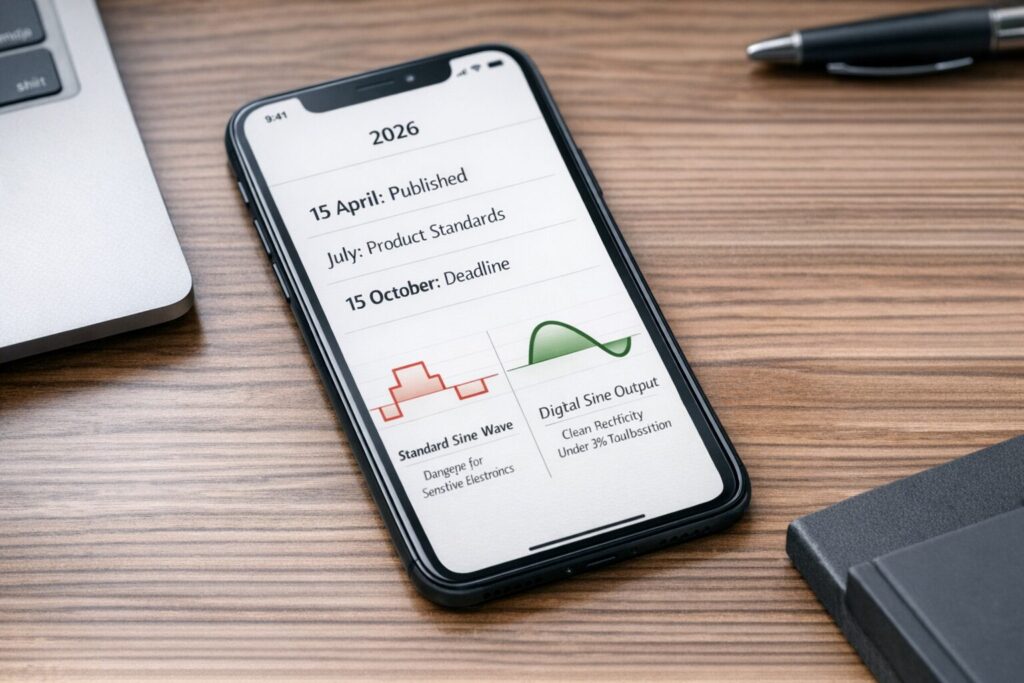
The Compliance Checklist for Your Solar Kit
The Hidden Fire Risk in Older Fuse Boards
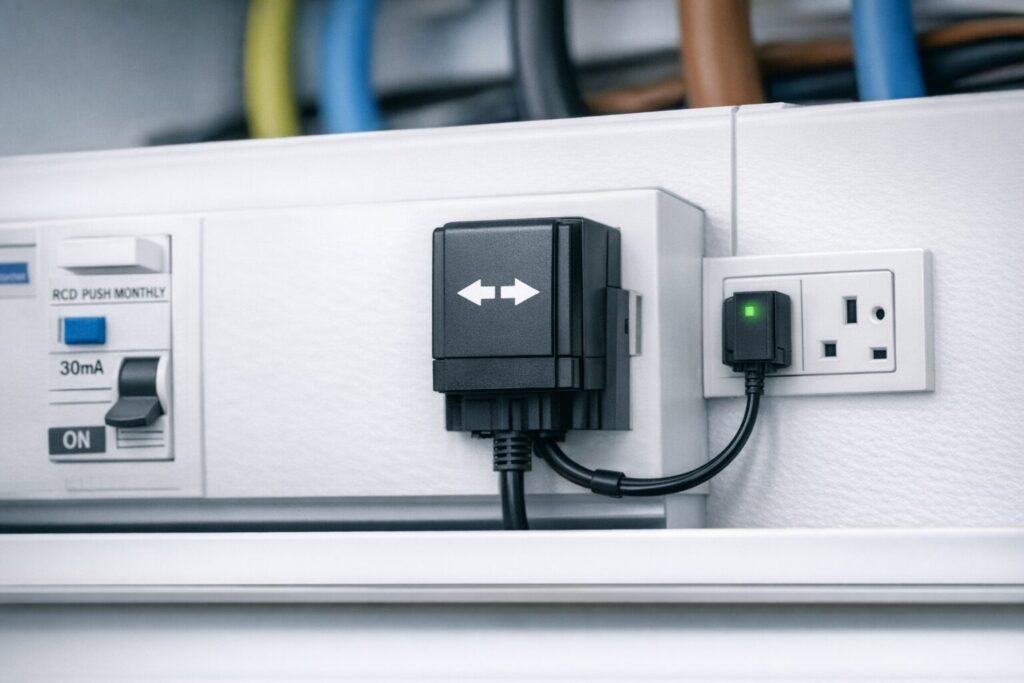
How to Identify Your Safe RCD Type

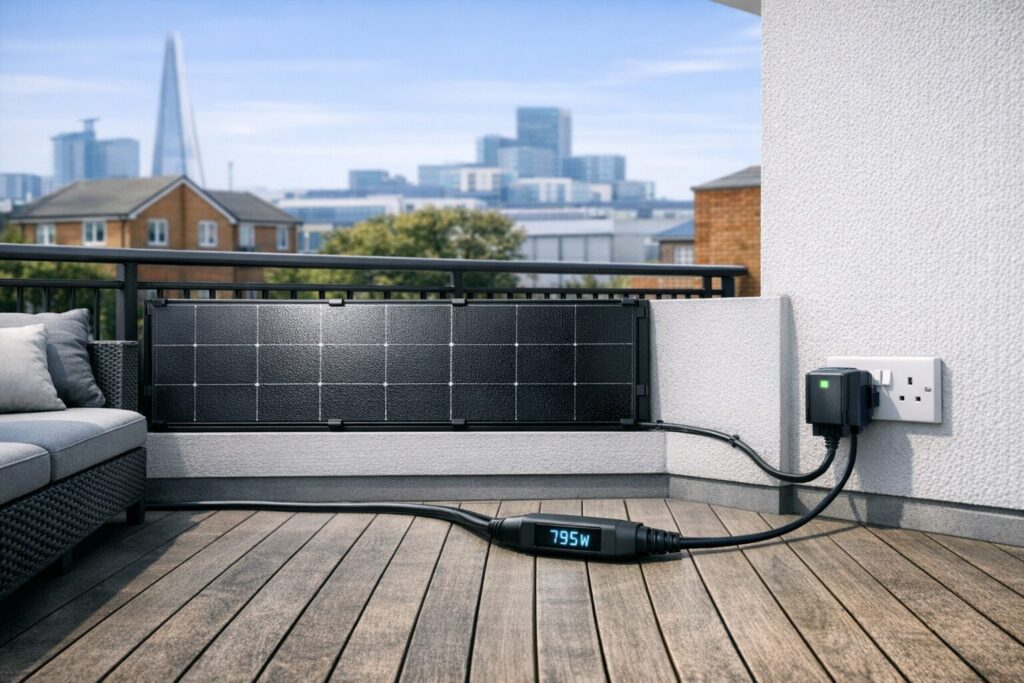
The 800W Safety Limit: Protecting UK Ring Mains
The upcoming regulatory shift introduces a strict 800-watt capacity cap.
This specific threshold grid limitation is entirely rooted in household engineering safety.
Most British domestic properties utilize distinct ring-main electrical socket circuits.
Standard ring-mains are typically protected by a traditional 32-Amp breaker.
Plugging an unmanaged, high-output power source into standard wall sockets introduces risks.
Continuous heavy current generation can quietly overheat older internal household copper wiring.
An 800W inverter limit restricts generation to roughly 3.5 Amps of continuous current.
This low current level prevents overloading your existing domestic circuit protection loops.
It completely eliminates the requirement for complex, expensive consumer unit rewiring projects.
| Kit Power Class | UK Legal Status (Post-Oct 2026) | Installation & Wiring Rule |
|---|---|---|
| Micro-Kits (Under 800W) | Fully Legal / Plug & Play | Standard UK 13A Wall Socket |
| Mid-Range (800W - 3.6kW) | Legal / Grid Notification | G98 Notification to DNO Required |
| Heavy Arrays (Over 3.6kW) | Strict Fire / Grid Control | Full G99 Application & Electrician |
The G98 Regulation: Connect and Notify Process
| Timeline Step | Action Required | Compliance Details |
|---|---|---|
| Step 1 | Hardware Installation | Plug in your fully approved, certified 800W kit into your socket and turn it on. |
| Step 2 | Identify Your DNO | Use your postcode to find your regional Distribution Network Operator (e.g., UK Power Networks, National Grid). |
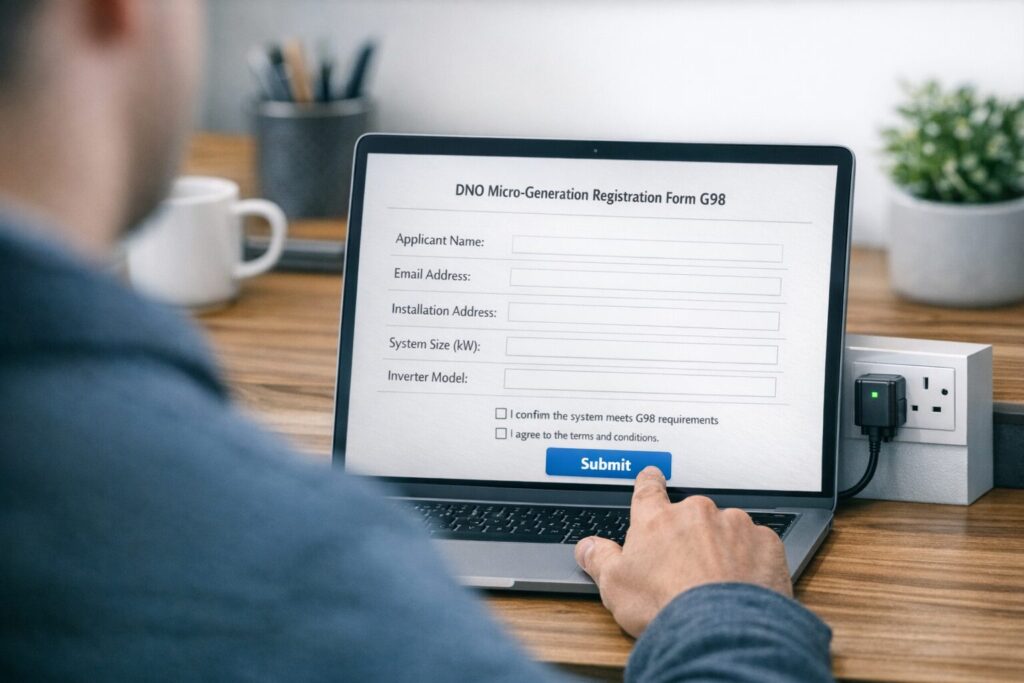
| Step 3 | Submit G98 Form | Fill out and submit the simple G98 notification form on your DNO's portal. **Must be done within 28 days of turning the kit on.** |
| Step 4 | Confirmation | Your DNO logs your kit on the regional asset register. Your setup is now officially legal and compliant. |
Plugging in an approved 800W kit bypasses complex advance planning applications.
However, you must still legally register your generation hardware setup.
The UK energy network operates under a strict strict Connect and Notify framework.
Property owners must submit formal paperwork within 28 days of commissioning.
This official documentation goes directly to your local Distribution Network Operator.
Your local operator manages the physical power cables entering your property.
Failing to submit a G98 form violates formal distribution code parameters.
The registration process ensures the regional grid can manage local feedback.
Completing this notification step keeps your home setup fully insurance-compliant.
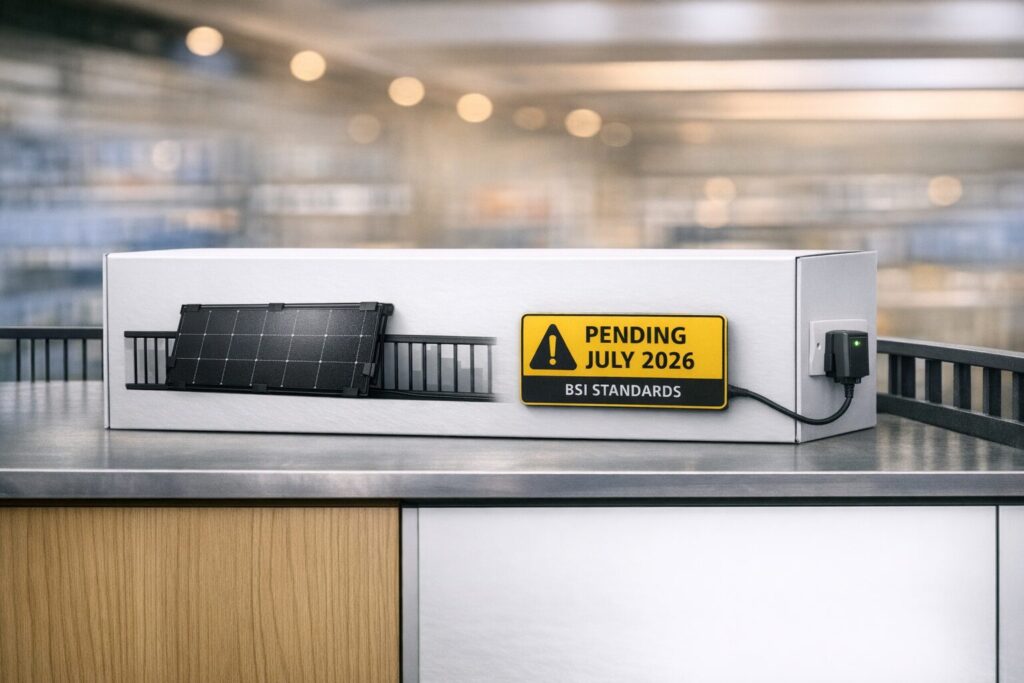
Beware of Early Compliance Claims
DIY Setup vs. Professional Installation
| Project Type | Do I Need an Electrician? | Legal Requirement |
|---|---|---|
| Plugging 800W kit into existing socket | No (Pure DIY) | Fully allowed under Amendment 4 |
| Installing a brand new outdoor socket | Yes (Professional) | Requires Part P notification |
| Hardwiring a permanent solar battery | Yes (Professional) | Requires Competent Person sign-off |
| Mounting panels onto balcony railings | No (Pure DIY) | Homeowner / tenant task |
Notifying Your Distribution Network Operator
Understanding Your Structural and Financial Limits
Structural Rules
- Tenancy Agreements: Lease terms still dictate balcony alterations.
- Cosmetic Changes: Landlords retain full veto rights for exterior rails.
- Property Drilling: Modifying structural walls requires absolute consent.
Financial Rules
- SEG Tariff Exclusion: Plug-in kits cannot apply for export income.
- No Grid Payouts: Unused electricity fed back into the grid is free.
- Offset Model Only: Financial returns come strictly from bill savings.
Next Steps: Choosing Your Approved Setup
| Compliance Check | Target Requirement | Why It Matters |
|---|---|---|
| Inverter Capacity | Maximum 800W Output | Keeps setup fully plug and play without requiring custom electrician rewiring. |
| Wiring Standard | BS 7671 Amendment 4 | Ensures the hardware legally complies with the latest UK domestic safety rules. |
| Grid Notification | Within 28 Days | You must submit a standard G98 form to your regional DNO after turning it on. |
| Mounting & Hardware | Wind-Tested Mounts | Essential for securing panels safely against high winds on balconies or railings. |
The new UK regulations remove the traditional barriers to urban solar power.
Staying within the 800W limit ensures complete legal and electrical safety.
Your primary focus should now switch to finding certified, premium hardware components.
Look for setups that offer integrated micro-inverters with built-in decoupling protection.
High-quality mounts are equally critical for managing wind loads on standard balconies.
We are currently evaluating the leading plug and play kits entering the UK market.
Our upcoming technical reviews will break down efficiency ratings and pricing parameters.
Ensure your chosen hardware fully conforms to the strict new Amendment 4 guidelines.
Frequently Asked Questions Regarding Amendment 4
Is my existing rooftop solar affected by Amendment 4? [Expand]
What is the actual difference between BS 7671 and the law? [Expand]
Does Amendment 4 require a brand new consumer unit? [Expand]
Can I install a plug and play kit in a rented flat? [Expand]
Where can I download the full text of Amendment 4 for free? [Expand]
Below are three plug‑in “balcony” Plug in Solar power systems from EcoFlow.
All include LiFePO4 batteries, built‑in micro inverters and expandable storage, but they target slightly different priorities: maximum solar input (Ultra), best balance (Pro) and highest appliance power (Max)


In simple terms: choose Ultra if you have the roof or balcony space for lots of panels, Pro if you want strong performance at a lower price, and Max if running power‑hungry appliances is your main goal.