
Home Solar Inverters UK Guide
A solar inverter is the central control unit of any home solar system. It decides how your solar energy is used, where it flows, how efficiently it is converted, and how your home interacts with the grid. Whether you are building a full home energy system, upgrading an existing installation, or starting with a small balcony setup, choosing the right inverter is the most important decision you will make.
This guide explains the different types of inverters, how they work, which models are best for UK homes, and how to match them with the correct batteries. It also includes comparison grids, technical explanations, and practical examples so you can build a reliable and safe system.
What a Solar Inverter Does
Solar inverters form the central conversion and control stage within any photovoltaic system. Their purpose is to transform the variable direct current produced by solar modules into stable alternating current suitable for domestic circuits, commercial installations, or grid export.
The inverter also manages synchronisation with the grid, monitors system performance, and provides essential safety functions such as rapid shutdown and anti‑islanding. Because the inverter governs both conversion efficiency and operational stability, its design has a direct impact on long‑term energy yield and system reliability.
Modern inverters incorporate advanced switching electronics, digital control processors, and real‑time monitoring interfaces. These elements work together to ensure that the AC output remains within strict voltage and frequency tolerances while maximising the usable energy extracted from the PV array. As solar deployment expands across residential and commercial sectors, the inverter has become a critical component in achieving high‑efficiency, low‑loss energy systems.
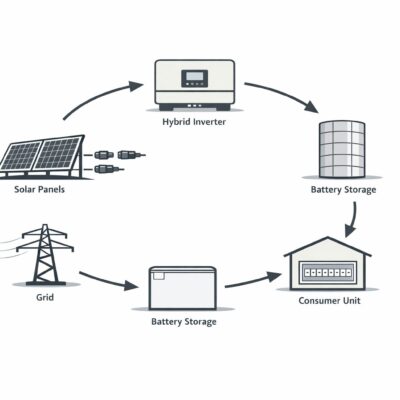
Hybrid vs Micro Inverters Comparison
| Feature | Hybrid Inverter | Micro Inverter |
|---|---|---|
| System Type | Central inverter controlling whole system | One inverter per panel |
| Best For | Full home systems with batteries | Small systems, balconies, shaded roofs |
| Battery Support | Yes, built in charging and discharging | No battery support |
| Backup Power | Yes, if model supports off grid mode | No backup capability |
| Installation Size | Medium to large systems | Small to medium systems |
| Shading Performance | Reduced if one panel is shaded | Excellent, each panel independent |
| Expandability | Add panels in strings | Add panels one at a time |
| Monitoring | Whole system monitoring | Panel level monitoring |
| Complexity | Higher, requires wiring and setup | Low, plug and play for small systems |
| Cost | Higher upfront cost | Lower upfront cost |
| Ideal Use Case | Homes with storage and backup needs | Balconies, flats, shaded roofs, beginners |
How DC to AC Conversion Works
The inverter’s primary function is to transform the direct current generated by solar modules into alternating current compatible with household and grid systems. This conversion process relies on precision electronic switching and filtering to produce a clean sinewave output that matches grid voltage and frequency.
The inverter receives variable DC voltage from the PV array. Internal control circuits stabilise this input to maintain consistent conversion performance.
Semiconductor devices such as insulated gate bipolar transistors (IGBTs) or MOSFETs rapidly switch the DC signal at high frequency. This creates a stepped waveform that approximates AC.
The inverter’s microprocessor adjusts the width of each pulse to shape the waveform precisely. PWM ensures the output voltage and frequency remain stable under varying load conditions.
Inductors and capacitors filter the stepped waveform to remove high‑frequency components, producing a smooth sinusoidal AC output.
The inverter continuously monitors grid parameters and adjusts its output phase and frequency to maintain synchronisation.
Conversion efficiency typically exceeds 97 % in modern designs.
Harmonic distortion is minimised through advanced filtering and control algorithms.
Safety isolation between DC and AC circuits is achieved using galvanic separation or transformerless topology depending on design.
String Inverters
String inverters are the most established and widely deployed inverter architecture for residential and small‑scale commercial solar systems. They operate by connecting multiple solar panels in series to form a single electrical string.
This string feeds DC power into a central inverter, which performs the DC‑to‑AC conversion for the entire array.
String inverters are valued for their simplicity, reliability, and cost‑efficiency.
They remain the preferred choice for installations where panels share similar orientation, tilt, and shading conditions.
Key Characteristics
Centralised Conversion All panels in the string feed one inverter, which manages voltage regulation, MPPT, and AC output.
Series Configuration Panels are electrically linked in series, increasing voltage while maintaining current.
High Efficiency Modern string inverters routinely achieve conversion efficiencies above 97 percent.
Cost‑Effective Architecture Fewer components compared to module‑level systems reduce installation and maintenance costs.
When String Inverters Work Best
Uniform roof orientation and tilt
Minimal or no shading across the array
Medium to large residential systems
Commercial rooftop installations with consistent panel layout
Technical Considerations
Voltage Window The combined string voltage must remain within the inverter’s MPPT operating range.
Shading Sensitivity Because panels are in series, shading on one module affects the entire string.
Single Point of Conversion If the inverter fails, the entire array stops producing AC power.
Microinverters
Microinverters represent a decentralised approach to power conversion. Instead of a single central inverter, each solar panel is equipped with its own miniature inverter that converts DC to AC directly at the module level.
This configuration enhances system flexibility, optimises performance under variable conditions, and simplifies monitoring.
Core Principles
Module‑Level Conversion Each panel operates independently, producing AC power without relying on other modules in the array.
Maximum Power Point Tracking (MPPT) Individual MPPT per panel ensures optimal energy harvest even when shading or orientation differs between modules.
Plug‑and‑Play Installation Microinverters mount beneath each panel and connect directly to the AC trunk cable, reducing DC wiring complexity.
Advantages
Improved Energy Yield Shading or dirt on one panel does not affect others.
Enhanced Safety Eliminates high‑voltage DC runs, reducing electrical risk.
Simplified Maintenance Faults are isolated to individual modules, making diagnostics straightforward.
Scalability Easy to expand systems by adding panels with integrated microinverters.
Limitations
Higher Cost per Watt Each panel requires its own inverter hardware.
Increased Component Count More devices mean more potential points of failure.
Complex Replacement Accessing roof‑mounted microinverters can be labour‑intensive.
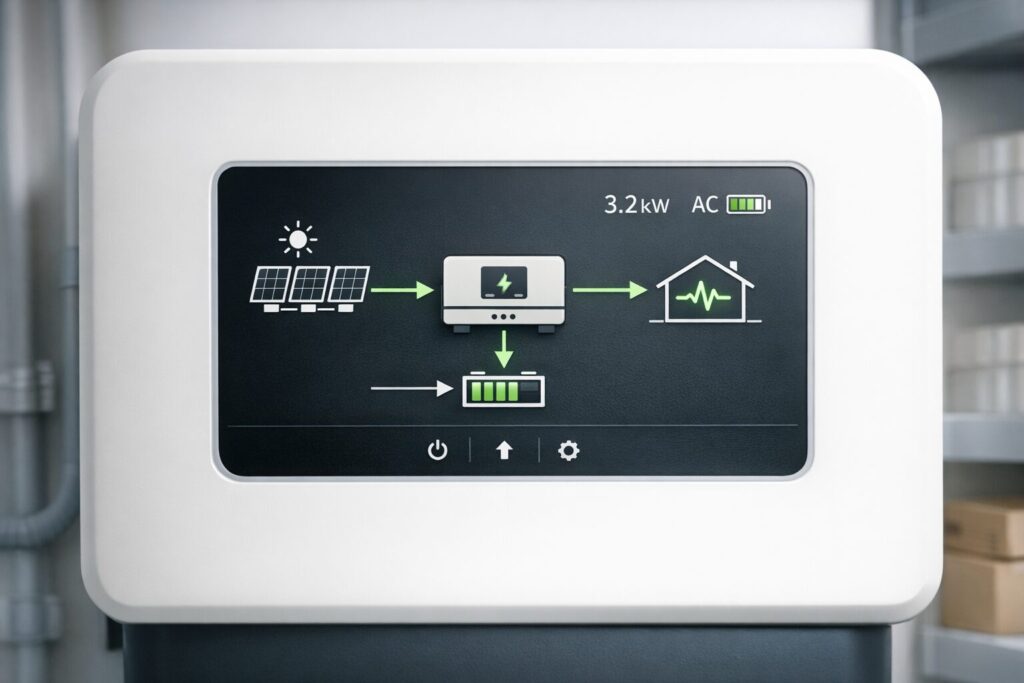
Technical Overview
Conversion efficiency typically ranges from 96 % to 98 %.
Communication protocols allow real‑time monitoring of each module’s performance.
AC output from all microinverters is combined through trunk cabling and fed into the main distribution board.
Power Optimisers
Power optimisers are module‑level devices designed to enhance the performance of string inverter systems. They sit between each solar panel and the inverter, conditioning the DC output before it reaches the central unit. This hybrid approach combines the cost efficiency of string inverters with the individual performance benefits of microinverters.
Functional Overview
DC Conditioning Each optimiser adjusts the panel’s voltage and current to operate at its maximum power point.
Communication Link Optimisers transmit real‑time performance data to the inverter or monitoring platform.
Safety Control They can automatically reduce voltage during maintenance or emergency shutdowns.
Advantages
Improved Energy Harvest Shading or mismatch on one panel no longer limits the entire string.
Flexible Design Allows panels with different orientations or tilt angles within the same array.
Enhanced Monitoring Provides per‑panel visibility for diagnostics and maintenance.
Compatibility Works with most modern string inverters, enabling retrofit upgrades.
Limitations
Additional Hardware Cost Each panel requires an optimiser, increasing upfront expense.
Complex Wiring More connections mean longer installation time.
Dependent on Central Inverter If the inverter fails, all optimisers stop transmitting power.
Technical Notes
Efficiency typically exceeds 99 % for DC conditioning.
Optimisers maintain MPPT at the module level while the inverter manages overall AC conversion.
Systems often use proprietary communication protocols between optimisers and inverters.
Hybrid Inverters
Hybrid inverters combine the functions of a traditional solar inverter with integrated battery management. They can convert DC from solar panels, charge and discharge a battery system, and supply AC to the property or grid. This makes them central to modern energy‑storage‑enabled systems.
Hybrid inverters are increasingly used in UK residential installations due to rising interest in self‑consumption, time‑of‑use tariffs, and backup capability.
Core Functions
Solar DC to AC Conversion Performs the same role as a standard string inverter.
Battery Charging and Discharging Manages bidirectional DC flow to and from a connected battery.
Energy Flow Control Determines whether solar energy is used for:
Household loads
Battery charging
Grid export
Hybrid Inverters
Hybrid inverters combine the functions of a traditional solar inverter with integrated battery management. They can convert DC from solar panels, charge and discharge a battery system, and supply AC to the property or grid. This makes them central to modern energy‑storage‑enabled systems.
Hybrid inverters are increasingly used in UK residential installations due to rising interest in self‑consumption, time‑of‑use tariffs, and backup capability.
Core Functions
Solar DC to AC Conversion Performs the same role as a standard string inverter.
Battery Charging and Discharging Manages bidirectional DC flow to and from a connected battery.
Energy Flow Control Determines whether solar energy is used for:
Household loads
Battery charging
Grid export
Advantages
Integrated Storage Control No need for a separate battery inverter.
Optimised Self‑Consumption Stores excess solar energy for evening use.
Flexible Operating Modes Time‑of‑use optimisation Backup mode Export‑limited mode
Reduced Installation Complexity Fewer components and simplified wiring.
Limitations
Higher Upfront Cost More complex electronics increase price.
Battery Compatibility Constraints Many hybrid inverters require specific battery brands or communication protocols.
Thermal Management Requirements Combined conversion and charging functions generate more heat.
Technical Notes
Typical efficiency:
97 % solar conversion
94–96 % battery charge/discharge round‑trip
Often includes dual MPPT trackers for flexible array design.
Supports export limitation for DNO compliance.
Off‑Grid Inverters
Off‑grid inverters are designed for systems that operate independently from the national grid. They form the core of standalone power systems used in remote locations, off‑grid homes, agricultural sites, and backup‑critical environments. Unlike grid‑tied inverters, they must generate a stable AC waveform entirely on their own while managing batteries, solar input, and load demand simultaneously.
Off‑grid systems prioritise reliability, autonomy, and energy security. The inverter must therefore handle rapid load changes, battery charging cycles, and generator integration without external grid support.
Core Functions
Independent AC Generation Produces a stable 230 V AC supply without grid reference.
Battery Management Controls charging and discharging cycles for deep‑cycle or lithium batteries.
Load Regulation Maintains voltage and frequency under varying load conditions.
Generator Integration Supports automatic generator start for extended autonomy.
Advantages
Complete Energy Independence Ideal for remote or grid‑inaccessible locations.
High Reliability Designed to handle fluctuating loads and harsh environments.
Flexible Energy Sources Can integrate solar, wind, hydro, and generator inputs.
Limitations
Higher System Cost Requires batteries and often a backup generator.
Energy Storage Dependency System performance is limited by battery capacity.
More Complex Design Requires careful sizing of loads, batteries, and solar input.
Technical Notes
Pure sinewave output is essential for sensitive electronics.
Typical inverter‑charger efficiency ranges from 92 % to 96 %.
Systems often include low‑voltage disconnects to protect batteries.
Inverter Efficiency and Losses
Inverter efficiency is a critical factor in overall system performance. Even small conversion losses can accumulate over the lifetime of a solar installation. Efficiency describes how effectively the inverter converts DC from the panels into usable AC power while minimising heat and electrical losses. Modern inverters are engineered to operate with high precision, but several internal and external factors influence their real‑world performance.
Functional Overview
DC Conditioning Each optimiser adjusts the panel’s voltage and current to operate at its maximum power point.
Communication Link Optimisers transmit real‑time performance data to the inverter or monitoring platform.
Safety Control They can automatically reduce voltage during maintenance or emergency shutdowns.
Types of Efficiency
Peak Efficiency The highest efficiency the inverter can achieve under ideal conditions. Typical values: 97 % to 99 %.
European Weighted Efficiency A more realistic metric that averages performance across varying load levels common in European climates. Typical values: 95 % to 98 %.
CEC Efficiency A weighted metric used in the US, similar to European efficiency but with different load weighting.
Sources of Losses
Switching Losses Occur in transistors during high‑frequency switching.
Conduction Losses Resistance in semiconductor devices and internal wiring.
Magnetic Losses Heat generated in inductors and transformers.
Standby Consumption Power used by control electronics even when solar input is low.
External Factors Affecting Efficiency
Panel Temperature Higher module temperatures reduce DC voltage, affecting inverter operating range.
Partial Shading Causes mismatch losses unless optimisers or microinverters are used.
System Design Incorrect string sizing can push the inverter outside its optimal MPPT window.
Technical Notes
Most inverters operate at peak efficiency when loaded between 30 % and 80 %.
Oversizing the PV array relative to inverter capacity can improve annual yield.
Thermal management is essential; fanless designs rely on large heat sinks and airflow.
MPPT (Maximum Power Point Tracking)
Maximum Power Point Tracking is one of the most important functions inside any modern solar inverter. Its purpose is to ensure that the PV array operates at the voltage and current combination that produces the highest possible power output at any given moment. Because irradiance, temperature, and shading conditions constantly change, the inverter must continuously adjust the operating point to maintain optimal performance.
MPPT is handled electronically within the inverter’s DC‑DC conversion stage. Each MPPT tracker independently controls a string of panels, allowing the system to extract maximum energy even when different parts of the array experience different conditions.
Why MPPT Is Essential
Solar panels do not produce maximum power at a fixed voltage Their output curve shifts with temperature and sunlight intensity.
Real‑time optimisation MPPT algorithms adjust operating voltage many times per second.
Higher annual yield Systems with multiple MPPT trackers perform better on complex roofs.
How MPPT Works
Voltage Sweep The inverter samples the panel’s voltage‑current curve to locate the peak power point.
Dynamic Adjustment The tracker continuously nudges the operating voltage up or down to stay at the peak.
Independent Tracking Inverters with dual or quad MPPT inputs allow different roof sections to operate independently.
Common MPPT Algorithms
Perturb and Observe Adjusts voltage incrementally and observes whether power increases or decreases.
Incremental Conductance Calculates the slope of the power curve for faster and more accurate tracking.
Constant Voltage Used in simpler systems but less accurate under changing conditions.
Technical Notes
MPPT efficiency typically exceeds 99 percent.
Each MPPT input has its own voltage window, which must match the string design.
Systems with shading or mixed orientations benefit significantly from multiple MPPTs.
Inverter Cooling and Thermal Management
Thermal management is one of the most important engineering considerations in inverter design. Solar inverters generate heat through switching losses, conduction losses, and magnetic losses. If this heat is not dissipated effectively, the inverter will reduce output power to protect internal components. This process, known as thermal derating, directly reduces system yield.
Modern inverters use a combination of passive and active cooling strategies to maintain stable operating temperatures and ensure long‑term reliability.
Why Cooling Matters
Prevents Thermal Derating High temperatures force the inverter to reduce output power.
Extends Component Lifespan Capacitors, transistors, and inductors degrade faster at elevated temperatures.
Improves Efficiency Cooler electronics operate with lower resistance and switching losses.
Ensures Safety Overheating can trigger shutdowns or protective trips.
Cooling Methods
Used in many residential inverters.
Large aluminium heat sinks
Natural convection airflow
No moving parts
Silent operation
Used in high‑power or commercial inverters.
Internal fans
Temperature‑controlled airflow
Higher cooling capacity
Requires periodic maintenance
Heat‑pipe technology
Intelligent thermal sensors
Optimised PCB layout to reduce hotspots
Installation Factors Affecting Temperature
Wall Clearance Inverters require adequate space around heat sinks for airflow.
Direct Sunlight Exposure Outdoor units must be shaded or positioned on north‑facing walls.
Ambient Temperature High summer temperatures reduce cooling efficiency.
Dust and Debris Can block vents and reduce airflow in fan‑cooled units.
Technical Notes
Most inverters are rated for operation up to 45–60 °C ambient temperature.
Thermal derating curves vary by manufacturer and model.
Fan‑cooled inverters often include replaceable filters to maintain airflow.
Monitoring and Communication Systems
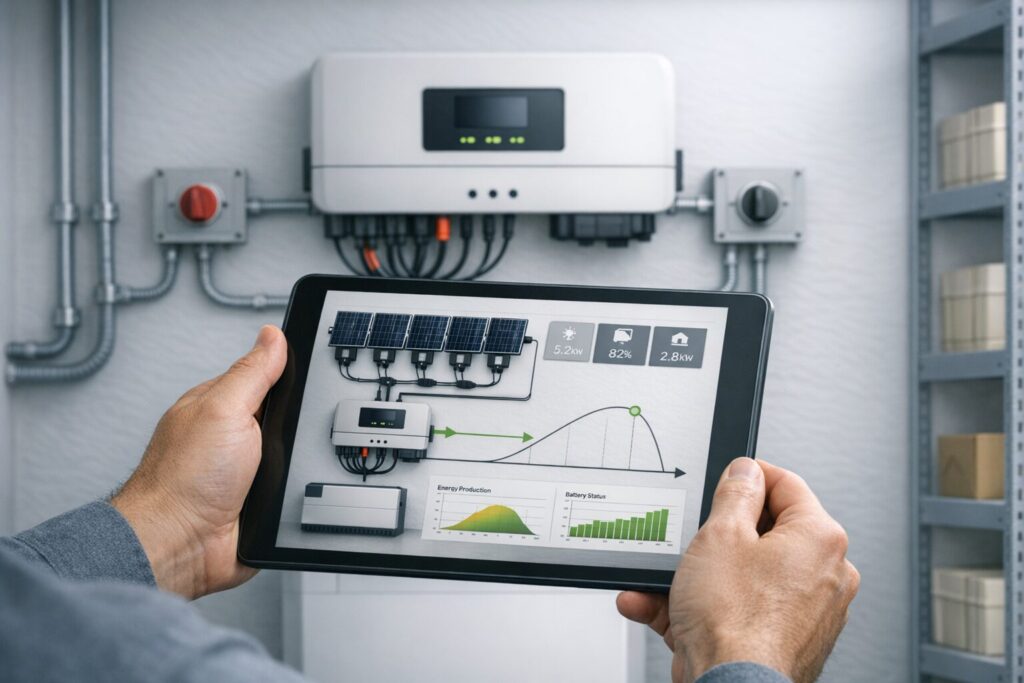
Modern inverters include advanced monitoring and communication features that allow homeowners, installers, and maintenance teams to track system performance in real time.
These systems provide visibility into energy production, fault conditions, and long‑term performance trends.
Effective monitoring is essential for ensuring the system operates at peak efficiency and for diagnosing issues quickly.
What Monitoring Systems Provide
Real‑Time Performance Data Live readings of power output, voltage, current, and inverter status.
Historical Analytics Daily, monthly, and annual production reports to track long‑term performance.
Fault and Alert Notifications Automatic warnings for grid issues, DC faults, temperature events, or shutdowns.
Per‑Panel Visibility Available in systems using microinverters or optimisers.
Communication Methods
Common in residential systems.
Easy setup
Remote access via mobile apps
Dependent on home network stability
Preferred for reliability.
Stable connection
Ideal for commercial installations
Supports high‑volume data transfer
Used when no internet connection is available.
Independent of home network
Small monthly data cost
Ideal for remote sites
Industrial communication standard.
Used for BMS, EMS, and commercial monitoring
Highly reliable
Supports long cable runs
Monitoring Platforms
Manufacturer Portals Provide detailed inverter‑specific analytics and firmware updates.
Third‑Party Platforms Offer cross‑brand monitoring, fleet management, and advanced reporting.
Home Energy Management Systems (HEMS) Integrate solar, battery, EV charging, and smart appliances.
Technical Notes
Many inverters support API access for custom integrations.
Firmware updates are often delivered remotely via Wi‑Fi or Ethernet.
Systems must comply with UK data security and privacy standards.
Installation Best Practices and Sizing Considerations
Core Installation Best Practices
Mounting Location
Install in a cool, dry, well‑ventilated area.
Avoid direct sunlight and confined spaces.
Maintain manufacturer‑specified clearance around heat sinks.
Cable Management
Keep DC cable runs short and tidy to reduce voltage drop.
Use UV‑resistant outdoor cabling where required.
Ensure AC and DC cables are separated to reduce interference.
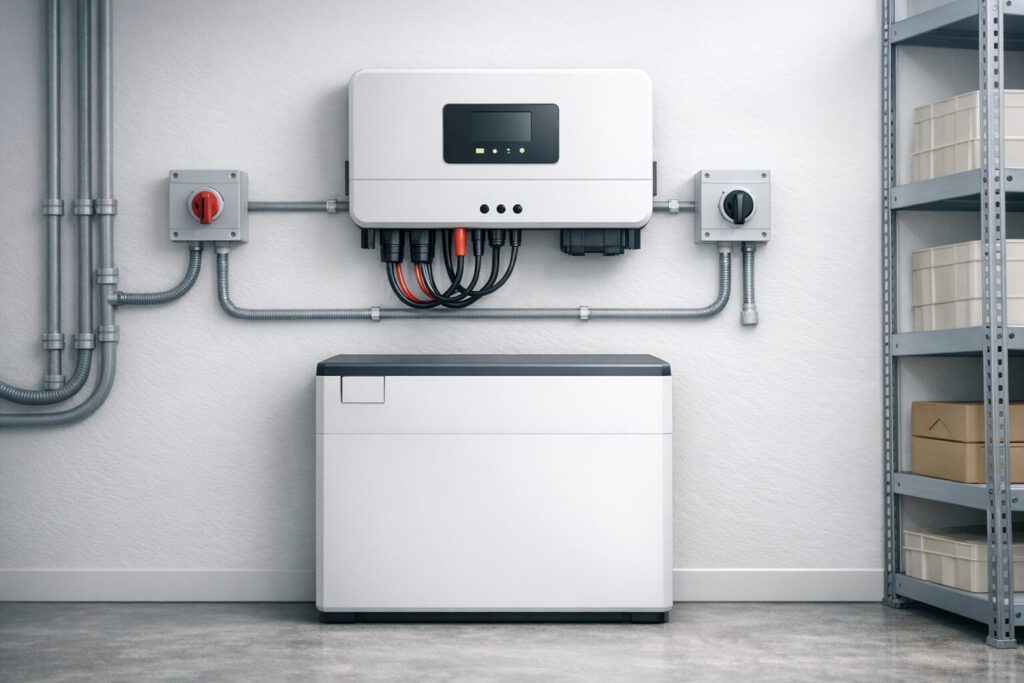
Safety Hardware
Fit AC and DC isolators adjacent to the inverter. Use surge protection devices where required by G99 or site conditions. Ensure correct earthing and bonding of all components.
Environmental Protection
Outdoor installations must meet IP65 or higher enclosure ratings.
Avoid mounting near corrosive environments (e.g., coastal spray) unless rated for it.
Sizing Considerations
Inverter to PV Ratio (DC/AC Ratio)
Typical UK residential systems use a ratio of 1.1 to 1.3.
Oversizing the PV array increases annual yield, especially in winter.
Avoid exceeding the inverter’s maximum DC input voltage.
Cable Management
Keep DC cable runs short and tidy to reduce voltage drop.
Use UV‑resistant outdoor cabling where required.
Ensure AC and DC cables are separated to reduce interference.
MPPT Tracker Allocation
Assign roof sections with different orientation or shading to separate MPPTs.
Keep string voltages within the MPPT operating window.
Battery Sizing (for Hybrid Systems)
Match battery capacity to household consumption patterns.
Typical UK homes pair 5–10 kWh storage with a 3.6–5 kW hybrid inverter.
Grid Export Limits
UK DNOs often restrict export to 3.68 kW per phase under G98.
Export‑limiting features must be enabled where required.
FAQ
Why does my inverter never reach its full kW rating? [Expand]
- Inverters require maximum DC input to reach full power.
- UK daylight levels and panel temperatures limit peak generation.
- String voltages vary constantly across different seasons.
- Select optimized hardware using our High Efficiency Solar Panels manual.
Why does my inverter turn off at night? [Expand]
- Inverters require active DC voltage to power internal chips.
- Panel voltage collapses completely when the sun goes down.
- The system automatically shuts down until daylight returns safely.
- Store your evening generation by choosing solar batteries.
Why does my inverter derate in summer? [Expand]
- High internal temperatures trigger automatic thermal power throttling.
- The device lowers output to protect internal electronics components.
- Poor loft ventilation makes this structural issue significantly worse.
- Review layout planning details in our Home power Options index.
How do I know if my PV array is correctly sized for the inverter? [Expand]
- Ensure your DC/AC sizing ratio sits between 1.1 and 1.3.
- Verify winter string voltage stays below maximum open-circuit limits.
- Keep overall operating voltage inside the specified MPPT window.
- Sizing rules change if installing Solar Systems Over 800W.
Can I mix different panel orientations on one inverter? [Expand]
- Yes, if utilizing a modern hybrid DC-coupled battery.
- No, if connecting to standalone AC-coupled storage options.
- Mixed panels must use separate, independent MPPT inputs.
- Check balance solutions via our simple Plug-In Solar Power guide.
Why is my inverter showing "offline" in the app but still producing power? [Expand]
- The core power generation system remains entirely unaffected here.
- However, the communication chip has lost its local network.
- Reset your home router to re-establish the data link.
Why does my inverter's generation graph look "saw-toothed"? [Expand]
- This shape indicates standard, healthy MPPT voltage hunting activity.
- The tracking program adjusts voltage steps multiple times weekly.
- This active management extracts peak electricity under passing clouds.
What is anti‑islanding and why is it mandatory? [Expand]
- Anti-islanding shuts down generation instantly during utility power drops.
- This protocol stops electricity backfeeding dangerously into local streets.
- It safely protects network engineers working on dead lines.
Why does my inverter trip when the grid voltage is high? [Expand]
- UK statutory grid limits cannot safely exceed 253V.
- Inverters must trip off instantly if local voltages spike.
- This issue stems from grid saturation, not hardware faults.
Do I need surge protection? [Expand]
- Surge shields remain mandatory across complex G99 power systems.
- They provide critical protection for installations using overhead lines.
- Inline protection clamps lightning spikes before hitting tracking chips.
Why is one string producing less than the other? [Expand]
- Common faults include direct panel shading or heavy dirt.
- Loose external MC4 wire terminals can cause major drops.
- Mismatched string lengths limit overall loop current output capacities.
What does "Isolation Fault" mean? [Expand]
- This error indicates structural current leakage to system ground.
- Moisture inside outdoor terminal blocks routinely triggers this fault.
- Damaged wiring shielding needs immediate professional installation site testing.
Why does my inverter restart during the day? [Expand]
- Sudden grid voltage transients force automatic circuit safety reboots.
- Loose internal AC links cause intermittent tracking system disconnects.
- Cabling drops below startup activation voltage parameters on cloudy days.
How often should an inverter be serviced? [Expand]
- Complete clean visual equipment tracking checks annually.
- Fan-cooled units require regular vent dust clearing treatments.
- Verify isolation terminal connectivity stays firm over time.
When should an inverter be replaced? [Expand]
- Standard string models deliver 10 to 15 years lifespan.
- Complex hybrid electronics degrade within 10 to 12 years.
- Plan replacements when internal storage capacitor logs trigger frequent errors.
- Explore dedicated off-grid options inside our Backup Power overview.
The Kettle Test
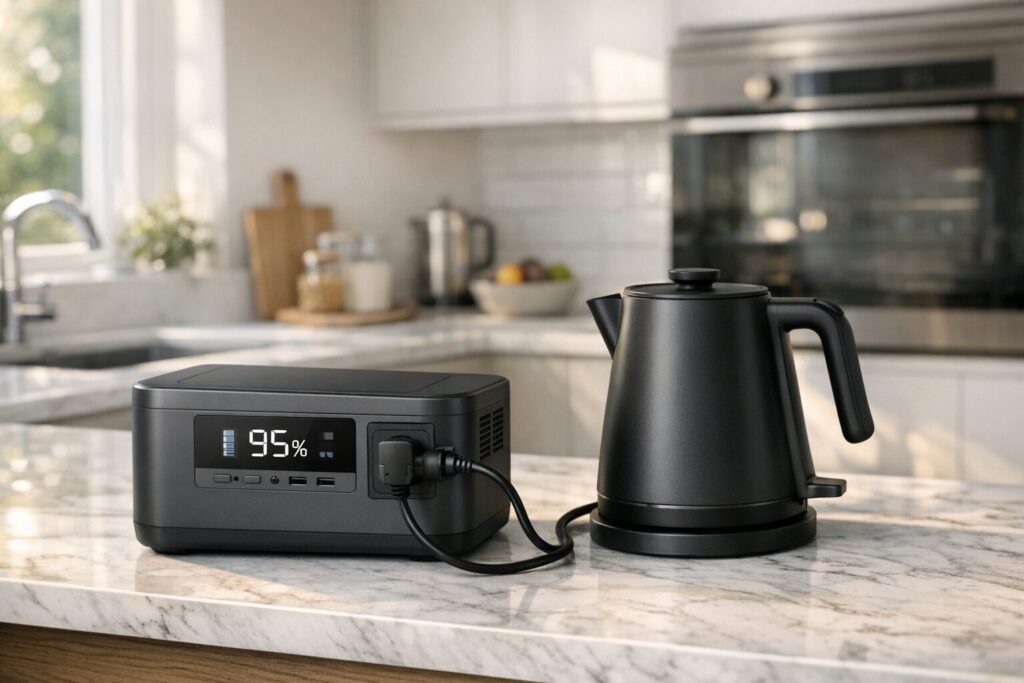
If your inverter is rated at 3kW or less, boiling water while other appliances are running may cause the system to .