Solar Systems Over 800W
The Performance Guide
Choosing a solar system over 800W marks the transition into serious home power generation.
Whether you are aiming for complete grid-independence with an off-grid system or seeking maximum ROI via a grid-tie setup, understanding real-world UK performance is vital.
A typical 1200W array in the UK will generate between 900kWh and 1,200kWh per year, providing enough energy to significantly offset standing charges and daily base loads.
Our guide compares verified hardware to help you build a resilient, high-yield energy powerhouse

| Feature | Off-Grid Systems | Grid-Tie Systems |
|---|---|---|
| Best For | Energy Security & Outbuildings | Maximum Bill Reduction (ROI) |
| Grid Status | Independent (No Standing Charges) | Connected (Earn via SEG) |
| Outage Power | Full Power During Blackouts | No Power (Safety Shut-off) |
| Battery Cost | Higher Upfront (£3k - £8k) | Lower (No Batteries Required) |
Top-Rated Solar Systems Over 800W
The Complete 1200W Hybrid Kit
“The ECO-WORTHY 1200W System is the best all-in-one solution for high-capacity generation. It includes 6 bifacial panels and a 3000W hybrid inverter, making it perfect for garden offices or workshops.
Selecting the best solar systems over 800W requires an understanding of module efficiency and inverter compatibility.
- High Efficiency:This 1200W system can generate 4.8kWh power per day under 4 hours' full sunshine, perfect for home, shed, cabin, farm or as other energy backup. They can also provide enough power for portable AC, air condition, TV, refrigerator, coffee maker, microwave and other devices
- Bifacial Solar Panels:195W Bifacial solar panels are designed with a transparent back of 12BB solar cells, the back panel uses composite materials, the light transmittance up to 91.5%, the conversion rate of 23%, the power generation is 897Wh per day under ideal conditions, compared to traditional solar panels, energy surge up to 15%
- Superb LiFePO4 Battery:2pcs 12V 100Ah lithium battery have high charging/discharging efficiency and more than 4000-15000 times deep cycles. They can last for a longer time (about 10 years) than lead acid batteries. Built-in BMS (battery management system) can also prevent the lithium batteries from getting damaged
- Solar Hybrid Inverter:Composed of a 3000W pure sine wave inverter and a 60A MPPT charge controller, it can not only provide the alternating current for many devices, but also prevent the appliances' life with mutiple protection
- Complete System Accessories:The 1200W complete solar power system includes 6pcs 195W bifacial solar panels, 1pc 3000W hybrid solar charge inverter, 2pcs 100Ah LiFePO4 Batteries, as well as the extension cables and mounting brackets needed
The ECO-WORTHY 1200W System is the definitive choice for homeowners seeking maximum generation and storage in one package. This system includes six high-yield bifacial panels and a 3000W hybrid inverter, making it one of the most robust solar systems over 800W currently available on Amazon. Because it includes LiFePO4 battery storage, it functions as a complete ‘Generate and Store’ solution, ideal for garden offices or workshops. Realistically, this setup generates between 876kWh and 1,168kWh per year in the UK, providing enough daily power to run major appliances while maintaining a silent, fume-free energy reservoir for emergency grid failures
The 1000W High-Efficiency Array (Panel-Only)
For custom builds, the Rvpozwer 1000W Kit offers 5 x 200W N-type monocrystalline panels with a 23% efficiency rating. Ideal for maximizing roof or garden space
- Maximising green energy output: With its top-tier conversion efficiency and the extended generation duration offered by N-type technology, this solar panel extracts more energy from every ray of sunlight. This means you can generate more electricity whilst reducing your carbon footprint, thereby making a greater contribution to the planet’s sustainability whilst significantly lowering your energy costs—truly a prime example of a win-win for both the environment and your wallet.
- A Commitment to Long-Lasting Reliability: The highest IP68 seal rating is not a gimmick; it represents our commitment to durability. The EVA encapsulation and sealed junction box together form an impeccable barrier against moisture, dust, and extreme temperatures, ensuring your green investment retains strong performance for years to come, providing you with long-term, stable clean energy
- Tailored for Global Climatic Conditions: Its robust, waterproof aluminium alloy frame is precision-engineered and tested to withstand extreme wind and snow pressures (5400Pa snow load / 2400Pa wind load). Whether you're in snow-laden mountains or wind-swept coasts, it will stand firm, ensuring your off-grid system operates reliably in any weather
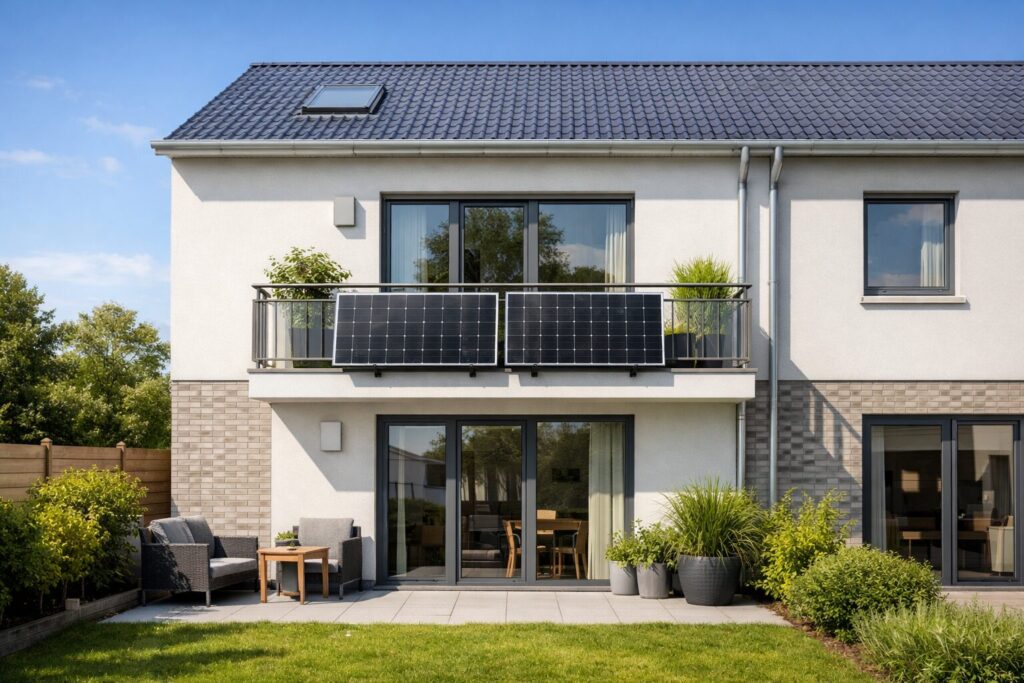
- Designed for DIY Installation by Anyone: We firmly believe green energy should be accessible. Therefore, we've equipped it with plug-and-play MC4 connectors and thoughtfully placed mounting holes, making the installation process intuitive and straightforward. You can easily install it on your van roof, balcony railing, or garden shed without needing to hire professionals, enjoying power generation instantly
- Begin Your Journey to Energy Independence: This module is the key to a self-sufficient lifestyle. It's perfectly suited for powering homes, cabins, boats, camping gear, and even power tools. Simply position it towards the sun and connect it to your system, and you can immediately utilise free solar energy, reducing reliance on the grid and moving towards a more autonomous, greener lifestyle
The Compact 800W Power Array
The Rvpozwer 800W Kit is a versatile 4-panel system using IP68 waterproof technology, designed for long-term residential or RV installations
- Maximising green energy output: With its top-tier conversion efficiency and the extended generation duration offered by N-type technology, this solar panel extracts more energy from every ray of sunlight. This means you can generate more electricity whilst reducing your carbon footprint, thereby making a greater contribution to the planet’s sustainability whilst significantly lowering your energy costs—truly a prime example of a win-win for both the environment and your wallet.
- A Commitment to Long-Lasting Reliability: The highest IP68 seal rating is not a gimmick; it represents our commitment to durability. The EVA encapsulation and sealed junction box together form an impeccable barrier against moisture, dust, and extreme temperatures, ensuring your green investment retains strong performance for years to come, providing you with long-term, stable clean energy.
- Tailored for Global Climatic Conditions: Its robust, waterproof aluminium alloy frame is precision-engineered and tested to withstand extreme wind and snow pressures (5400Pa snow load / 2400Pa wind load). Whether you're in snow-laden mountains or wind-swept coasts, it will stand firm, ensuring your off-grid system operates reliably in any weather.
- Designed for DIY Installation by Anyone: We firmly believe green energy should be accessible. Therefore, we've equipped it with plug-and-play MC4 connectors and thoughtfully placed mounting holes, making the installation process intuitive and straightforward. You can easily install it on your van roof, balcony railing, or garden shed without needing to hire professionals, enjoying power generation instantly.
- Begin Your Journey to Energy Independence: This module is the key to a self-sufficient lifestyle. It's perfectly suited for powering homes, cabins, boats, camping gear, and even power tools. Simply position it towards the sun and connect it to your system, and you can immediately utilise free solar energy, reducing reliance on the grid and moving towards a more autonomous, greener lifestyle.
Off-Grid Systems (Independence)
- Best For: Energy security, remote sheds, and avoiding standing charges (£220-£290/year savings).
- Pros: Total independence from grid failures; no export restrictions.
- Reality Check: Requires significant battery storage investment (£3k-£8k) and manual winter management.
Grid-Tie Systems (ROI)
- Best For: Maximum financial return and reducing standard household bills.
- Pros: Lower initial cost (no batteries needed); earn money via Smart Export Guarantee (SEG) payments.
- Reality Check: Does not provide power during a grid outage; requires professional MCS-certified installation and DNO approval.
| System Output | Typical Layout | Yearly Yield (Est) | UK Requirement |
|---|---|---|---|
| 800W Kit | 2 x 400W Panels | ~750 kWh | Hard-wired / G98 |
| 1000W System | 2 x 500W Panels | ~950 kWh | Hard-wired / G98 |
| 1200W+ System | 3 x 400W Panels | ~1150+ kWh | Hard-wired / G98 |
What Can a 1200W Solar System
Over 800W Actually Generate?
- Summer Performance: Expect 4-6 kWh per day. On sunny days, this often exceeds the storage capacity of standard 200Ah battery banks.
- Winter Performance: Expect 1-2 kWh per day. In the darkest months, a solar system over 800W will focus on maintaining your essential base loads like WiFi and fridges.
- Financial Payback: A 320W modular grid-tie unit can save roughly £100 per year, whereas a full 1200W system can cut bills by £400+ per year at current UK energy rates.
Mounting Versatility: Roof vs. Garden Ground-Mount
By law, any solar system over 800W must be hard-wired into your home’s electrical infrastructure by a qualified professional.
Ensure your setup complies with BS 7671 Wiring Regulations to maintain your home insurance and ensure grid safety.
For full technical standards, consult the Energy Saving Trust.
This transition from plug-in to permanent installation is a critical legal threshold designed to prevent overloading your domestic ring main. Failing to utilize a certified electrician for systems of this capacity not only poses a significant fire risk but also prevents your installation from being recognized by the District Network Operator (DNO).
Adhering to these professional standards is the only way to guarantee your energy security remains legally compliant and fully insured for the long term
Essential Safety Protocols for Solar Systems Over 800W
Operating high-capacity solar systems over 800W requires strict adherence to UK safety standards to protect your property from electrical fire and grid-side faults. While the components are designed for durability, the high current produced by these arrays demands professional installation and regular inspection. By prioritizing these essential safety protocols, you ensure your energy powerhouse remains a secure and reliable asset for your home
- Mandatory Hard-Wiring: By law, any solar system over 800W must be hard-wired into a dedicated circuit by a qualified electrician to prevent overloading your home’s existing ring main.
- DC Isolation: Ensure your system includes a dedicated DC isolator switch between the panels and the inverter, allowing you to safely cut power for maintenance or in emergencies.
- Anti-Islanding Protection: Your inverter must feature certified anti-islanding technology, ensuring the solar systems automatically shut down during a grid failure to protect utility workers.
- Load Balancing: Always verify that your home’s consumer unit and main fuse can handle the total continuous output of your solar system over 800W before final commissioning.
The Buying Guide
When Solar Stops Being “Small”
and Becomes a Real Home System
here’s a moment when solar stops behaving like a small add‑on and starts acting like a genuine part of how your home is powered. For most UK households, that moment arrives the second you step above 800 watts. Below that line, solar is still useful, perfect for balconies, sheds, and plug‑in kits, but it can only ever support the edges of your energy use.
Once you cross into the 800W+ range, everything changes. You’re no longer generating a trickle of power; you’re building a system that can run appliances, charge a battery, feed energy back to the grid, and genuinely shift how your home uses electricity. It’s the point where solar becomes a long‑term investment rather than a small experiment, a proper part of your home’s energy plan, not just a gadget on the side.
What a Full Solar System Actually Is
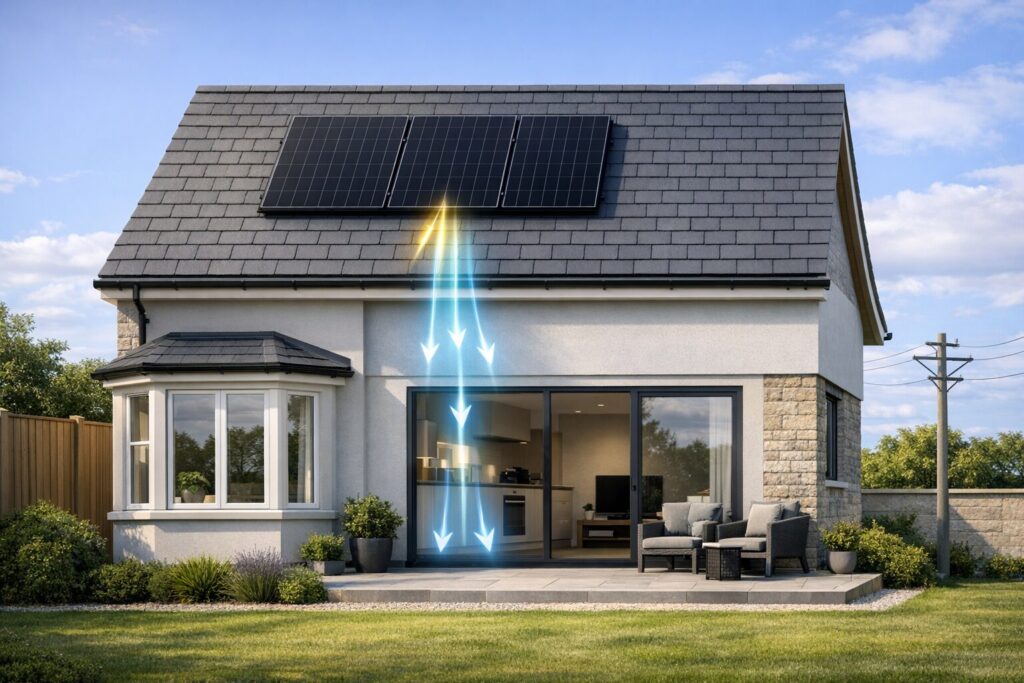
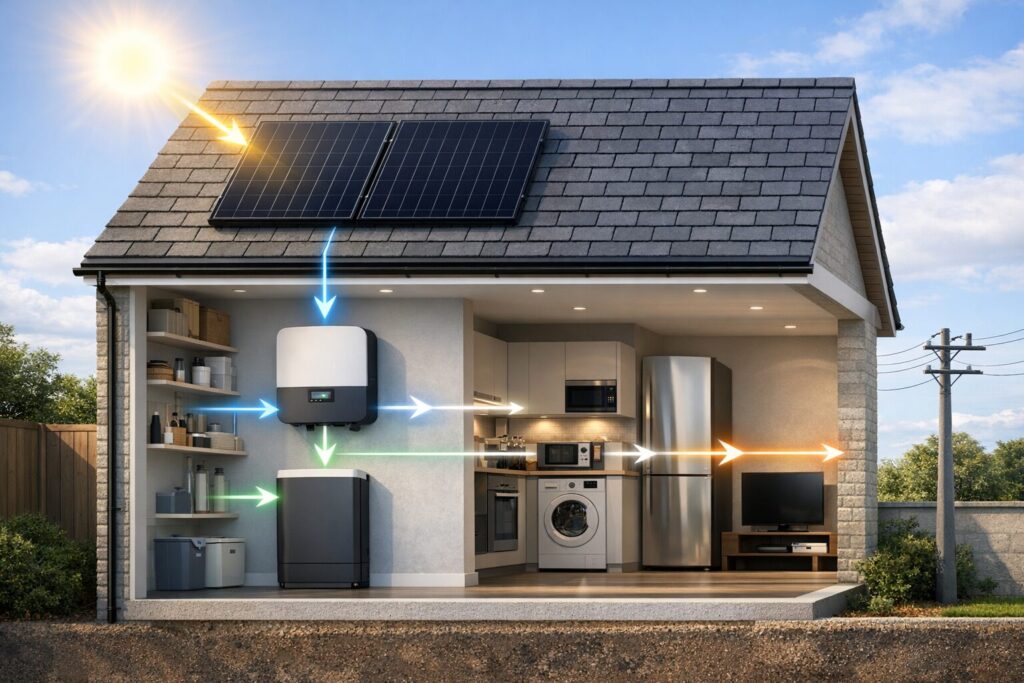
A full solar system is a coordinated setup where every component plays a role.
The panels on your roof generate electricity, but they’re only the beginning.
That power travels down into an inverter, which converts it into the type of electricity your home actually uses.
From there, it flows into your consumer unit, where it powers your appliances, charges your battery if you have one, and sends any surplus back to the grid.
It’s a quiet, automatic process, a small power station working in the background, day after day, without you needing to touch a thing.

Why the 800W Threshold Changes Everything

The UK treats anything under 800W as a micro‑system.
These are simple, flexible, and brilliant for renters or small spaces, but they come with limits. You can’t add a battery.
You can’t export to the grid. You don’t qualify for 0% VAT. And you won’t see a meaningful reduction in your annual electricity bill.
Once you step above 800W, you enter a different world.
You can build a system that powers real household loads, integrates with smart tariffs, stores energy for the evening, and qualifies for the same protections and incentives as any professionally installed solar array.
It’s the point where solar becomes a long‑term part of your home, not just a gadget.
How the Panels Fit Into the Bigger Picture
Every full system starts with panels, but this page doesn’t go deep into the technology.
That’s the job of your High‑Efficiency Solar Panels guide. What matters here is simple: the panels you choose determine how much power you can fit on your roof.
If your roof is small, shaded, or awkwardly shaped, high‑efficiency panels help you reach your target system size without compromise.
If you want to understand the differences between TOPCon, HJT, and Back‑Contact, or why some panels perform better in low light or look cleaner on the roof, the High‑Efficiency page is where you’ll find all of that.
Here, we stay focused on how the panels fit into the system as a whole.

The Inverter: The Part That Quietly Runs the Show
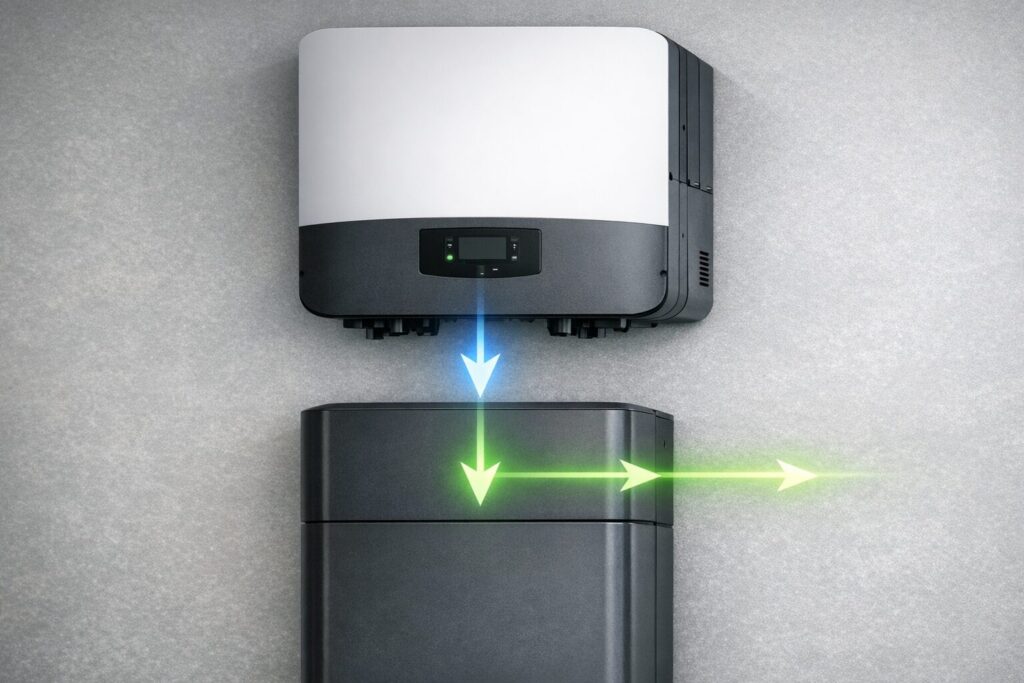
The inverter is the part most homeowners never think about, yet it’s the component that decides how your system behaves. It controls how energy flows, how your battery charges, how you export to the grid, and how your home prioritises power.
To make this easier to understand, here’s a simple comparison of the three inverter types:
Best for clear, unshaded roofs. One central unit manages all panels together.
Ideal if you want a battery now or later. Handles solar + storage in one device.
Perfect for shaded or complex roofs. Each panel works independently for maximum flexibility.
Adding a Battery: Turning Solar Into a 24‑Hour Power Source

The UK treats anything under 800W as a micro‑system.
These are simple, flexible, and brilliant for renters or small spaces, but they come with limits. You can’t add a battery.
You can’t export to the grid. You don’t qualify for 0% VAT. And you won’t see a meaningful reduction in your annual electricity bill.
Once you step above 800W, you enter a different world.
You can build a system that powers real household loads, integrates with smart tariffs, stores energy for the evening, and qualifies for the same protections and incentives as any professionally installed solar array.
It’s the point where solar becomes a long‑term part of your home, not just a gadget.
How to Choose the Right System Size for Your Home
System size isn’t about guessing, it’s about matching your roof, your usage, and your goals. To make this easier, here’s a simple chart that shows how different home types typically map to system sizes.
This isn’t a rulebook, it’s a starting point. Your installer will refine it based on your roof shape, shading, and how much of your bill you want to offset.
| Home Type | Typical System Size | Approx. Panel Count |
|---|---|---|
| Small terrace | 2.4–3.2 kW | 6–8 panels |
| Semi‑detached | 3.6–4.5 kW | 8–10 panels |
| Detached | 5–6 kW | 10–14 panels |
Designing Around Your Roof: Orientation, Layout, and Shading
No two roofs are the same, and that’s why system design matters. A south‑facing roof gives you the highest output. An east/west split gives you a longer, smoother generation curve across the day. A mixed layout can help you capture morning and evening sun. And if you have shading from chimneys or neighbouring buildings, your installer can design around it using optimisers or microinverters.
This isn’t about panel technology, it’s about how the system is arranged to suit your home.
What a System Like This Can Actually Save You
Solar savings vary from home to home, but most UK households see a noticeable reduction from day one. To give you a sense of scale, here’s a simple chart showing typical annual generation and savings for different system sizes.
These numbers depend on your tariff, your usage, and whether you add a battery, but they give you a realistic starting point.
| System Size | Annual Generation (kWh) | Typical Annual Savings |
|---|---|---|
| 3 kW | 2,700–3,300 kWh | £350–£550 |
| 4 kW | 3,400–4,200 kWh | £450–£700 |
| 6 kW | 5,000–6,200 kWh | £650–£1,000 |
Understanding Payback: The Realistic UK Picture
Payback isn’t a fixed number. It’s a range shaped by your system size, your tariff, your usage, and whether you have a battery. For some homes, payback arrives in six or seven years. For others, it’s closer to ten. What matters is that solar is one of the few home upgrades that pays you back over time — and keeps paying long after it’s paid for itself.
The Practical Side: VAT, DNO Approval, and Safety Compliance
A full solar system isn’t just panels and an inverter — it’s a regulated home energy upgrade. Once you step above 800W, the UK treats your system as part of the national electrical infrastructure, which means there are rules, protections, and approvals designed to keep everything safe, legal, and future‑proof. None of this is complicated for the homeowner, but it’s important to understand what happens behind the scenes.
Your installer handles almost all of it, but here’s what’s actually going on when a full system is installed.
0% VAT Eligibility
Full solar systems — including panels, inverters, batteries, and labour — qualify for 0% VAT when installed by an MCS‑certified professional. This is one of the biggest financial advantages over plug‑in solar, which is treated as a consumer product and taxed at 20%.
DNO Approval
Every full solar system must be registered with your local Distribution Network Operator.
G98 — for most domestic systems up to 3.68kW per phase.
G99 — for larger systems or anything exporting above the G98 limit.
Your installer submits the paperwork, diagrams, and test results. You don’t need to do anything — but it’s essential for export payments and legal compliance.
DNO approval is one of those things homeowners never see, but it’s a key part of installing a full solar system.
The process is simple: your installer designs the system, submits the DNO paperwork, and waits for either a same‑day G98 acknowledgement or a 2–6 week G99 approval depending on system size.
Once the system is installed, they send the final commissioning report back to the DNO, and that’s what officially enables export and completes the compliance side. You don’t have to do anything — it all happens in the background — but it’s the step that makes your system legal, safe, and eligible for export payments.
Safety & Installation Standards
A full system must meet strict UK electrical and fire‑safety standards. This includes:
Correct DC isolators and AC isolators
Proper cable sizing and fire‑safe routing
Secure roof mounting with wind‑load calculations
RCD/RCBO protection at the consumer unit
Safe battery placement with ventilation and clearance
These aren’t “nice to haves” — they’re what make a full system safe, insurable, and long‑lasting.
MCS Certification
Once the system is commissioned, your installer issues an MCS certificate. This is your proof that the system:
meets UK standards,
is eligible for export tariffs,
and is recognised by insurers and mortgage lenders.
Without MCS, a system is essentially “off the books.”
Why This Section Matters
This is the point where homeowners realise that full solar isn’t just bigger — it’s properly integrated into the home and the grid. It’s safe, certified, and protected. It qualifies for incentives. And it’s designed to last decades, not years.
Plug‑in solar is brilliant for small spaces, but once you cross the 800W line, you’re entering a world where the system becomes part of your home’s infrastructure — and that comes with real benefits.
Warranties and Lifespan: How Long Each Part Really Lasts
Solar systems are long‑term investments, and each component has its own lifespan. To keep this clear and easy to digest, here’s a short list that breaks down the typical longevity of each part.
25–30 years of service, with slow, predictable degradation.
Usually replaced once in that time, often after 10–12 years.
Around 10 years of reliable performance before capacity begins to taper.
A good installer will walk you through each component’s warranty so you know exactly what’s covered and for how long.
Export Tariffs and How Your System Gets Paid
| Tariff Type | Typical Rate | What It Means |
|---|---|---|
| Fixed‑rate SEG | 3–7p/kWh | A simple, predictable payment for every exported unit. |
| Variable SEG | 5–15p/kWh | Rates change with market conditions; higher potential earnings. |
| Smart/Agile Export | 0–30p/kWh | Prices vary hourly; best for homes with batteries and smart controls. |
Once your system is live, you can sign up for a Smart Export Guarantee (SEG) tariff. This pays you for any energy you send back to the grid. To make this easy to compare, here’s a simple chart showing the types of export tariffs and what they mean.
Future‑Proofing Your System for the Next 20 Years
A good solar system isn’t just for today — it’s for the next 20–30 years. That’s why many homeowners choose to oversize their inverter, leave space for more panels, or plan for a battery later. Solar integrates beautifully with EV chargers, heat pumps, and smart tariffs, and a well‑designed system can grow with your home as your needs change.
Where This Page Fits in Your Solar Journey
This page is the “big picture” guide. It helps you understand what a full solar system is, how it works, and what decisions matter. If you want to dive deeper into the technology behind the panels themselves — efficiency, shading behaviour, temperature performance, and the differences between TOPCon, HJT, and Back‑Contact — that’s exactly what the High‑Efficiency Solar Panels page is for.
FAQ
What is the main difference between an off-grid and grid-tie system over 800W? [Expand]
- Grid-tie setups offer maximum financial return via energy bills.
- They lower initial cost because no heavy storage is required.
- Off-grid configurations provide independent power security during utility blackouts.
- However, they require higher upfront costs for deep-cycle energy storage.
- Study the hardware differences using our Solar Inverters manual.
Why is professional hard-wiring mandatory for systems over 800W? [Expand]
- High-current domestic systems will quickly overload standard ring mains.
- BS 7671 wiring regulations require a dedicated consumer unit connection.
- This transition to permanent installation ensures full property insurance validity.
- It completely eliminates severe fire risks from loose wall adapters.
- Keep your localized grid tracking safe via your central category dashboard.
What is the difference between G98 and G99 DNO approval? [Expand]
- G98 covers standard domestic installations up to 3.68kW phase limits.
- This application route uses a simple post-install notification process.
- G99 applies to higher capacity outputs or customized export tracking.
- It requires advanced utility permission prior to starting physical installation.
- Failure to register grid connections risks severe compliance asset penalties.
How do solar systems over 800W qualify for 0% VAT? [Expand]
- The 0% VAT incentive applies exclusively to professional installations.
- Materials and labor must be completed by MCS-certified contractors.
- Over-the-counter DIY kits carry the standard 20% tax rate.
- Government rules classify separate component purchases as consumer products.
- Ensure code compliance by adding dedicated hardware safety protective devices.
Why can't a grid-tie system provide backup power during a blackout? [Expand]
- Grid-tied inverters feature built-in, mandatory anti-islanding safety shutdown systems.
- This structural cutoff instantly stops electricity feeding back into streets.
- It protects utility engineers working on damaged regional grid lines.
- Safe emergency backup requires isolated, dedicated battery storage instead.
- Review the baseline isolation architecture in our Solar Inverters guide.
What are the typical annual financial savings for a 4kW system? [Expand]
- A standard 4kW UK system saves roughly £450 to £700 annually.
- Return velocity accelerates when shifting high-drain appliance tasks to daytime.
- You can further boost yield by selecting High Efficiency Solar Panels.
- Connect all external strings safely using industry-standard solar transmission links.
What does an MCS certificate prove for a large system? [Expand]
- The certificate provides legal proof that installation matches safety standards.
- It is mandatory for unlocking Smart Export Guarantee payments.
- Mortgage lenders and home insurers require this documentation for properties.
- Uncertified installations remain entirely off the official national grid registry.
How long does a hybrid inverter typically last compared to panels? [Expand]
- Modern hybrid inverters offer reliable service for 10 to 12 years.
- Solid-state internal switching electronics naturally degrade faster than panel cells.
- Expect to change the central inverter unit once during system lifespans.
- Meanwhile, premium rooftop photovoltaic panel frames easily surpass 25-year landmarks.
Can I add a battery to my system at a later date? [Expand]
- Yes, but your system must use an adaptable hybrid inverter.
- Standard string inverters require an expensive secondary AC-coupled storage unit.
- Hybrid hardware manages both incoming panel lines and energy cells simultaneously.
- Safely map your future storage paths with our solar batteries manual.
What is a Smart/Agile Export tariff and how does it pay? [Expand]
- Agile export tariffs pay variable rates that change every hour.
- Earnings peak when discharging power during high-demand grid windows.
- Maximizing this return requires combining smart controls with battery storage.
- This setup helps you sell stored energy at premium evening prices.