
Portable Power Stations:
What Are They Actually Good For at Home?
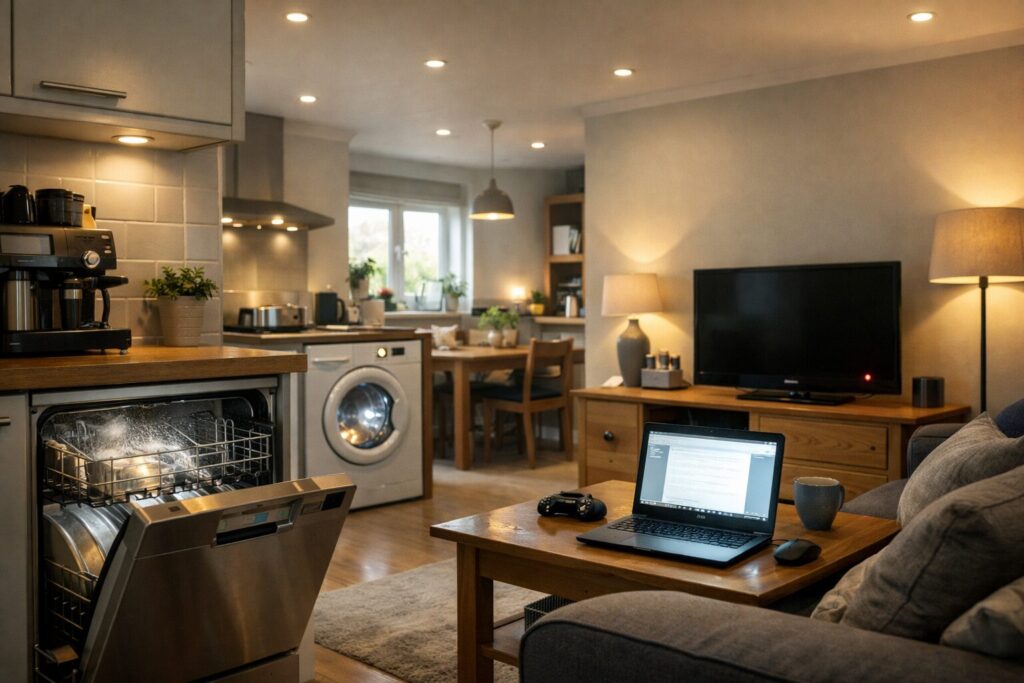
Portable power stations are everywhere online at the moment. Manufacturers promise they can run your entire life during a power cut or wipe out your monthly utility bills. But if you dig past the marketing hype, the real-world reality of using these rechargeable battery packs inside a UK home is very different.
If you plug a heavy appliance like a washing machine or an electric oven into a portable battery, you will flatten the cells in minutes or trip the system out entirely. However, if you know how to leverage their strengths, these units become phenomenal tools.
This guide cuts through the noise to show you exactly what a household portable battery is good for. We break down the honest truth about daily peak-rate bill savings, long-term food security, and how these units act as a vital emergency lifesaver for at-home medical and mobility equipment.
📖 Quick Navigation Menu: What's Inside This Guide Click to Open
- 1. High-Wattage Short Bursts to Save on Bills
- 2. Medical & Care at Home Mobility Lifelines
- 3. The Math of Financial & Carbon Payback
- 4. Critical Safety Checklist & Disclaimers
- 5. Heavy Appliances That Flatten Batteries
- 6. 8-Step Fridge & Freezer Preservation Plan
- 7. Matching the Right Battery Size to Your Home
- 8. Frequently Asked Questions Hub
What They Are GOOD For:
High-Wattage Short Bursts to Save on Bills
To make a portable power station pay for itself, you have to target high-energy appliances that only run for a few minutes at a time. This is called smart peak-shaving.
By charging your battery from a standard wall socket overnight on a cheap off-peak smart tariff, you store electricity at a fraction of the price. During the expensive daytime peak hours, you plug your short-burst kitchen appliances directly into the battery instead of the wall. Because a kettle or microwave draws huge power but only runs for minutes, it takes a tiny fraction of your battery capacity while completely wiping out your most expensive peak-rate electricity spikes.
| Kitchen Appliance | Average Power Draw | Typical Runtime | Why It Saves Money Every Day |
|---|---|---|---|
| Rapid Boil Domestic Kettle | 2,500W to 3,000W | 3 Minutes | Massive power spike completely offset by cheap stored energy |
| Solo Countertop Microwave | 800W to 1,200W | 5 Minutes | Heats food fast without registering on your main electricity meter |
| Two-Slice Kitchen Toaster | 900W to 1,500W | 2 Minutes | Short heating element burst uses negligible battery capacity |
Medical & Care at Home:
Keeping Lifeline Mobility Equipment Alive
While kitchen swaps save pennies on your bills, the most profound thing a household portable battery can do is provide absolute safety for at-home medical care. During an unexpected power cut, losing power to vital health or mobility equipment creates an immediate emergency.
Unlike loud, fumes-producing petrol generators, portable power stations are completely clean and near-silent, making them perfectly safe to run directly inside a bedroom or living space. Devices like adjustable beds, CPAP machines, and stairlift bases pull remarkably low continuous wattage, allowing a mid-sized 1,000Wh battery bank to keep critical independence and comfort systems running smoothly for hours or even days.
| At-Home Care Equipment | Average Continuous Draw | Estimated Runtime (1kWh Battery) | Blackout Emergency Lifeline |
|---|---|---|---|
| Standard Sleep CPAP Machine | 40W to 60W | 16 to 20 Hours | Guarantees multiple nights of uninterrupted breathing therapy |
| Electric Profile Hospital Bed | 150W (Only when active) | Multiple Days | Maintains critical position adjustments and patient transfers |
| Motorised Domestic Stairlift Base | 20W (On standby charge) | 2 to 3 Days | Trickle-charges internal lift batteries so mobility is never lost |
The Math of Payback:
How Long for an Off-Peak Battery to Pay for Itself?
If you are investing in a household portable power station, you need to look at the return on investment through a wider lens than just daily pennies saved on your utility bills. Shifting your short-burst kitchen appliances to an off-peak battery tariff works brilliantly, but the true value of this hardware lies in a triple-benefit return: financial savings, environmental carbon reduction, and priceless emergency preparedness.
The financial calculation comes down to the price gap between your daytime rate and your overnight off-peak rate. By charging a standard 1,000Wh (1kWh) battery for roughly £600 during a cheap overnight window, you save around 20p per day. However, overnight grid electricity isn’t just cheaper; it is also significantly greener.
Overnight power in the UK is heavily supplied by excess wind and nuclear energy, meaning you are storing low-carbon electricity to displace dirty, fossil-fuel-heavy gas power during peak daytime hours. When you layer this with the absolute security of knowing your home is fully prepared for an unexpected winter blackout, the investment moves from a simple budgeting trick to a vital household asset.
| Household Strategy | Daily Financial Savings | Environmental & Green Impact | Emergency Readiness Return |
|---|---|---|---|
| Smart Off-Peak Night Charging | Saves ~20p per daily cycle (£73 annually) | Utilises clean, overnight wind and nuclear grid baseloads | Guarantees a fully charged 1kWh backup bank every morning |
| Hybrid (Off-Peak + Balcony Solar) | Saves 20p to 30p per day (£90+ annually) | Zero-carbon local generation; directly reduces household footprint | Provides indefinite, off-grid energy generation during long outages |
Evaluating a 7-to-10-year financial payback timeline fits perfectly within the technology limits of modern hardware. Because these premium units utilize Lithium Iron Phosphate (LiFePO4) cell chemistry, they are rated to survive over 3,000 to 4,000 complete charge cycles before dropping in health. This means your battery will comfortably last for 10 to 15 years of daily household use, paying for itself cleanly and leaving you with several years of pure, green household energy profit.
But financial metrics cannot measure the value of safety. The true return on investment happens the exact second a major winter power cut hits. While the rest of your street plunges into darkness, your household remains completely resilient. Your Wi-Fi routers stay online, your medical care gear functions seamlessly, and your food stocks remain perfectly safe. It is an investment that slashes your carbon footprint, chips away at your utility bills daily, and acts as the ultimate home insurance policy when the grid fails.
Critical Safety Checklist:
Manufacturer Guidelines & Medical Disclaimers
Important Safety Notice: Portable power stations are consumer-grade backup devices. They are not certified medical-grade backup power systems.
If you or a family member rely on life-supporting or highly critical medical hardware, you must never depend solely on a portable consumer battery. Always maintain a certified alternative emergency plan with your healthcare provider and ensure your local network operator has placed your home on the Priority Services Register.
Before plugging any care or medical equipment into a portable power station, you must thoroughly audit your device manuals against the hardware specifications.
Use the checklist below to verify compatibility safely.
1. Verify a Pure Sine Wave Inverter Output
2. Check Motor Startup Surge Wattage (Peak Power)
3. Factor In the 20% Inverter Efficiency Loss
4. Test the Internal UPS Transfer Switch Delay
5. Call Your Equipment Manufacturer Directly
6. Review Medical Warranty and Liability Rules
7. Conduct a Supervised Live Test Run
What They Are BAD For:
The Heavy Household Appliances That Will Flatten Your Battery
This is where the marketing hype falls flat. Portable power stations are completely unsuited for appliances that create sustained heat or drive powerful internal water pumps over long periods.
Appliances like electric ovens, dishwashers, and washing machines require an immense amount of continuous energy to heat up volumes of water or air. Trying to run a full 90-minute laundry cycle or cooking a Sunday roast on a standard 1kWh portable battery will either trip the system’s safety overload switch instantly or drain the entire battery from 100% to empty in minutes. For these heavy domestic jobs, you must rely on your standard mains grid connection.
| Heavy Household Appliance | Average Power Draw | Real-World Battery Performance | The Honest Verdict |
|---|---|---|---|
| Built-In Electric Oven | 2,500W to 3,000W | Will empty a 1kWh battery in under 20 minutes | Completely unviable; exceeds continuous output thresholds |
| Full-Size Washing Machine | 2,000W to 2,400W (Heating element spike) | Drains a 1kWh battery to zero in exactly 1 wash cycle | Poor return on energy; avoid running laundry off portable cells |
| Standard Kitchen Dishwasher | 1,800W to 2,200W | Flattens the entire storage bank before the drying cycle starts | Sustained heating cycles render this completely impractical |
The Blackout Strategy:
How to Run a Fridge-Freezer for Days on a 1kWh Battery
Food security is a primary concern during a prolonged winter blackout. Fortunately, keeping your groceries fresh is where a 1,000Wh portable battery shines, provided you do not leave it plugged in continuously.
Cooling appliances do not draw power constantly; their internal compressors simply cycle on and off to maintain a target temperature. While leaving a large fridge-freezer plugged in continuously will empty a standard battery in under 10 hours, you can exploit food safety windows to stretch your backup power across multiple days using a clever intermittent power pulsing strategy.
Step 1: Understand the Unpowered Refrigerator Window
Step 2: Understand the Unpowered Deep Freezer Window
Step 3: Deploy the Refrigerator Pull-Down Pulse
Step 4: Deploy the Deep Freezer Pull-Down Pulse
Step 5: Monitor the Critical Fridge 8°C Safety Limit
Step 6: Monitor the Critical Freezer Thawing Limits
Step 7: Prioritise High-Risk Perishable Consumption
Step 8: Use Extreme Caution for Vulnerable Individuals
Picking Your Size:
Matching the Right Battery to Your Real-World Appliances
| Battery Size Class | Capacity Range | What It Safely Powers | The Ideal Home Use Case |
|---|---|---|---|
| Compact / Entry-Level | 200Wh to 500Wh | Laptops, smartphones, Wi-Fi routers, and LED lights | Home office emergency backup during brief power cuts |
| Mid-Sized (The Sweet Spot) | 1,000Wh to 1,500Wh | Kettles, microwaves, fridges, stairlifts, and CPAP machines | Daily peak-shaving bill savings and prolonged care device backup |
| Large / Whole-Home Expansions | 2,000Wh+ | Full-size fridge-freezers continuously, power tools, and medical sumps | Multi-day emergency household security and heavy appliance backup |
Portable power stations are generally categorized by their storage capacity, which is measured in Watt-hours (Wh). Choosing the wrong size leads to immediate frustration—either you buy an expensive, heavy unit that you do not fully utilize, or you purchase a compact model that trips out the moment you try to boil a kettle.
To map out your investment perfectly, evaluate how your household electronics align with the three standard market size categories below.
FAQ
Frequently Asked Questions: Home Appliance Runtimes & Rules
Have technical questions about UK domestic power limits or managing household billing spikes? Expand the toggles below for quick, direct answers.
1. Can a portable battery run a standard UK electric shower?
2. Can I use these batteries to power my gas boiler or central heating pumps?
3. Will leaving a power station plugged into a UK wall socket constantly degrade the battery?
4. Are portable power stations noisy when running heavy appliances indoors?
5. Do portable batteries work properly if stored in an outdoor garden shed over winter?
Explore Our Power Guides
📅 Last updated: