Inverter Generators —
Power Independence for UK Homes
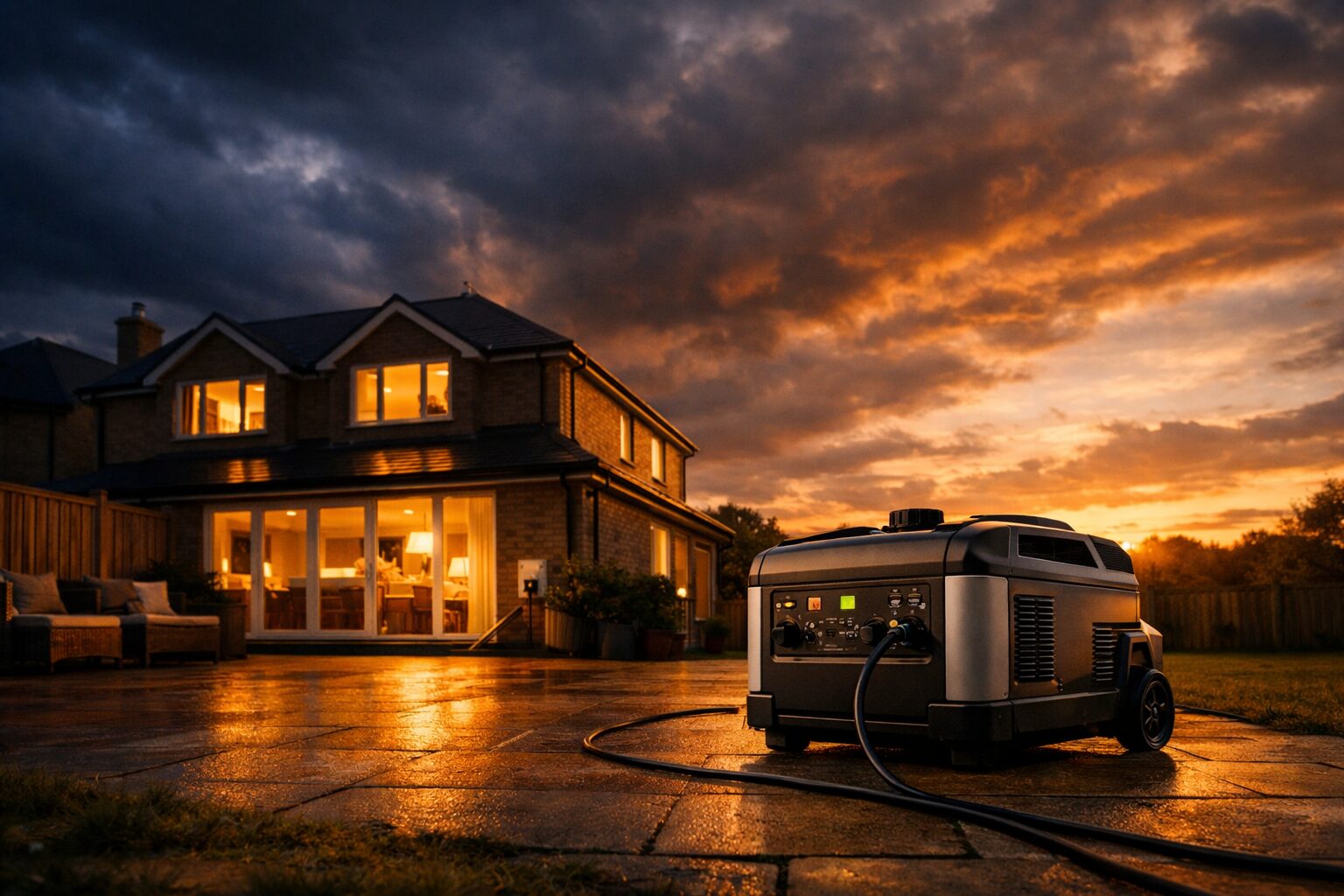
Quiet. Clean. Safe for sensitive electronics. When the grid goes down, an inverter generator keeps your home running without the noise, fumes or hassle of traditional backup power.
Browse All Generators ↓ On This Page 15 sections
How Inverter Generators Work
A standard portable generator runs at a fixed 3,000rpm regardless of load — noisy, fuel-hungry and producing dirty power with high harmonic distortion. An inverter generator works differently.
The engine drives a compact digital alternator that generates high-frequency AC current. This is immediately converted to DC by an internal processor, then inverted back to smooth, stable 230V AC — perfectly replicating the quality of the National Grid.
Crucially, the engine speed varies automatically with demand. Light loads mean slower running — quieter, more economical, longer on a tank of fuel.
Which Size Generator Do You Need?
| Capacity | Best For | Portability | Runtime | Noise |
|---|---|---|---|---|
| Up to 2,000W | Camping, laptops, WiFi, LED lighting, phone charging | 12–22kg — one person | 8–14 hours | 52–62dB ✅ |
| 2,000W–4,000W | Fridge, microwave, boiler, home office | 18–36kg — wheels help | 8–14 hours | 58–72dB ⚠️ |
| 4,000W+ | Whole-home backup, kettle, workshops | 39–105kg — two person | 8–12 hours | 62–72dB ⚠️ |
Starting Watts vs Running Watts — The Critical Difference
Appliances with electric motors — fridges, freezers, boiler pumps — need a large surge of power to start, then settle to a much lower running wattage. A generator that can't meet the surge will trip. Always size against starting watts, not running watts.
| Appliance | Running Watts | Starting Watts | Notes |
|---|---|---|---|
| Fridge-Freezer | 150–300W | 800–1,200W | Most common trip cause |
| Gas Boiler | 80–150W | 300–500W | Low draw once running |
| WiFi Router | 10–25W | 10–25W | Resistive — no surge |
| Microwave | 800–1,200W | 1,000–1,500W | Allow headroom |
| Laptop / Desktop | 200–400W | 200–400W | Resistive — sensitive to dirty power |
| Kettle | 2,000–3,000W | 2,000–3,000W | No surge but very high continuous draw |
Noise Levels — Suburban UK Compliance
Noise is measured at 7 metres. The Control of Pollution Act allows environmental health officers to issue abatement notices for unreasonable noise. Know your decibel level before you buy.
| Noise Level | Real-World Equivalent | Suburban Rule | Rating |
|---|---|---|---|
| 52–58dB | Quiet conversation, fridge hum | Safe at close boundaries | ✅ |
| 59–64dB | Office background, light rain | 7 metre buffer recommended | ⚠️ |
| 65–72dB | Restaurant, vacuum cleaner | Risk of complaints overnight | ⚠️ |
| 72dB+ | Heavy traffic, machinery | Not suitable for residential overnight | ❌ |
Petrol, Dual Fuel and Fuel Storage
⚠️ Critical Safety Rules
The Brands Behind the Machines
Brand matters less than spec — but warranty support, parts availability and UK customer service matter when something goes wrong at 2am during a power cut.
Essential Maintenance
A backup generator that fails when you need it is worse than no generator at all. Because these units sit idle for months, active maintenance is essential.
Integrating with Solar Battery Storage
The smartest use of an inverter generator is not running it continuously — it is using it to top up a solar battery bank during extended winter blackouts when solar input is insufficient. Run for 2–3 hours to fast-charge the battery, then switch off. The battery handles the base load silently.
☠️ Carbon Monoxide — The Silent Killer
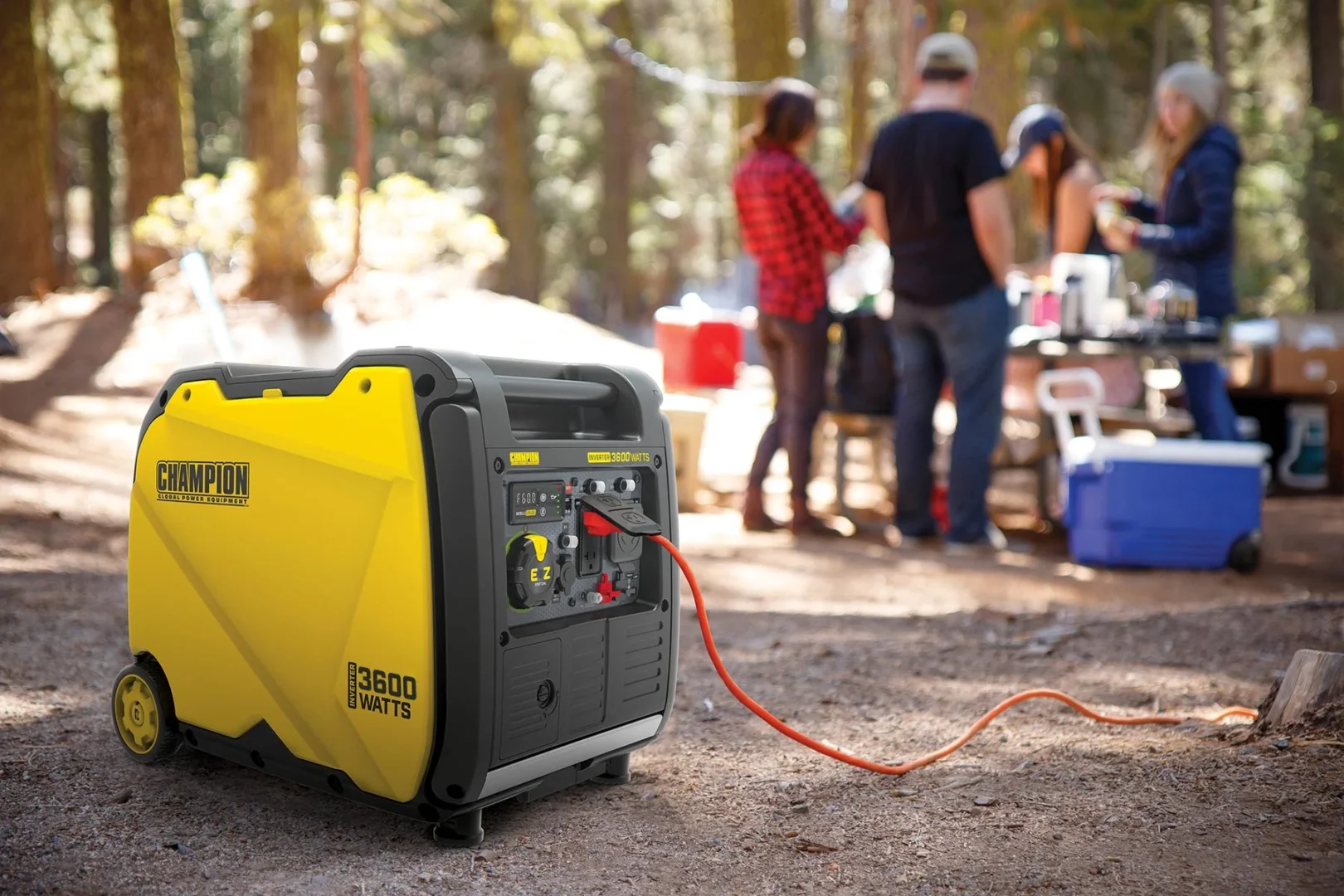
Carbon monoxide (CO) is an odourless, colourless gas produced by every petrol engine. You cannot smell it, see it or taste it. It kills within minutes at high concentrations. In the UK, carbon monoxide poisoning from portable generators causes deaths every year — in garages, sheds, conservatories and homes where owners thought they had enough ventilation.
They did not. There is no safe level of generator operation inside any enclosed space.
⚠️ Critical Safety Rules
Pure Sine Wave — Why It Matters for Your Devices
Every generator on this page produces pure sine wave output with Total Harmonic Distortion (THD) under 3%. This is not a marketing claim — it is a safety specification that protects your equipment.
Wet Weather, Extension Leads and Earthing

Up to 2,000W — Compact, Quiet, Portable
Six models from £129 to £499. All under 24kg. All pure sine wave. Quiet enough for a suburban garden.
Camping & Light Use — Up to 2,000W
Compact, quiet and portable. Ideal for camping, caravans, van life and keeping essentials running during a short outage. All units under 24kg — single person carry.
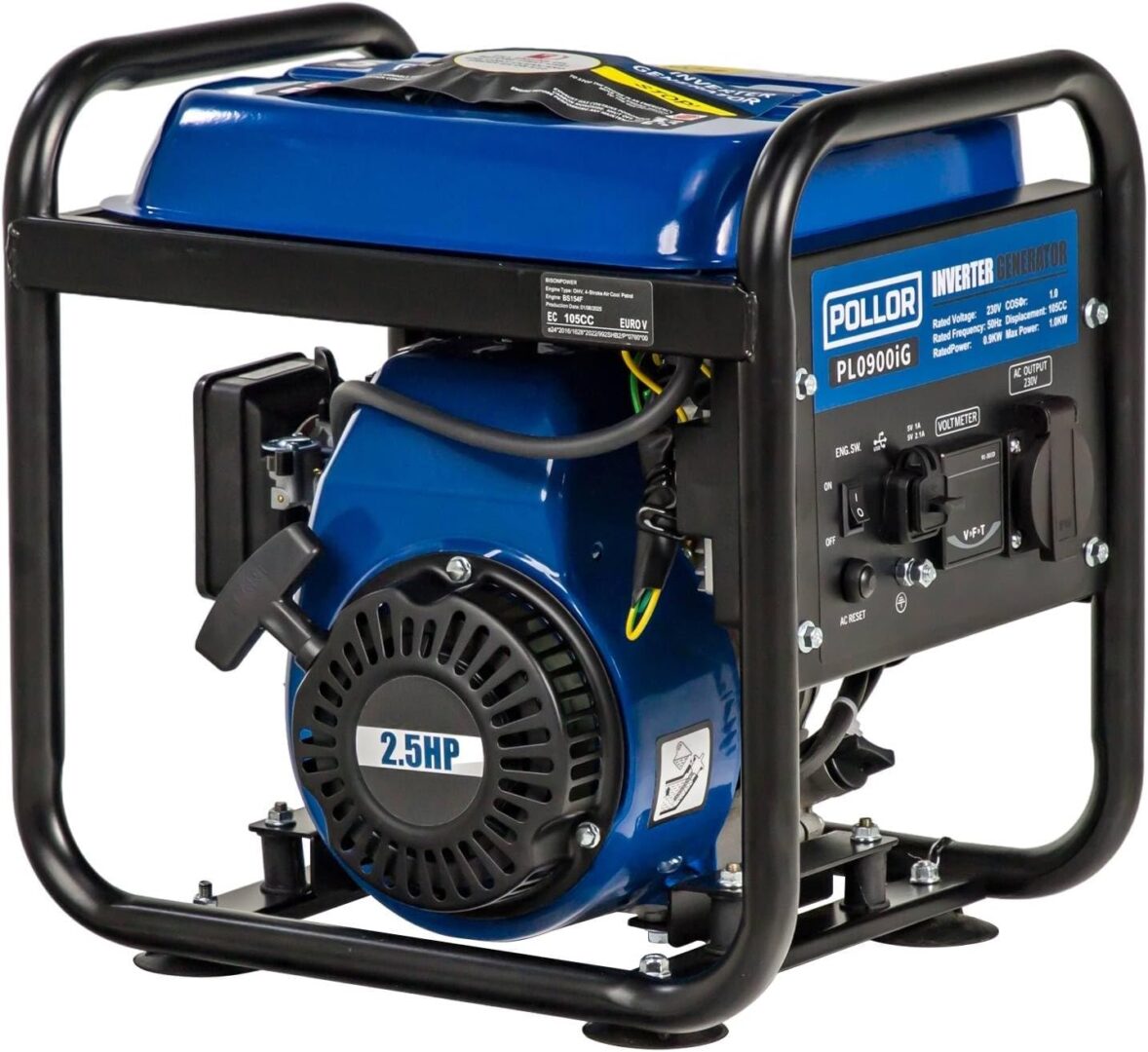
900W Compact Camping Generator
The most affordable entry point. 900W handles laptops, phones, lights and a small TV. Pure sine wave output safe for sensitive electronics. Best for remote locations where noise is not a concern.
1200W Ultra Quiet Suitcase Generator
Only 12kg and 58dB — genuinely easy to carry and quiet enough for a suburban garden. 10-hour runtime on a 2.5L tank at 50% load. The best entry-level quiet generator in the range.
2kW Portable Inverter Generator
UK brand with a 2-year warranty most competitors don't match. The quietest unit at this power level on the page at 56dB. Good UK-based after-sales support when you need parts or service.
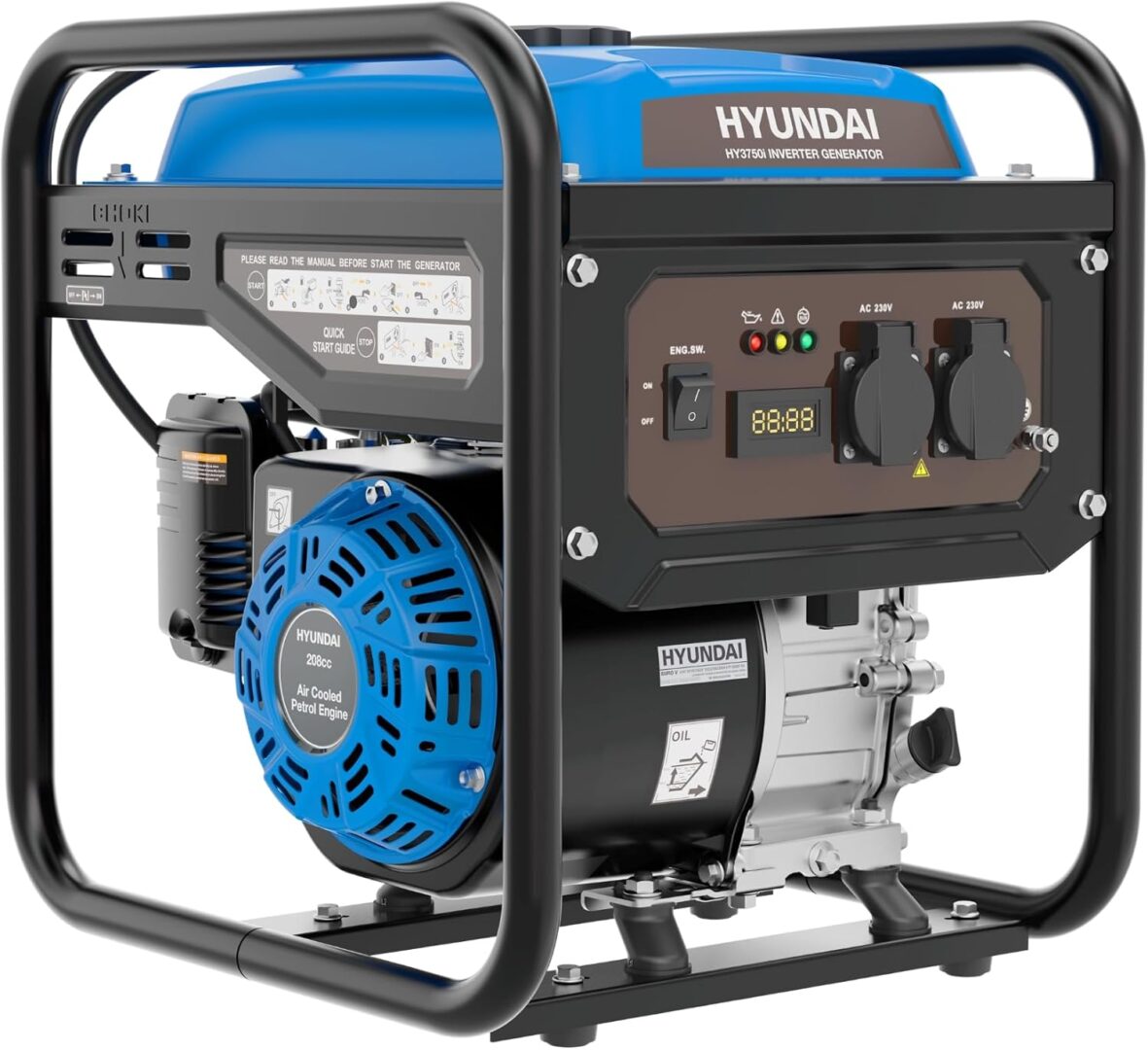
2.0kW Petrol Inverter Generator
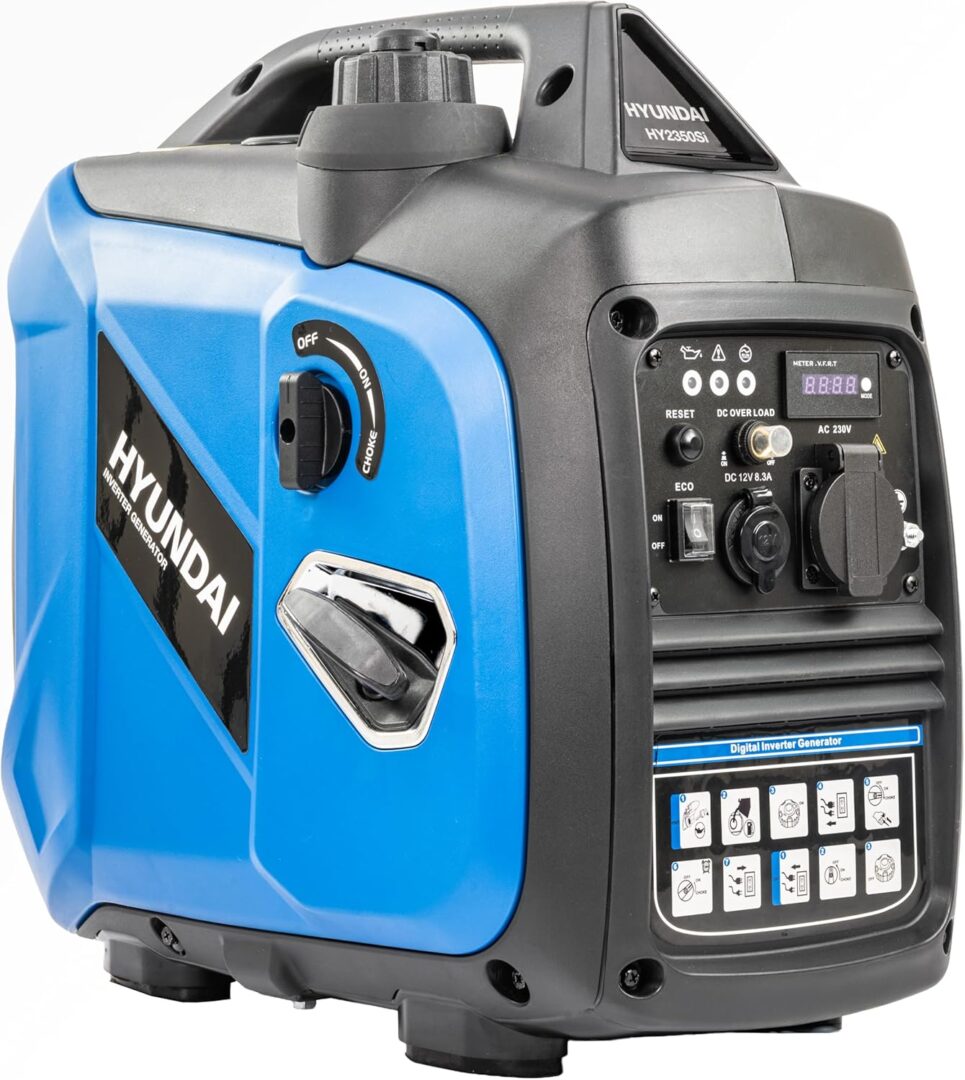
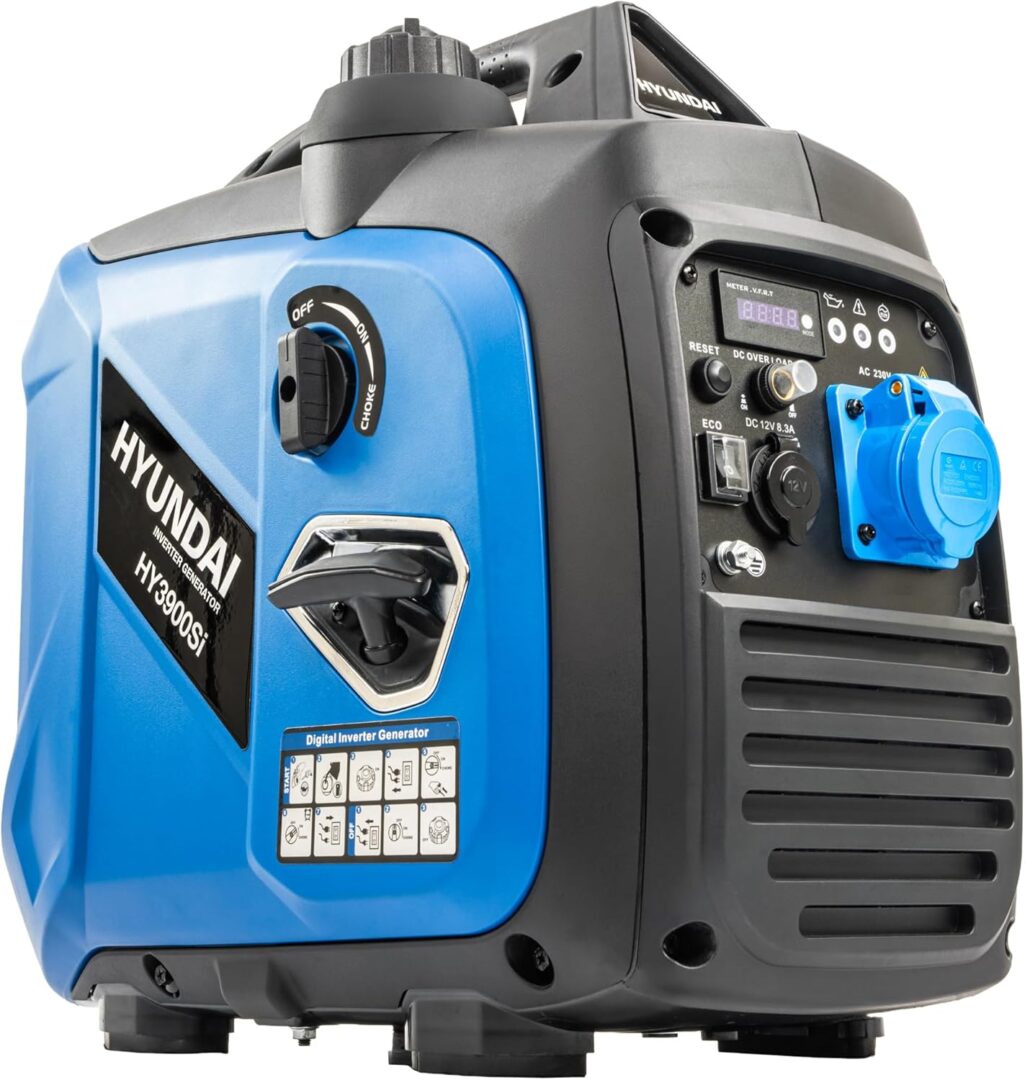
Hyundai reliability with an outstanding 14.5-hour runtime — the longest in this tier. 18kg and 62dB. The go-to choice when runtime matters more than outright weight.
2200W Mighty Atom Inverter Generator
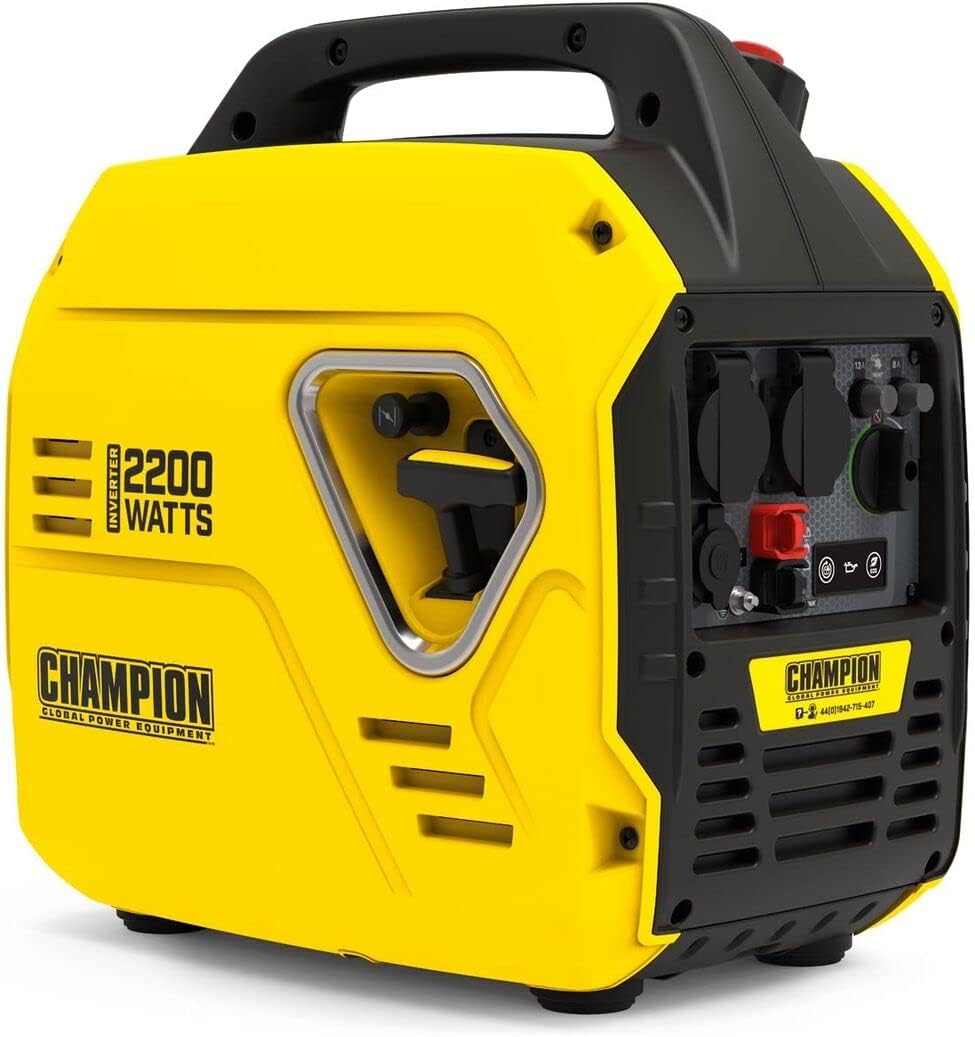
The lightest 2kW class generator at 17.6kg — near-cult status among caravan and camping users. 58dB, 10.5-hour runtime. Best all-round balance of power, weight and noise in this tier.
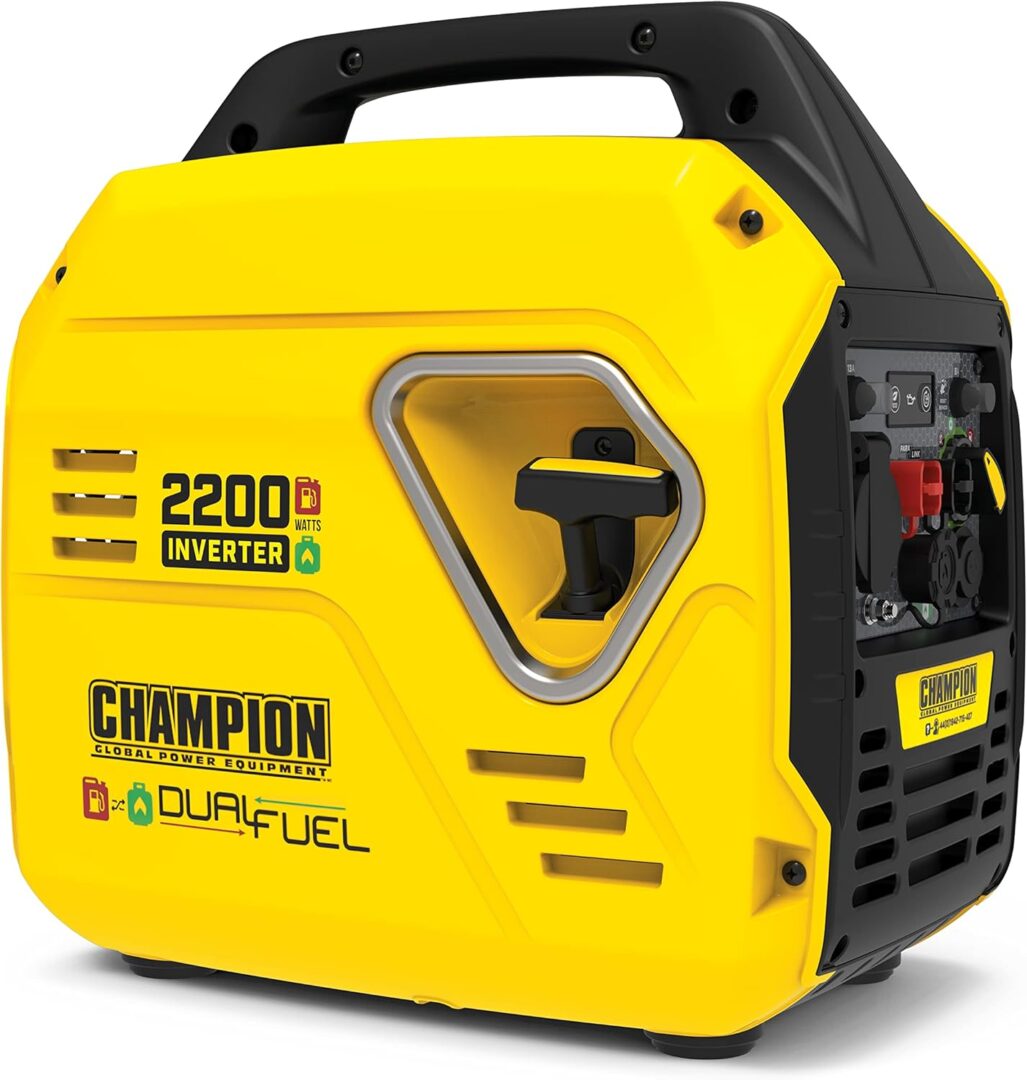
2200W Dual Fuel LPG Generator
Same Mighty Atom platform but with dual fuel capability. On LPG propane, runtime extends to an extraordinary 34 hours. LPG stores indefinitely — ideal for standby backup that may sit unused for months.

2,000W–4,000W — Essential Home Power
Nine models from £219 to £499. Runs your fridge, boiler, home office and microwave. The sweet spot for UK home backup.
Home Backup — 2,000W to 4,000W
The sweet spot for UK homes. Capable of running a fridge-freezer, gas boiler, home office and microwave simultaneously. Most units in this range are quiet enough for a suburban garden with a sensible buffer from neighbours.
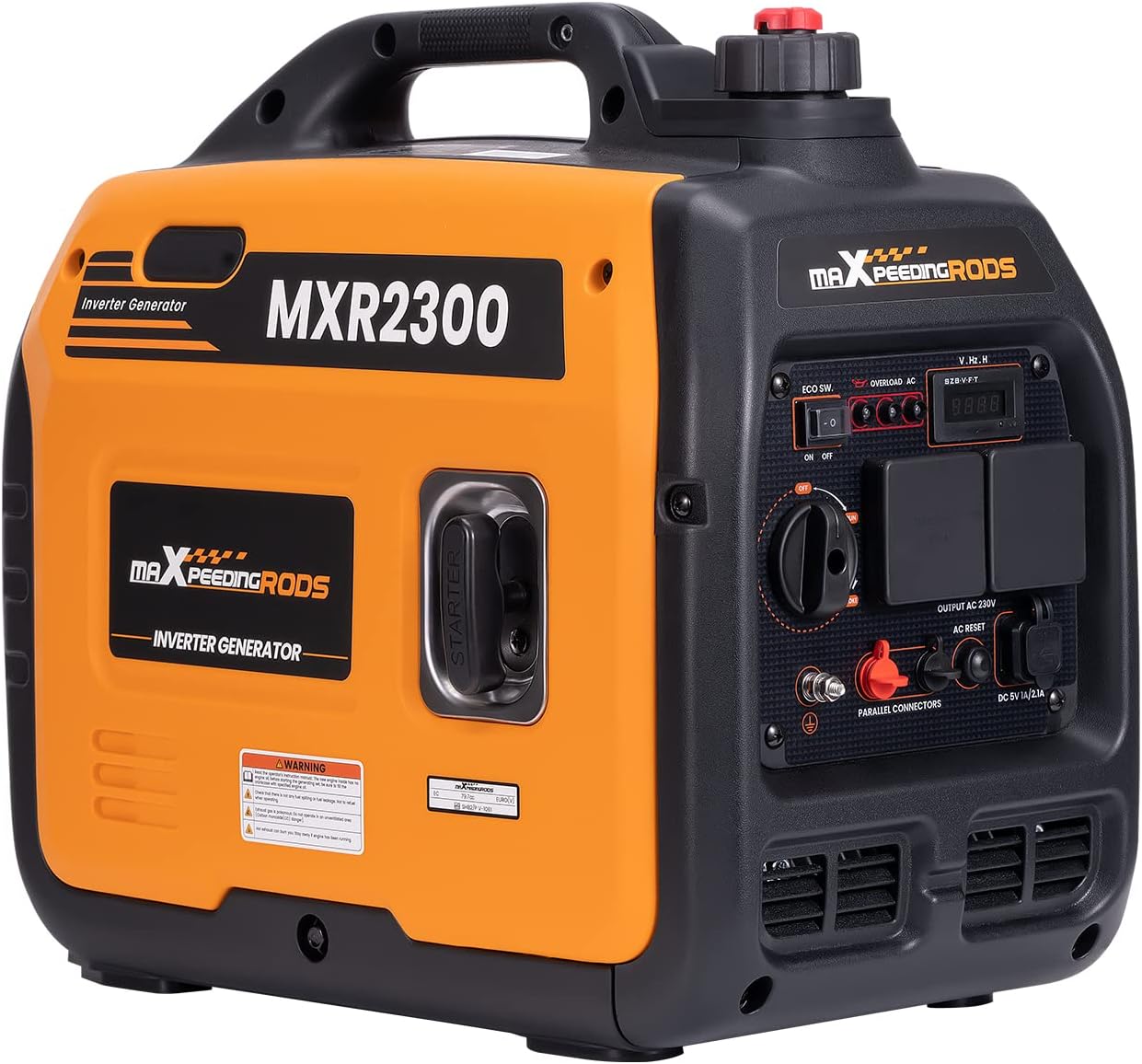
2300W Silent Inverter Generator
Best value entry into this tier. 58dB makes it one of the quietest mid-range units available. 11-hour runtime on a 4L tank and a digital display for monitoring output.
3.3kW Open Frame Inverter Generator
3,000W continuous with an outstanding 14-hour runtime on a 7.5L tank. ECO mode reduces fuel consumption and noise under light loads. Hyundai reliability at a competitive price point.
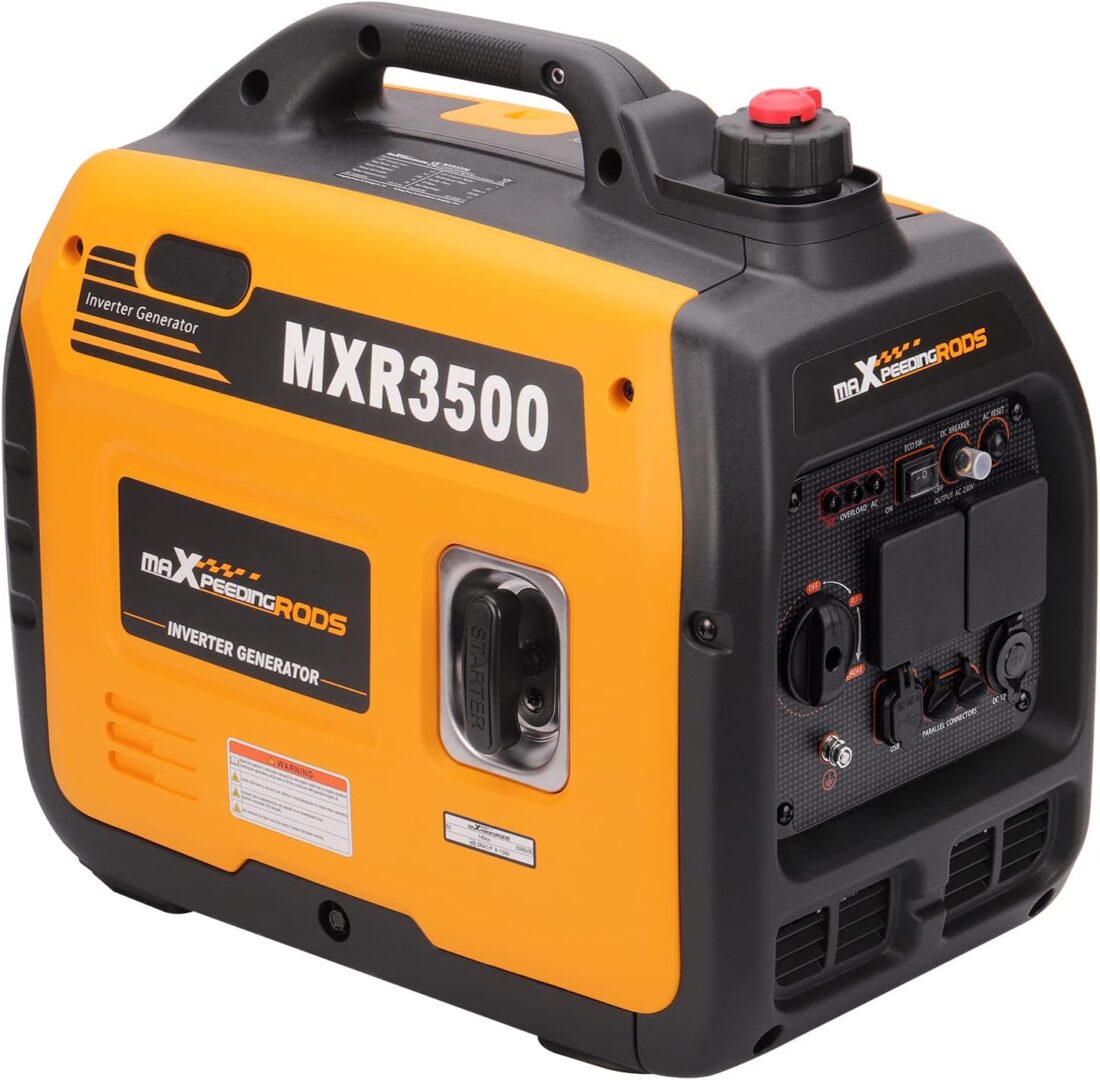
3500W Pure Sine Wave Generator
3,200W continuous at the lowest price in this power class. 7.5L tank with 8.5-hour runtime. Best value if you need serious power without the budget for premium brands.
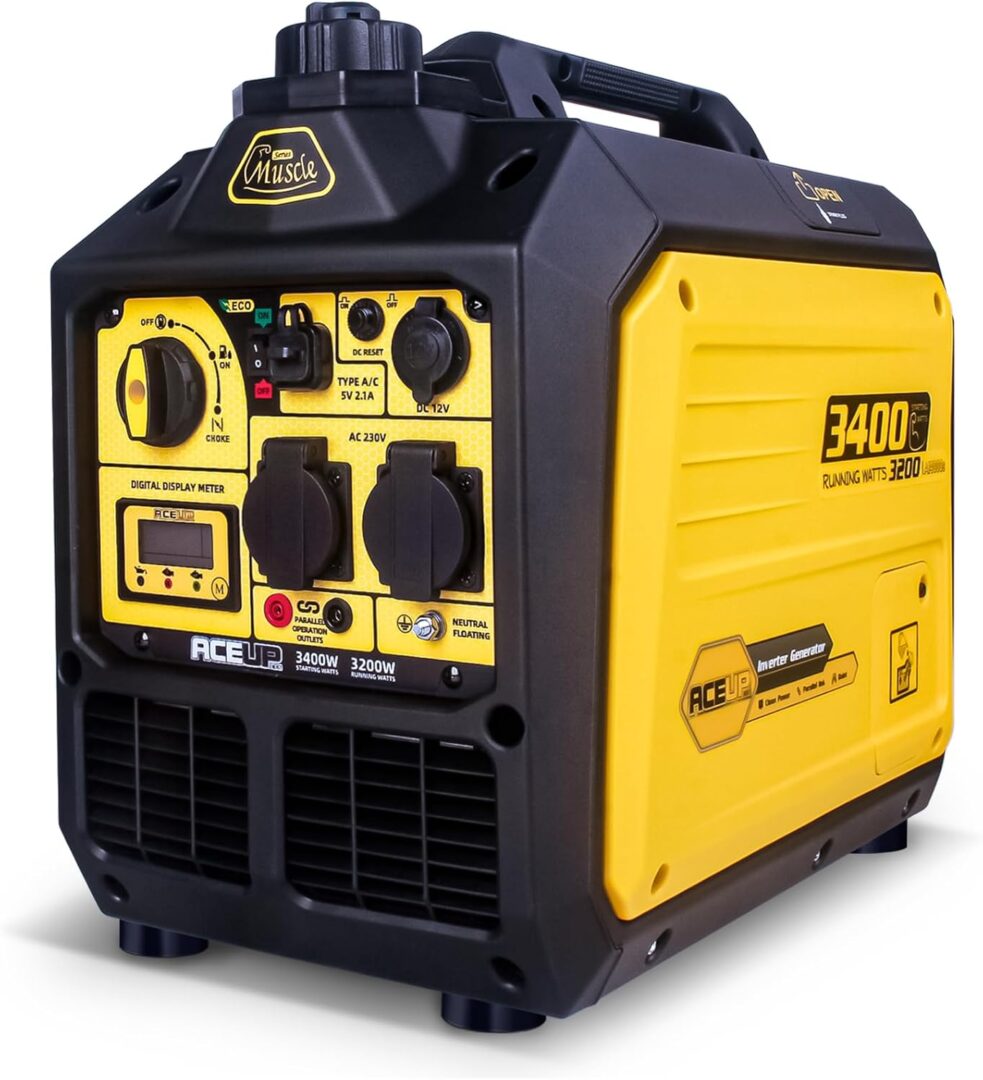
3400W EURO-V Silent Generator
EURO-V and CE certified. 62dB at this power level is genuinely impressive. Parallel ready — link two units for double the output. Built-in intelligent gauge monitors voltage and frequency.
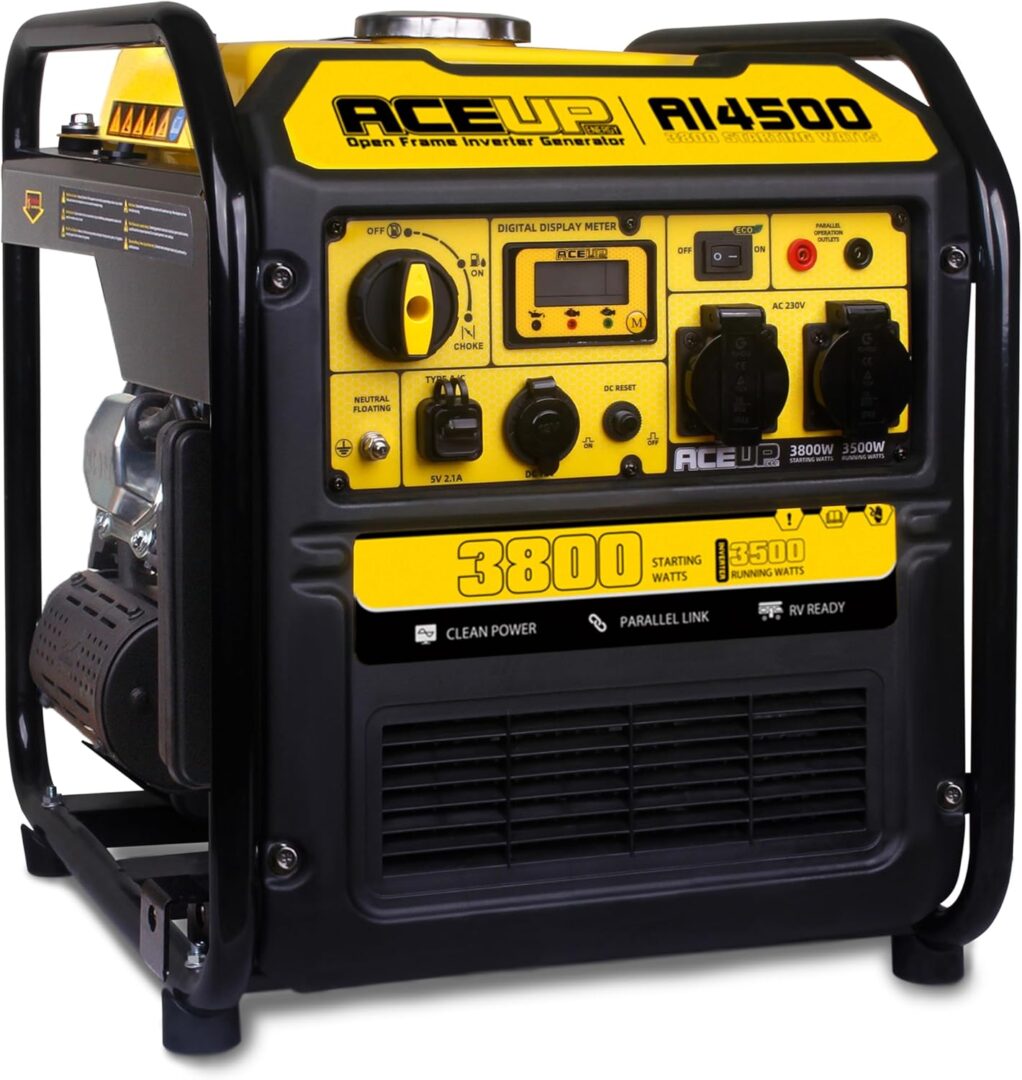
3800W Pure Sine Wave Generator
Aceup's larger unit with a 223cc engine and 10-litre tank for extended runtime. 3,500W continuous with EURO-V certification. The biggest tank in this tier — good for overnight backup without refuelling.
3300W Very Quiet Inverter Generator
The standout unit in this tier — 3,000W continuous at just 58dB. That's the same noise level as a 1,200W suitcase unit. 21kg and 8.3-hour runtime. Outstanding quiet performance at this power level.
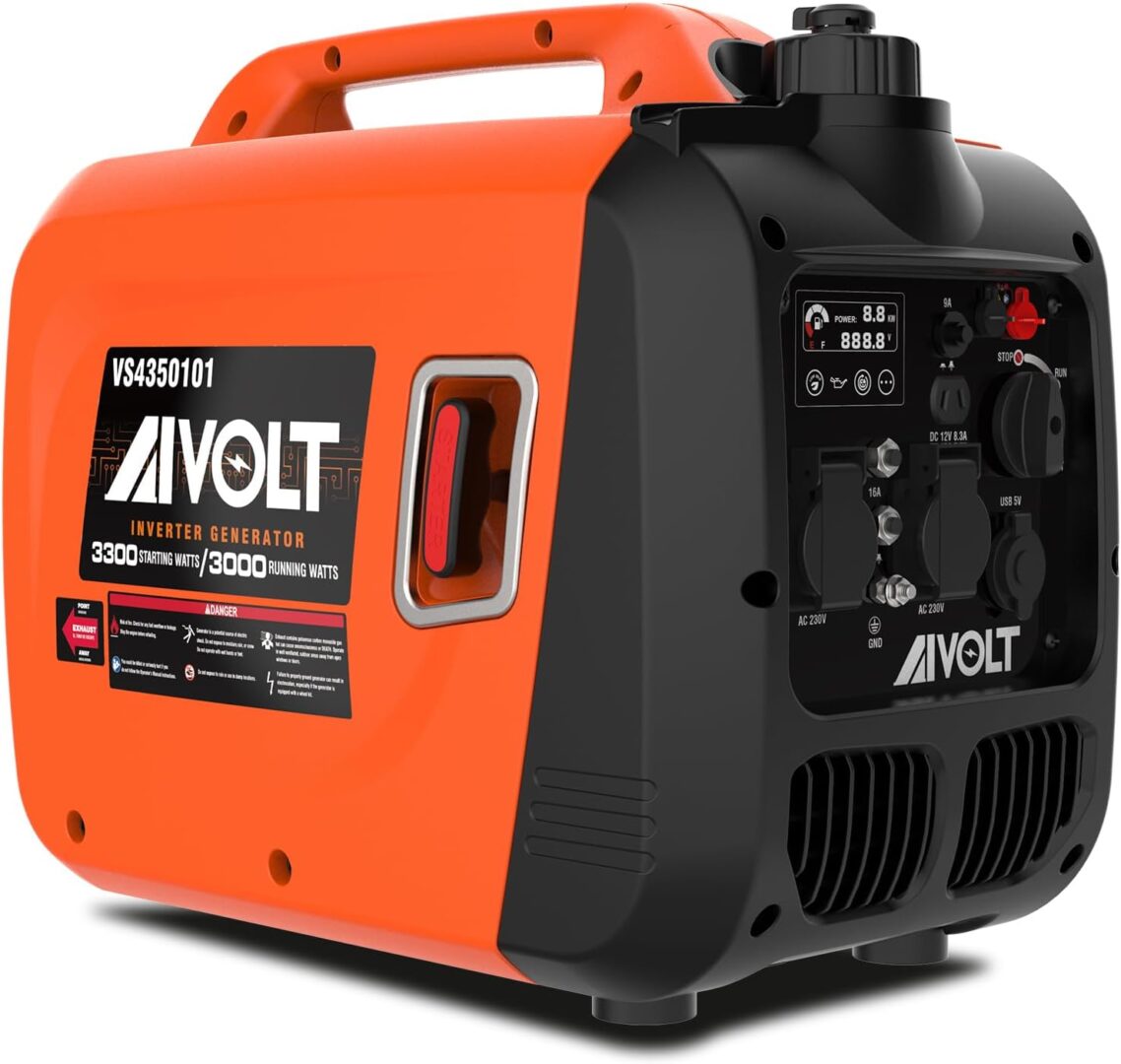
3300W Ultra Quiet 5-in-1 LCD Generator
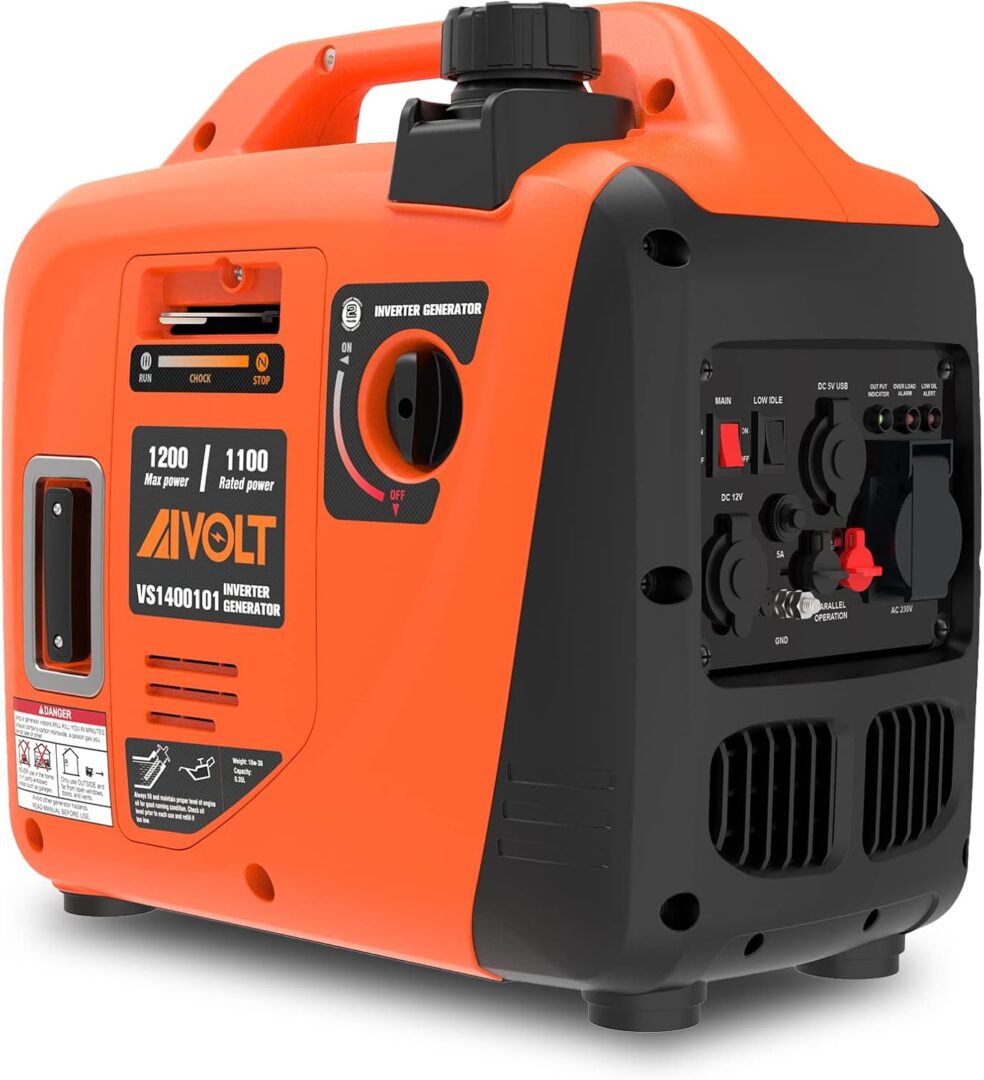
AIVOLT's larger unit with a 5-in-1 LCD display showing voltage, frequency, power output, runtime and fuel level simultaneously. 61dB and 8-hour runtime from a 4.2L tank.
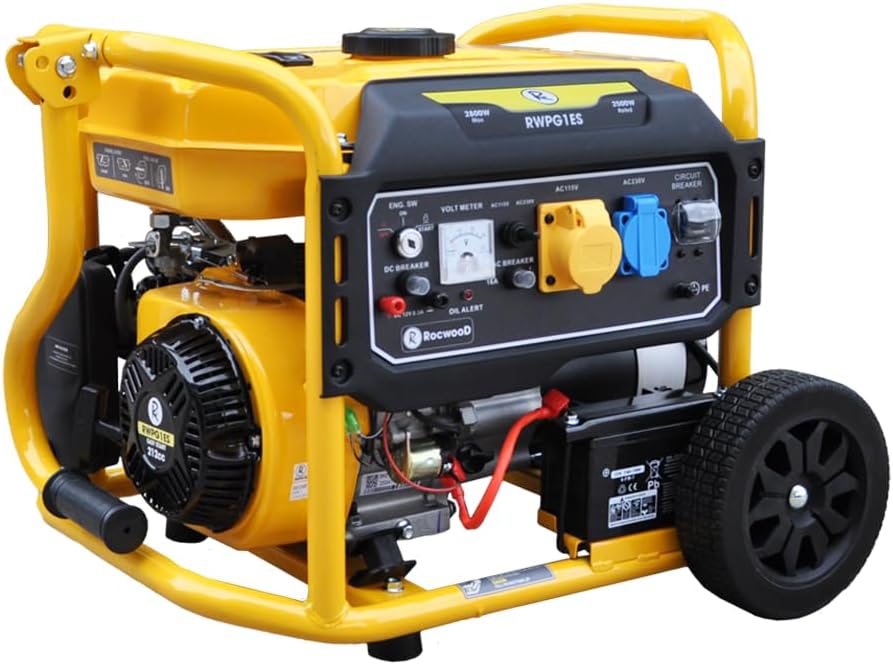
2800W Electric Key Start Generator
UK brand with electric key start — no pull cord needed. Copper wound alternator for improved efficiency and durability. 11L tank with 10-hour runtime. Dual voltage 115V/230V output.
3.3kW Recoil Start Inverter Generator
Hyundai's premium 3.3kW model with ECO mode for fuel efficiency under light loads. 14-hour runtime on a 7.5L tank. The most reliable long-runtime choice in this tier from an established brand.

4,000W+ — Whole Home & Heavy Duty
Six models from £189 to £1,699. Runs everything. Kettle, fridge, heating, workshop tools. When the lights go out — yours stay on.
Power Independence — 4,000W and Above
For those who need to maintain a normal lifestyle during an outage. These units run high-draw appliances — kettles, heaters, power tools — and can power an entire home simultaneously. Electric start on most models.
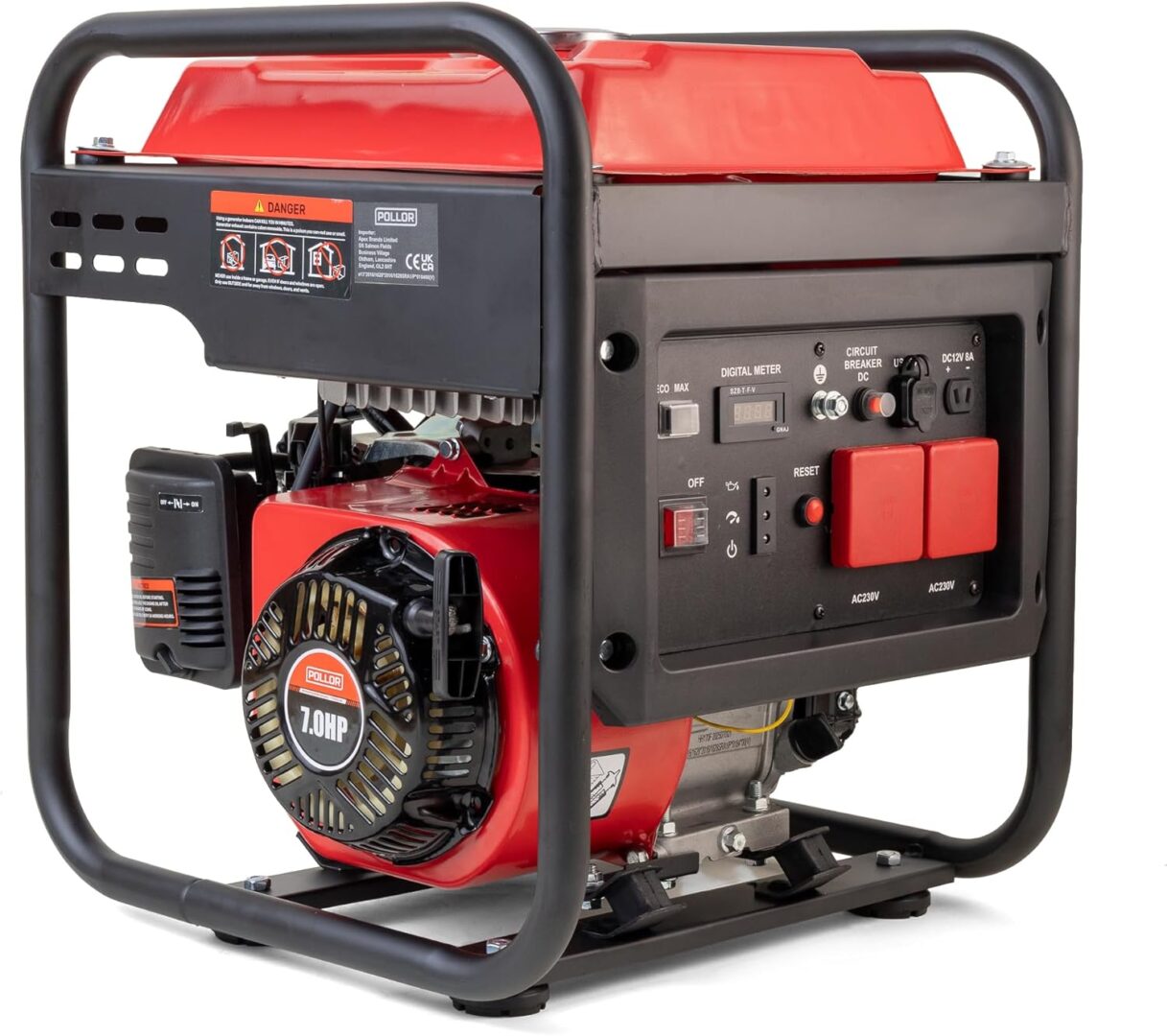
3500W Pure Sine Wave — Budget Entry
The most affordable route to 3,500W pure sine wave power. 8L tank, 8-hour runtime, 58dB — surprisingly quiet for the price. No frills, but all the basics done right.
3500W Dual Fuel — Digital Meter
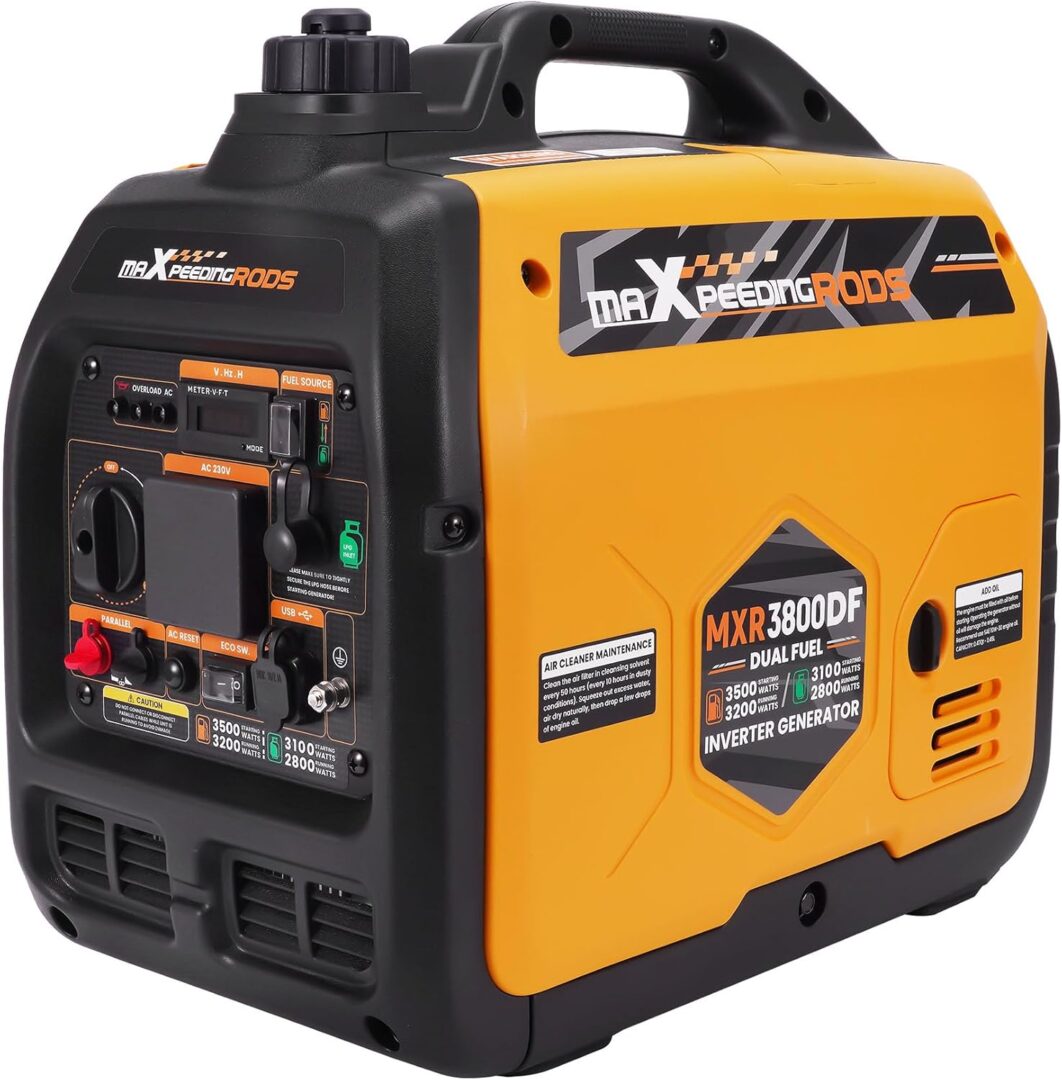
Dual fuel flexibility — runs on petrol or LPG. Digital meter displays output data in real time. 62dB and 8.3-hour runtime. Good mid-range option for those wanting fuel flexibility without electric start.
3500W Dual Fuel — Electric Start
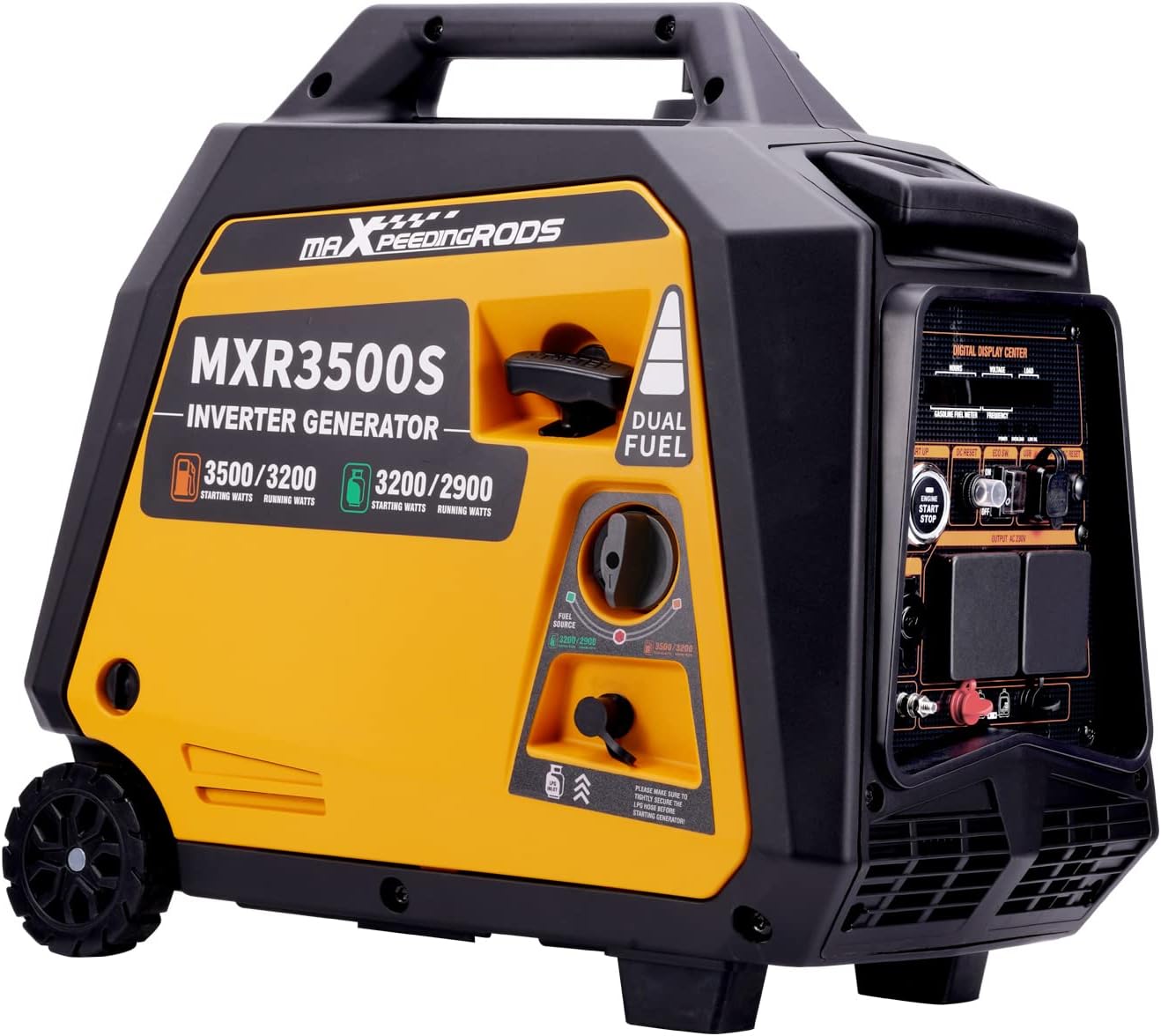
The complete package — dual fuel, electric start and 13.5-hour runtime on a 5.7L tank. 62dB and 25kg. Best all-round choice in this tier for serious home backup with maximum convenience.
5500W Heavy Duty Generator
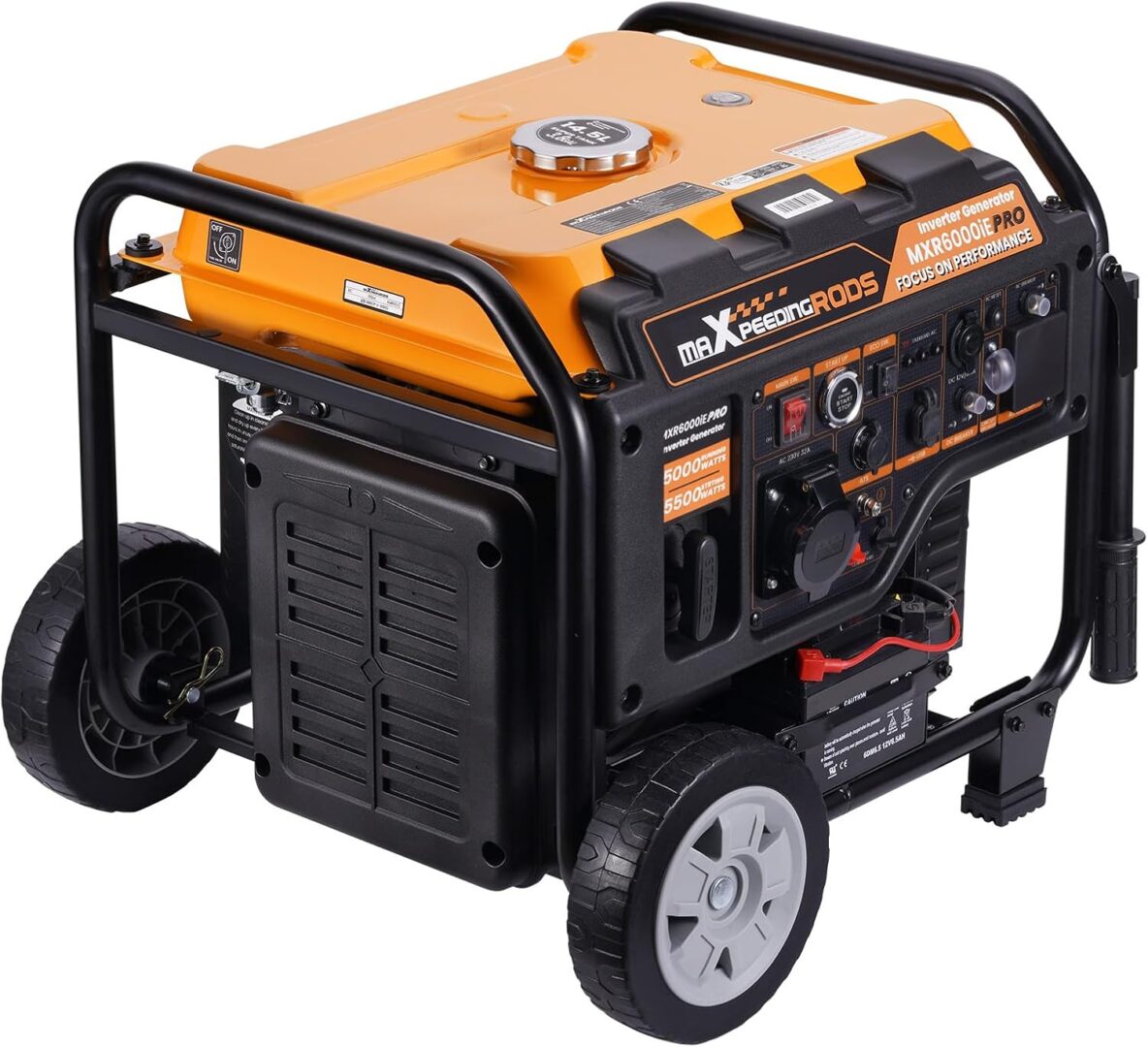
5,000W continuous — enough to run your entire home simultaneously including high-draw appliances. Electric start, 9-hour runtime. 39kg so wheel kit or two-person lift recommended.
4000W Electric Start Generator
UK brand with electric start, 15L tank and 12-hour runtime — the longest in this tier. 65dB and 3,600W continuous. Best choice for extended outages where refuelling needs to be kept to a minimum.
8000W ATS Electric Start Generator
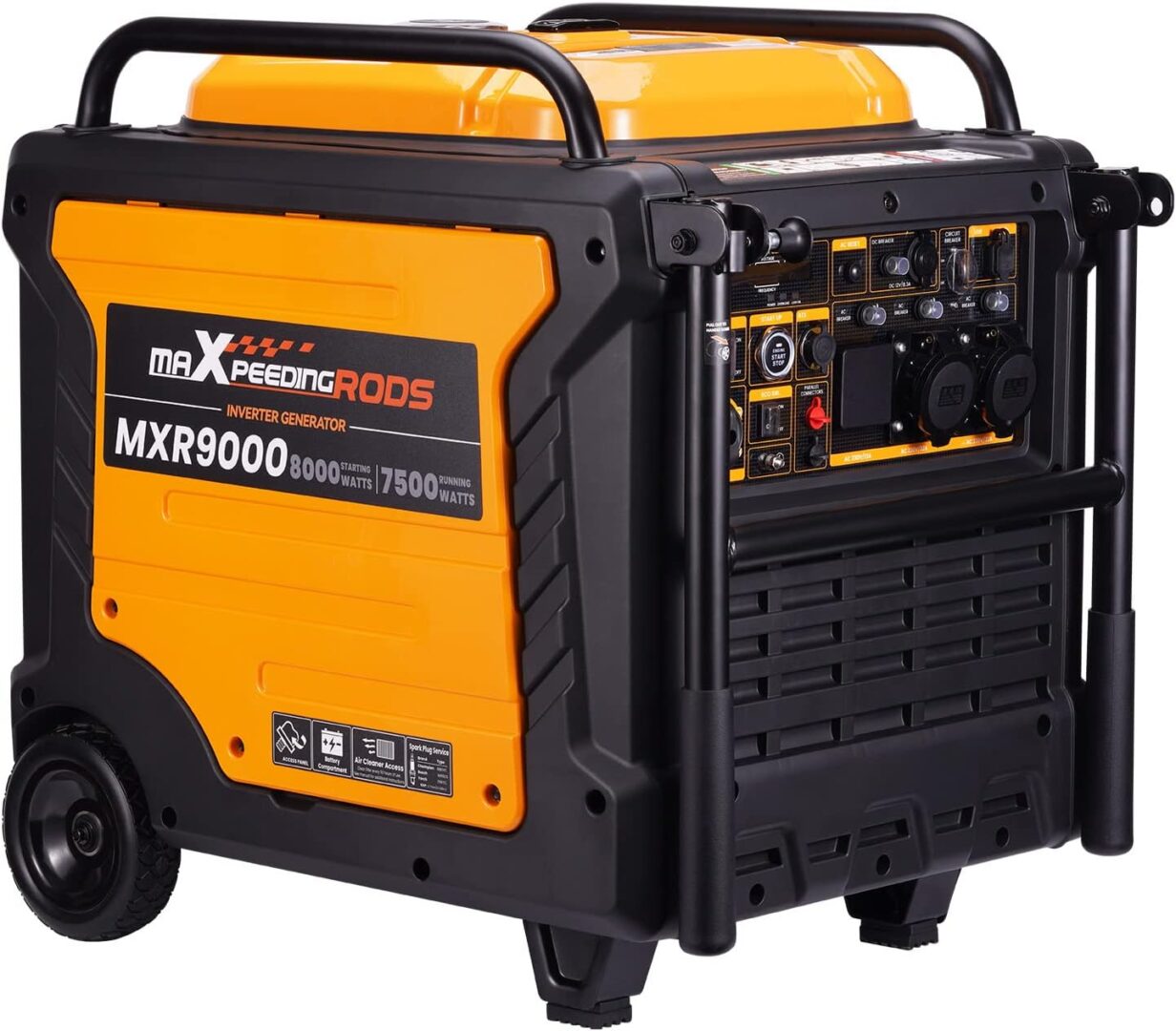
The most powerful unit on the page. 7,500W continuous with ATS (Automatic Transfer Switch) interface — switches to generator power automatically when the grid fails. Electric start, 20L tank, 8-hour runtime. Professional grade.
Loading products...
Which Inverter Generator
is Right for You?
Answer 5 questions — we'll match you to the right unit
Inverter Generator — Frequently Asked Questions
Answers to the questions we get asked most before buying.
Can I run an inverter generator indoors?
No — never. This is the most important safety rule on this page. Every petrol engine produces carbon monoxide, an odourless, colourless gas that kills within minutes at high concentrations. Carbon monoxide poisoning from generators used in garages, sheds, conservatories and homes with open windows causes deaths in the UK every year.
Always run your generator outdoors in open air, at least 5 metres from any windows, doors or vents. Fit a carbon monoxide detector in your home before operating a generator nearby. There is no safe level of indoor generator operation — not even briefly.
How long can I run a generator continuously?
Most inverter generators are designed to run for 8–14 hours continuously at 50% load on a full tank. Running at higher loads reduces runtime proportionally. Check the manufacturer specification for your specific model — runtimes in our product listings are at 50% load unless otherwise stated.
For extended use, allow the generator to cool for 15–20 minutes before refuelling. Never refuel a hot engine. Some models support extended runtime with larger external fuel tanks — check compatibility before purchasing aftermarket tanks.
Do I need to notify anyone before using a generator?
For standard portable outdoor use powering appliances directly — no notification is required. You do not need to inform your energy supplier, Distribution Network Operator or local authority for normal backup use.
If you are connecting to your home's fixed wiring via a transfer switch or distribution board, different rules apply and a qualified electrician should carry out the work. Never connect a generator directly to your home wiring without a proper transfer switch — backfeeding is illegal and dangerous.
Can I connect a generator to my home wiring?
Not directly — and never using a male-to-male plug cable (sometimes called a suicide cable or backfeed cable). This practice is illegal in the UK and potentially fatal. It sends live voltage back into dead street wiring, creating a lethal hazard for grid engineers working on the fault.
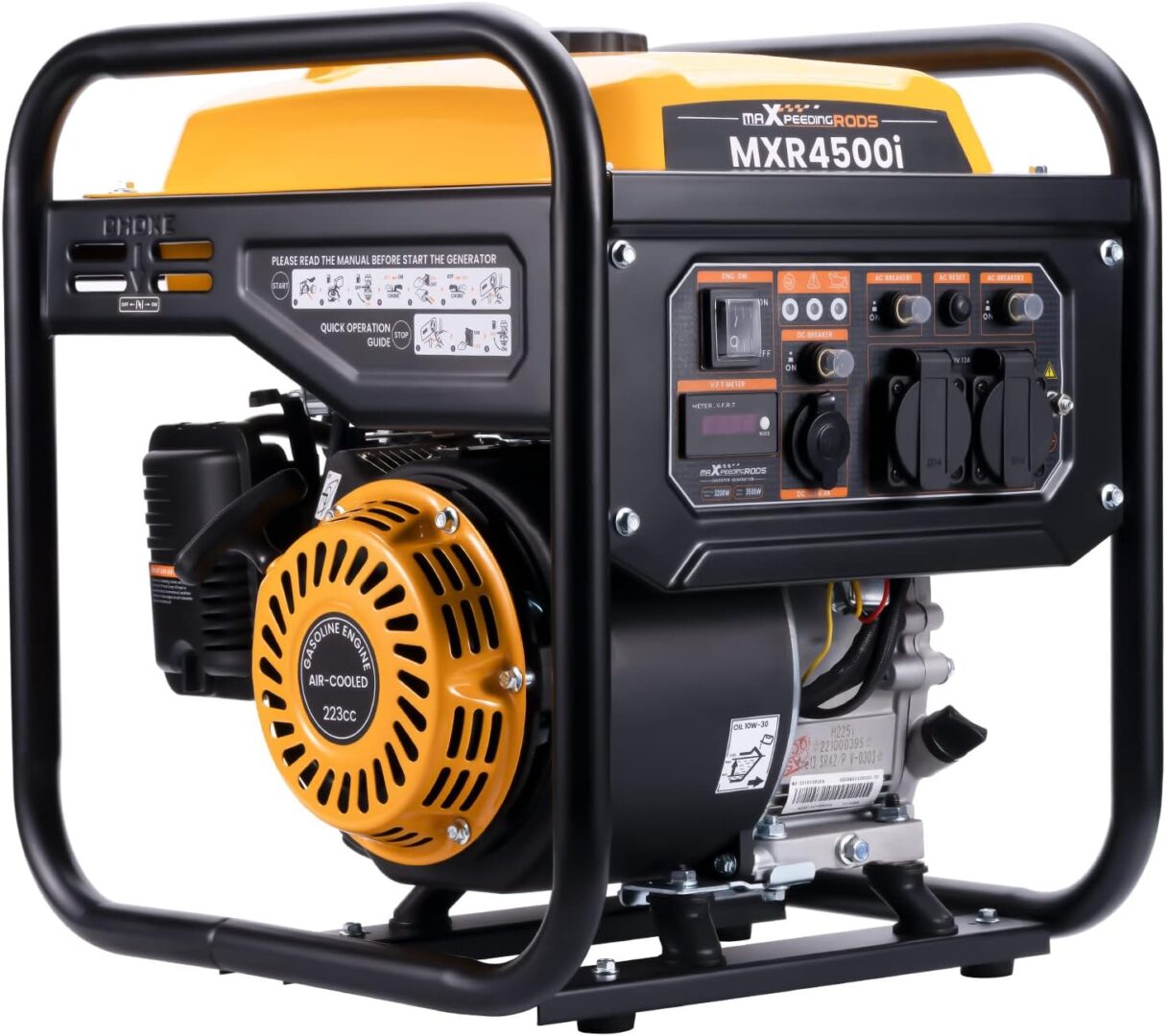
If you want to power your home circuits from a generator, a qualified electrician can install a manual changeover switch or automatic transfer switch (ATS). The maXpeedingrods 8000W on this page includes an ATS interface for exactly this purpose. All other connections should be made by plugging appliances directly into the generator's outlets via extension leads.
What's the difference between continuous watts and peak watts?
Continuous watts is the power the generator can sustain indefinitely — this is the figure that matters for sizing. Peak watts is the maximum power available for a fraction of a second to handle motor startup surges from appliances like fridges, freezers and boiler pumps.
Always size your generator based on continuous watts for your running load, plus enough peak headroom for the highest startup surge in your setup. A fridge-freezer drawing 200W continuously may need 1,200W peak to start. If your generator's peak rating can't meet that surge, it will trip or stall on startup.
How long does petrol last in storage?
Standard E10 petrol from UK forecourts degrades within 30 days in a stored container. The ethanol content absorbs atmospheric moisture, causing phase separation and forming an acidic sludge that clogs carburettor jets and ruins fuel delivery systems.
For storage longer than 30 days, use E5 super unleaded (available at most UK forecourts as the premium fuel option) and add a dedicated fuel stabiliser. Treated fuel can last 12–24 months. For generators stored over winter, either drain the tank and run the carburettor dry, or treat the fuel before storage. LPG on dual fuel models stores indefinitely with no degradation.
Can I use a generator in the rain?
Not without protection. Running a generator in rain without a purpose-built weather canopy or shelter risks water ingress into the control panel and outlets, causing short circuits and electric shock hazards. The generator body may have some weather resistance but the sockets and connections are not designed for direct rain exposure.
Purpose-built generator canopies are available online for around £30–£60 and allow safe outdoor operation in wet conditions while maintaining adequate ventilation. Never use a tarpaulin draped directly over a running generator — it restricts airflow and creates a carbon monoxide accumulation risk.
Do inverter generators need servicing?
Yes — and because backup generators sit unused for months, active maintenance is essential. Key tasks are checking and changing oil (every 50 hours of use or annually), replacing spark plugs (annually or every 100 hours), cleaning the air filter (every 25 hours), and treating or draining fuel before storage.
The most important habit is a monthly test run — 20–30 minutes under load. This keeps the engine lubricated, circulates fresh fuel through the carburettor, charges the electric start battery and confirms the unit will start when you actually need it. A generator that fails during a power cut because it hasn't been maintained is worse than no generator at all.
What size generator do I need to run a fridge and boiler?
A fridge-freezer draws 150–300W continuously but needs 800–1,200W peak to start the compressor. A gas boiler draws 80–150W continuously with a 300–500W startup surge. Running both simultaneously requires a generator with at least 1,800W continuous output and 2,000W+ peak capability to handle both startup surges safely.
Add your home office (200–400W), WiFi router (25W) and basic lighting (50–100W LED) and you are looking at around 2,000W continuous total. A 2,300W–3,000W continuous generator gives comfortable headroom. The maXpeedingrods 2300W, Hyundai 3.3kW or any of the 3,000W+ units in our home backup tier would handle this load comfortably.
Is dual fuel worth the extra cost?
For standby backup generators — yes, in most cases. The key advantage is that LPG propane stores indefinitely without degradation, unlike petrol which degrades within 30 days. A generator stored for months on LPG will start and run reliably when you need it. The same generator on old petrol may not.
The Champion 2200W dual fuel model on this page achieves 34 hours runtime on a single LPG cylinder — far beyond what any petrol tank can offer. The price premium over the petrol-only Mighty Atom is modest. For home backup specifically, dual fuel is a meaningful upgrade. For regular camping use where you always have fresh petrol, the petrol-only version is perfectly adequate.
Top Petrol Inverters — Side by Side Comparison
Click any column header to sort. Click again to reverse. Prices correct at May 2026.
| Image | Model | Brand | Tier | Continuous W | Peak W | Noise dB | Weight kg | Runtime hrs | Price £ | Buy |
|---|
DF = Dual Fuel | ES = Electric Start | ⭐ = Editor's Pick | N/A = Not published by manufacturer
Explore Our Power Guides
As an Amazon Associate, I earn from qualifying purchases. No additional costs are passed on to you.
for more info – click here