Meta Tracking Pixel

Best Solar Batteries

Looking to purchase the best solar battery for your home energy layout? The commercial collection below curates the top 10 retail options available on the UK market today, ranking hardware units by continuous output, fast-charging timelines, and overall LiFePO4 chemical cycle lifespans. 

If you require a structural explanation of how these storage cells integrate with external micro-generation kits or fixed household distribution panels before checking out, read through our comprehensive informational manual on Solar Batteries.

The Best Solar Batteries

Tier 1: Essential Backup — Under 600Wh

These units are built for the essentials: routers, laptops, LED lighting, phone charging, and low-draw medical devices. All four use LiFePO4 (Lithium Iron Phosphate) chemistry — the only battery type we recommend for indoor UK home use. Thermally stable, 3,000+ charge cycles, and safe to run overnight without supervision. If your priority is keeping communications and lighting running during a grid outage, this is your tier.

Gemshore Editorial Standard: LiFePO4 Chemistry Only

Every product on this page uses Lithium Iron Phosphate (LiFePO4) battery chemistry. Unlike standard NMC lithium-ion cells, LiFePO4 does not enter thermal runaway under normal operating conditions, making it the correct choice for indoor residential use in UK homes. No NMC or NCA chemistry units are listed here.

EcoFlow RIVER 3 Portable Power Station

EcoFlow

RIVER 3 Portable Power Station

£169

Capacity245Wh
AC Output300W (600W surge)
Weight3.5kg
BatteryLiFePO4
Warranty5 Years
Solar PanelNot Included
View on Amazon
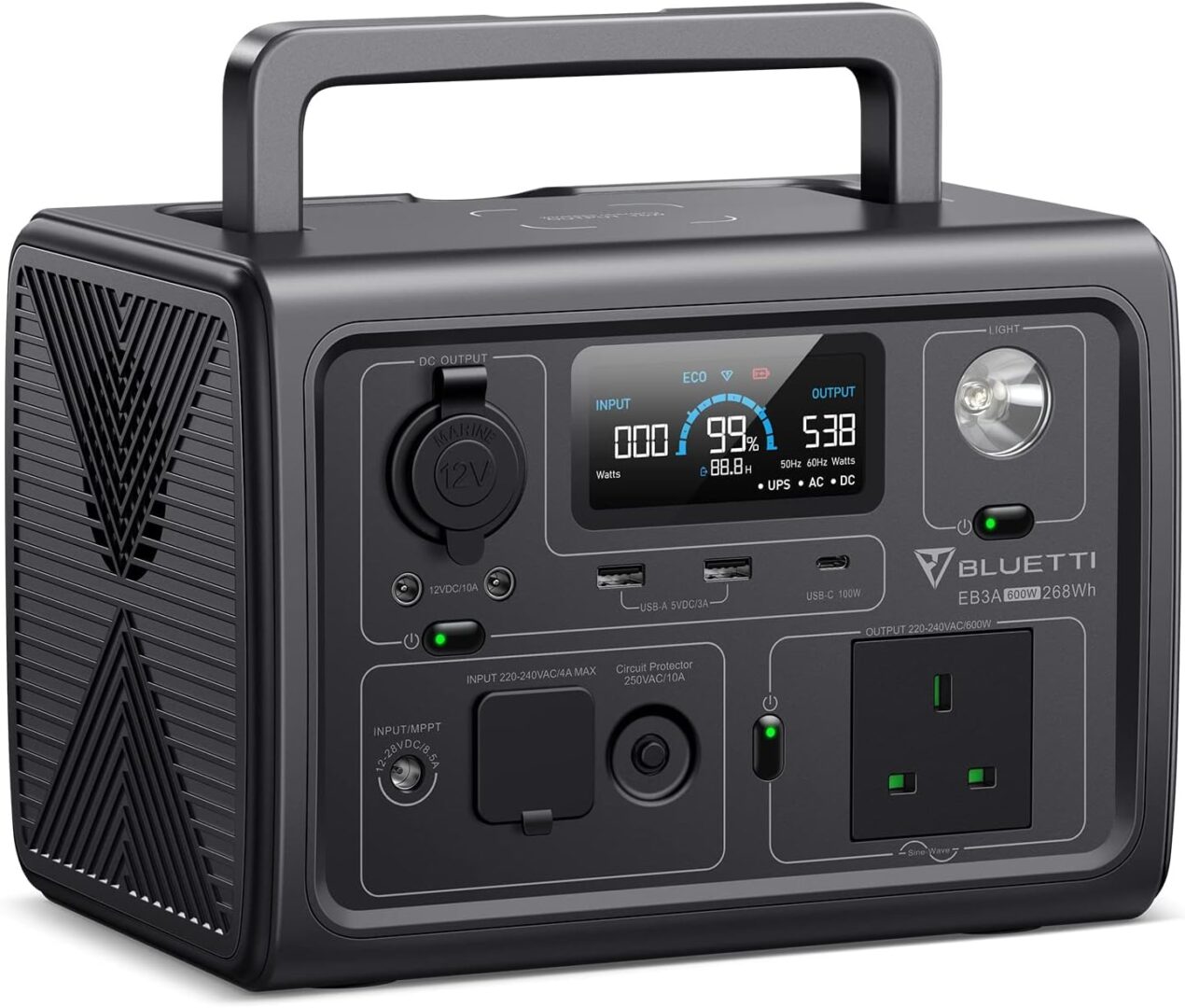
BLUETTI EB3A Portable Power Station

BLUETTI

EB3A Portable Power Station

£219

Capacity268Wh
AC Output600W (1200W surge)
Weight4.6kg
BatteryLiFePO4
Warranty2 Years
Solar PanelNot Included
View on Amazon
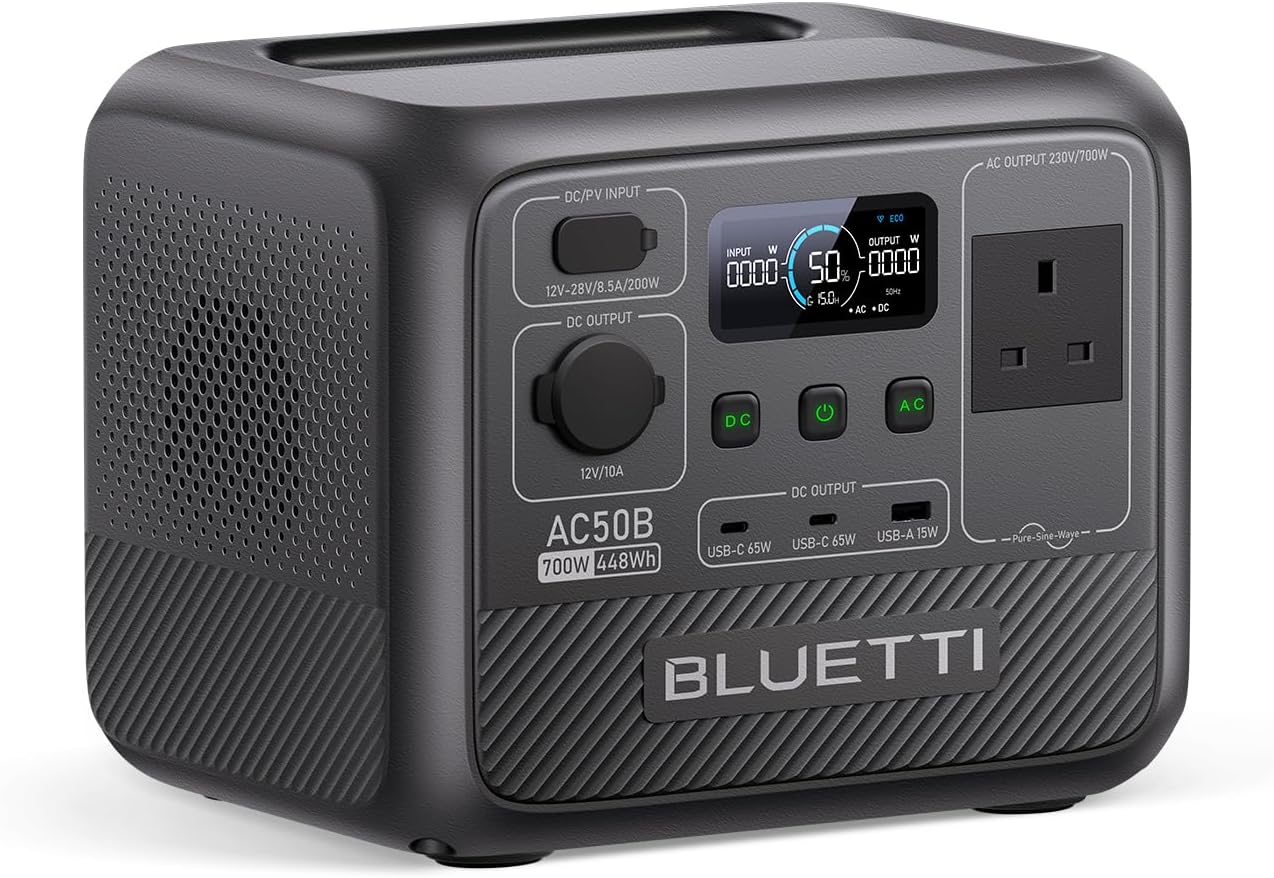
BLUETTI AC50B Portable Power Station

BLUETTI

AC50B Portable Power Station

£299

Capacity448Wh
AC Output700W (1050W surge)
Weight6.7kg
BatteryLiFePO4
Warranty5 Years
Solar PanelNot Included
View on Amazon
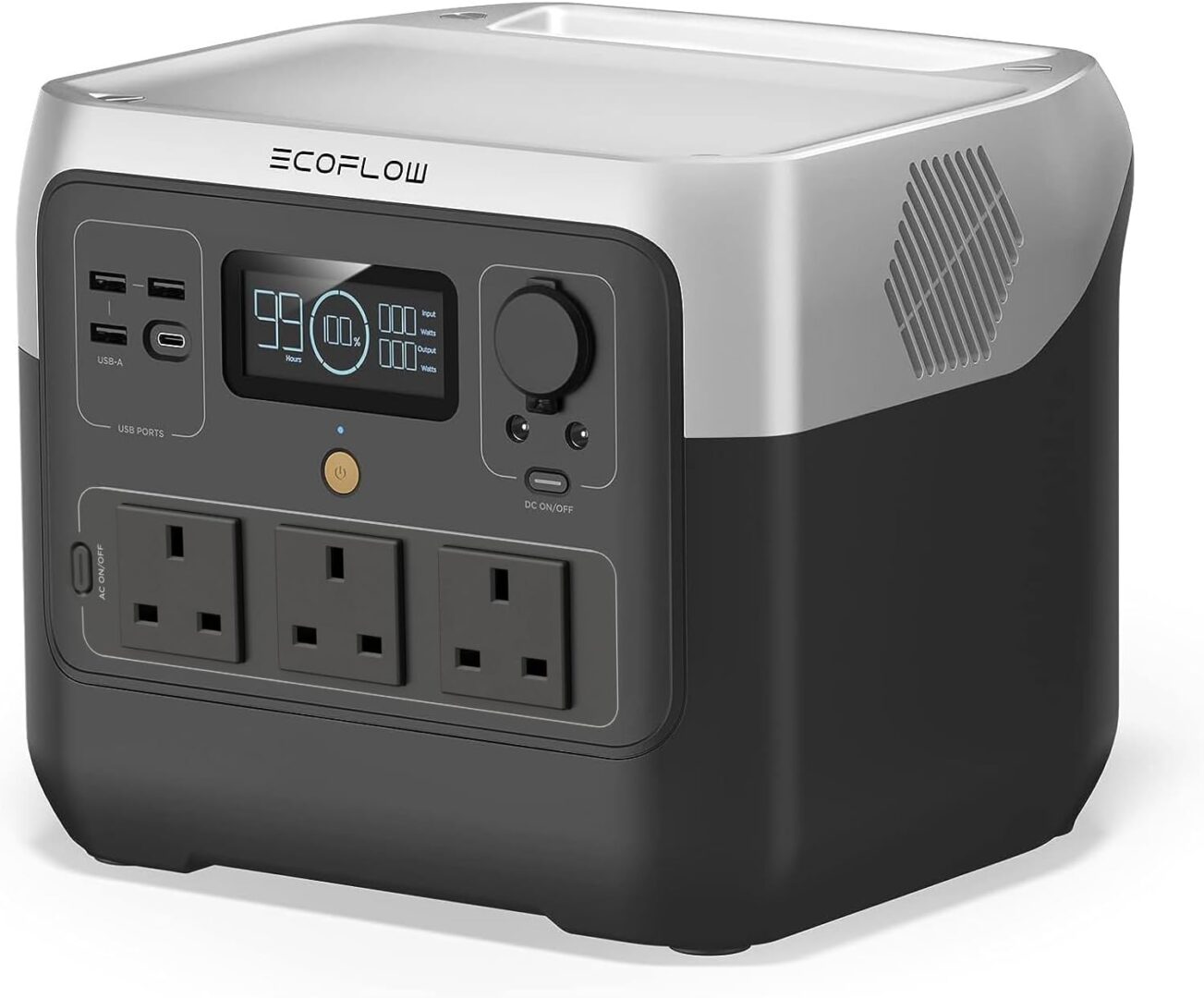
EcoFlow RIVER 2 Pro Portable Power Station

EcoFlow

RIVER 2 Pro Portable Power Station

£349

Capacity768Wh
AC Output800W (1600W surge)
Weight7.8kg
BatteryLiFePO4
Warranty5 Years
Solar PanelNot Included
View on Amazon

Tier 1 — Side by Side Comparison

ProductPriceCapacityAC OutputWeightWarrantySolar PanelBuy
EcoFlow RIVER 3£169245Wh300W / 600W3.5kg5 YearsNot IncludedBuy Now
BLUETTI EB3A£219268Wh600W / 1200W4.6kg2 YearsNot IncludedBuy Now
BLUETTI AC50B£299448Wh700W / 1050W6.7kg5 YearsNot IncludedBuy Now
EcoFlow RIVER 2 Pro£349768Wh800W / 1600W7.8kg5 YearsNot IncludedBuy Now

AC Output shown as Continuous W / Peak Surge W. All units LiFePO4 chemistry. Prices correct at 25/05/26 — verify on Amazon before purchase.

Tier 2: Home Office — 600Wh to 1200Wh

This tier covers households that need to keep working during a grid outage — running monitors, desktop computers, network switches, NAS drives, and small kitchen appliances simultaneously. With continuous AC outputs ranging from 1500W to 2600W, every unit here can handle a fridge, a kettle, or a microwave in addition to your home office load. Two of the four ship with solar panels included, giving you a complete off-grid charging solution from the box. All units use LiFePO4 chemistry and carry a minimum 3-year warranty.

The Kettle Test — Why Inverter Rating Matters

A standard UK kettle draws 2000W to 3000W at startup. Any power station with a continuous AC output below 2000W will error out when you try to boil water. All four units in this tier clear that threshold, with the DJI Power 1000 V2 delivering 2600W continuous — the highest output in its capacity class. If running high-draw appliances during an outage is a priority, check the continuous wattage figure, not the surge figure.

DJI Power 1000 V2 Portable Power Station

DJI

Power 1000 V2 Portable Power Station

£459

Capacity1024Wh
AC Output2600W continuous
Weight11.3kg
BatteryLiFePO4
Warranty3-5 Years
Solar PanelNot Included
View on Amazon
Anker SOLIX C1000 Gen 2 Portable Power Station

Anker

SOLIX C1000 Gen 2 Portable Power Station

£499

Capacity1024Wh
AC Output2000W (3000W surge)
Weight11.3kg
BatteryLiFePO4
Warranty5 Years
Solar PanelNot Included
View on Amazon
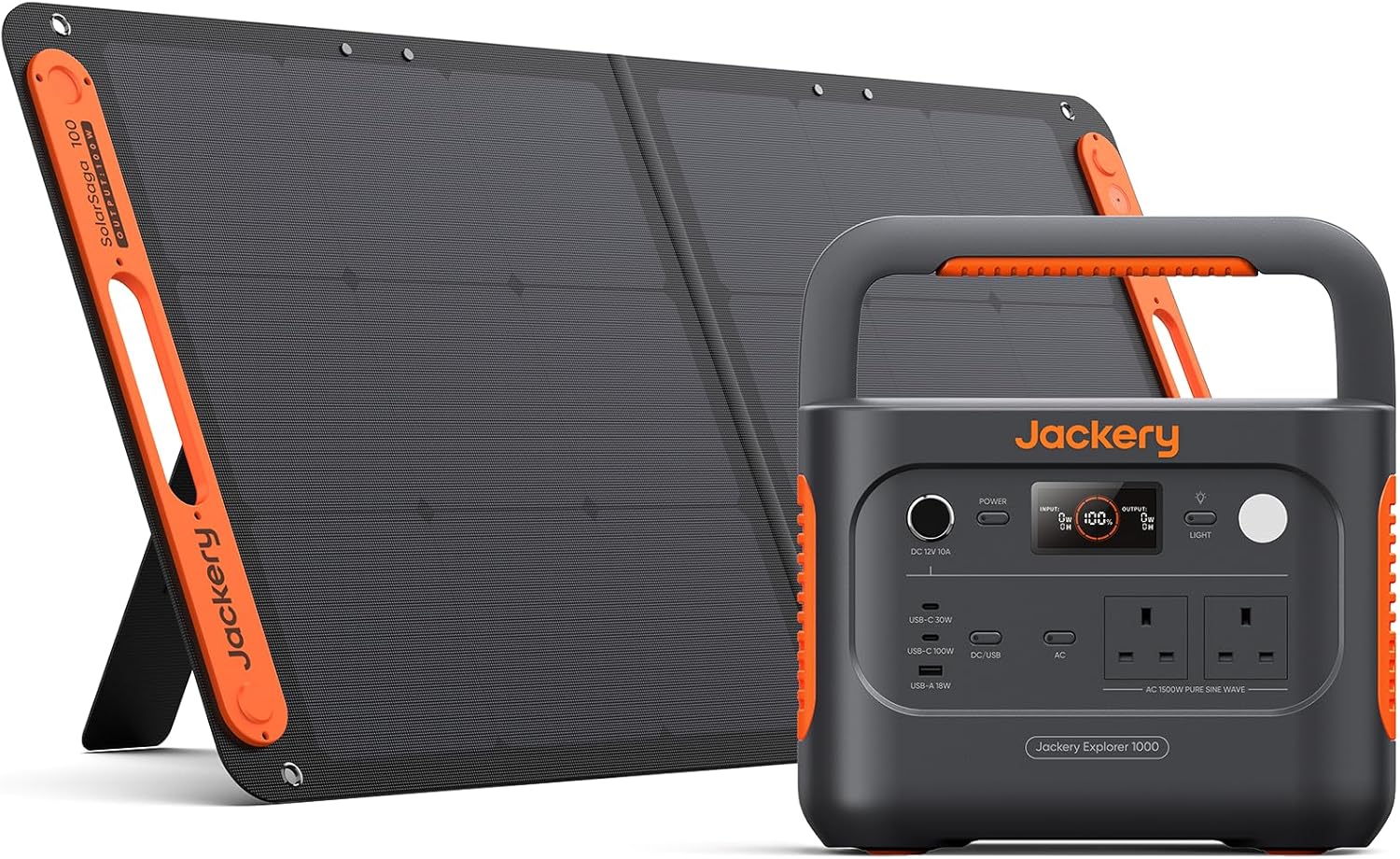
Jackery Explorer 1000 v2 with 100W Solar Panel

Jackery

Explorer 1000 v2 + 100W Solar Panel

£569

Capacity1070Wh
AC Output1500W (3000W surge)
Weight10.8kg
BatteryLiFePO4
Warranty5 Years
Solar Panel100W Included
View on Amazon
Jackery Explorer 1000 Plus Portable Power Station

Jackery

Explorer 1000 Plus Portable Power Station

£699

Capacity1264Wh
AC Output2000W (4000W surge)
WeightNot specified
BatteryLiFePO4
Warranty5 Years
Solar PanelNot Included
View on Amazon

Tier 2 — Side by Side Comparison

ProductPriceCapacityAC OutputWeightWarrantySolar PanelBuy
DJI Power 1000 V2£4591024Wh2600W continuous11.3kg3-5 YearsNot IncludedBuy Now
Anker SOLIX C1000 Gen 2£4991024Wh2000W / 3000W11.3kg5 YearsNot IncludedBuy Now
Jackery Explorer 1000 v2 + 100W Panel£5691070Wh1500W / 3000W10.8kg5 Years100W IncludedBuy Now
Jackery Explorer 1000 Plus£6991264Wh2000W / 4000WNot specified5 YearsNot IncludedBuy Now

AC Output shown as Continuous W / Peak Surge W. All units LiFePO4 chemistry. Prices correct at 25/05/26 — verify on Amazon before purchase.

Tier 3: Family Backup — 1200Wh to 2500Wh

This tier is built for households that need to maintain a normal lifestyle during extended grid outages — running a fridge-freezer, washing machine, television, lighting, and multiple device chargers simultaneously over one or more days. With capacities ranging from 2042Wh to 2073Wh and continuous AC outputs between 2200W and 2400W, every unit here comfortably handles high-draw UK appliances. Two units ship with solar panels included for a complete off-grid solution. All four use LiFePO4 chemistry with fast charging capability.

Multi-Day Outage Planning — Sizing Your Storage Correctly

A typical UK household running a fridge-freezer (150W), LED lighting (50W), television (100W), and device charging (100W) consumes approximately 9.6kWh per day. A 2kWh unit at this draw rate provides roughly 5 hours of full household coverage, or significantly longer when non-essential loads are managed. For outages beyond 24 hours, pairing a unit from this tier with a 200W solar panel can extend runtime indefinitely during daylight hours in UK summer conditions.

Jackery Explorer 2000 v2 Portable Power Station

Jackery

Explorer 2000 v2 Portable Power Station

£869

Capacity2042Wh
AC Output2200W continuous
Weight17.9kg
BatteryLiFePO4
Warranty5 Years
Solar PanelNot Included
View on Amazon
EcoFlow DELTA 3 Plus Solar Generator with 220W Bifacial Solar Panel

EcoFlow

DELTA 3 Plus + 220W Bifacial Solar Panel

£938

Capacity1024Wh
AC Output2400W continuous
WeightNot specified
BatteryLiFePO4
Warranty5 Years
Solar Panel220W Included
View on Amazon
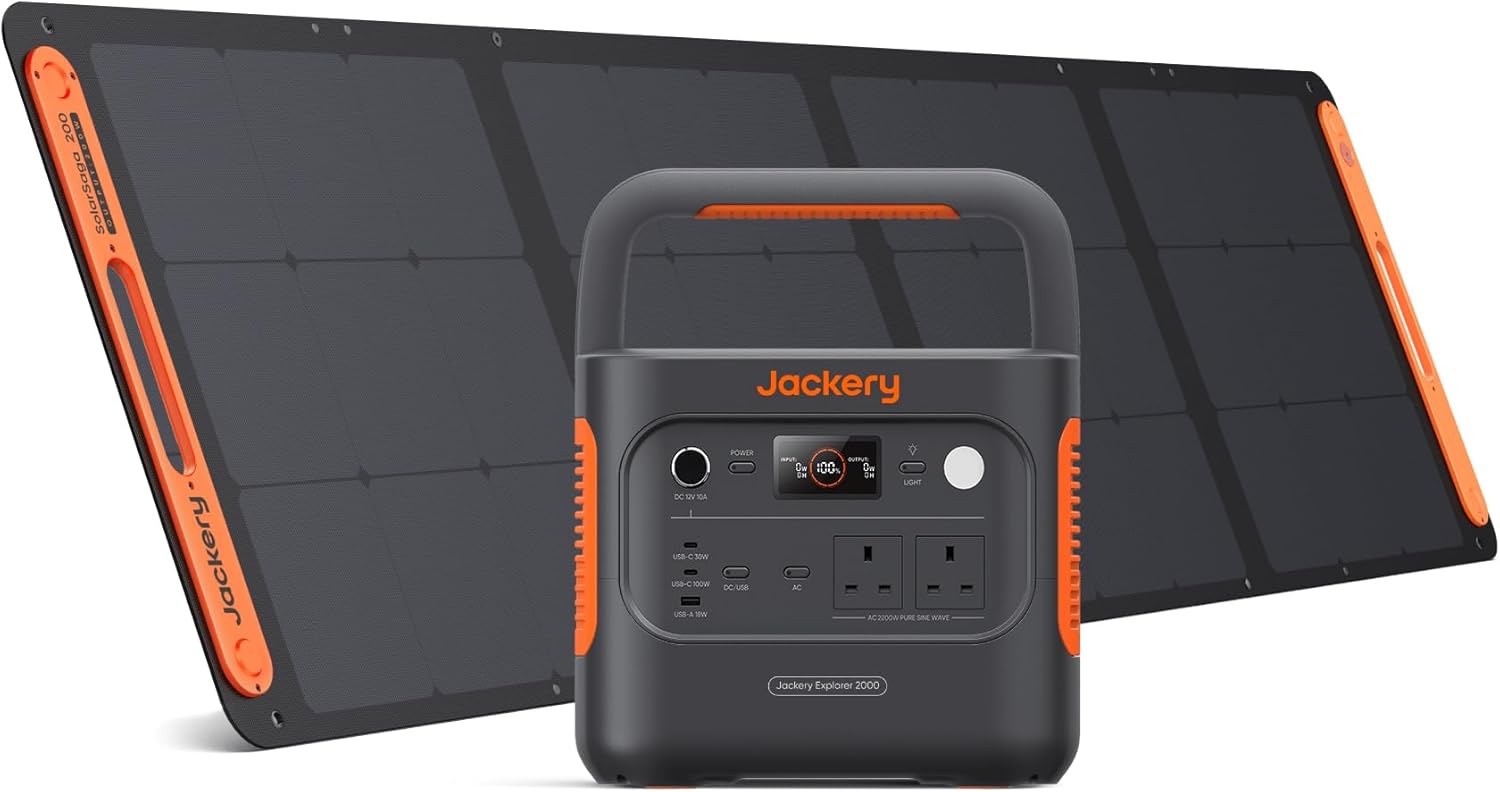
Jackery Solar Generator 2000 v2 with 200W Solar Panels

Jackery

Solar Generator 2000 v2 + 200W Solar Panel

£1,099

Capacity2042Wh
AC Output2200W continuous
Weight17.9kg
BatteryLiFePO4
Warranty5 Years
Solar Panel200W Included
View on Amazon
Anker SOLIX C2000 Gen 2 Portable Power Station

Anker

SOLIX C2000 Gen 2 Portable Power Station

£1,099

Capacity2048Wh
AC Output2400W (4000W surge)
Weight18.9kg
BatteryLiFePO4
Warranty5 Years
Solar PanelNot Included
View on Amazon

Tier 3 — Side by Side Comparison

ProductPriceCapacityAC OutputWeightWarrantySolar PanelBuy
Jackery Explorer 2000 v2£8692042Wh2200W continuous17.9kg5 YearsNot IncludedBuy Now
EcoFlow DELTA 3 Plus + 220W Panel£9381024Wh2400W continuousNot specified5 Years220W IncludedBuy Now
Jackery Solar Generator 2000 v2 + 200W£1,0992042Wh2200W continuous17.9kg5 Years200W IncludedBuy Now
Anker SOLIX C2000 Gen 2£1,0992048Wh2400W / 4000W18.9kg5 YearsNot IncludedBuy Now

AC Output shown as Continuous W / Peak Surge W where available. All units LiFePO4 chemistry. Prices correct at 25/05/26 — verify on Amazon before purchase.

Tier 4: Whole Home — 2500Wh and Above

This tier is for households that require serious, sustained off-grid capability — running multiple high-draw appliances simultaneously over multi-day outages, or building a permanent portable energy independence setup alongside a plug-in solar array. With capacities starting at 3kWh and continuous AC outputs reaching 3600W, these units can handle whole-home loads including electric hobs, tumble dryers, and air conditioning units. All three use LiFePO4 chemistry. At this price point, review counts are naturally lower — brand credibility and warranty terms carry more weight than volume of reviews.

Whole Home Coverage — What 3kWh Actually Powers

A 3kWh unit running a fridge-freezer (150W), LED lighting across four rooms (80W), a television (100W), broadband router (20W), and continuous device charging (150W) will sustain that load for approximately 12 hours before requiring recharge. Paired with a 400W solar array on a clear UK summer day, the same unit can run indefinitely. For winter use or cloudy periods, mains top-up via overnight cheap-rate tariffs such as Octopus Go makes these units viable year-round storage solutions.
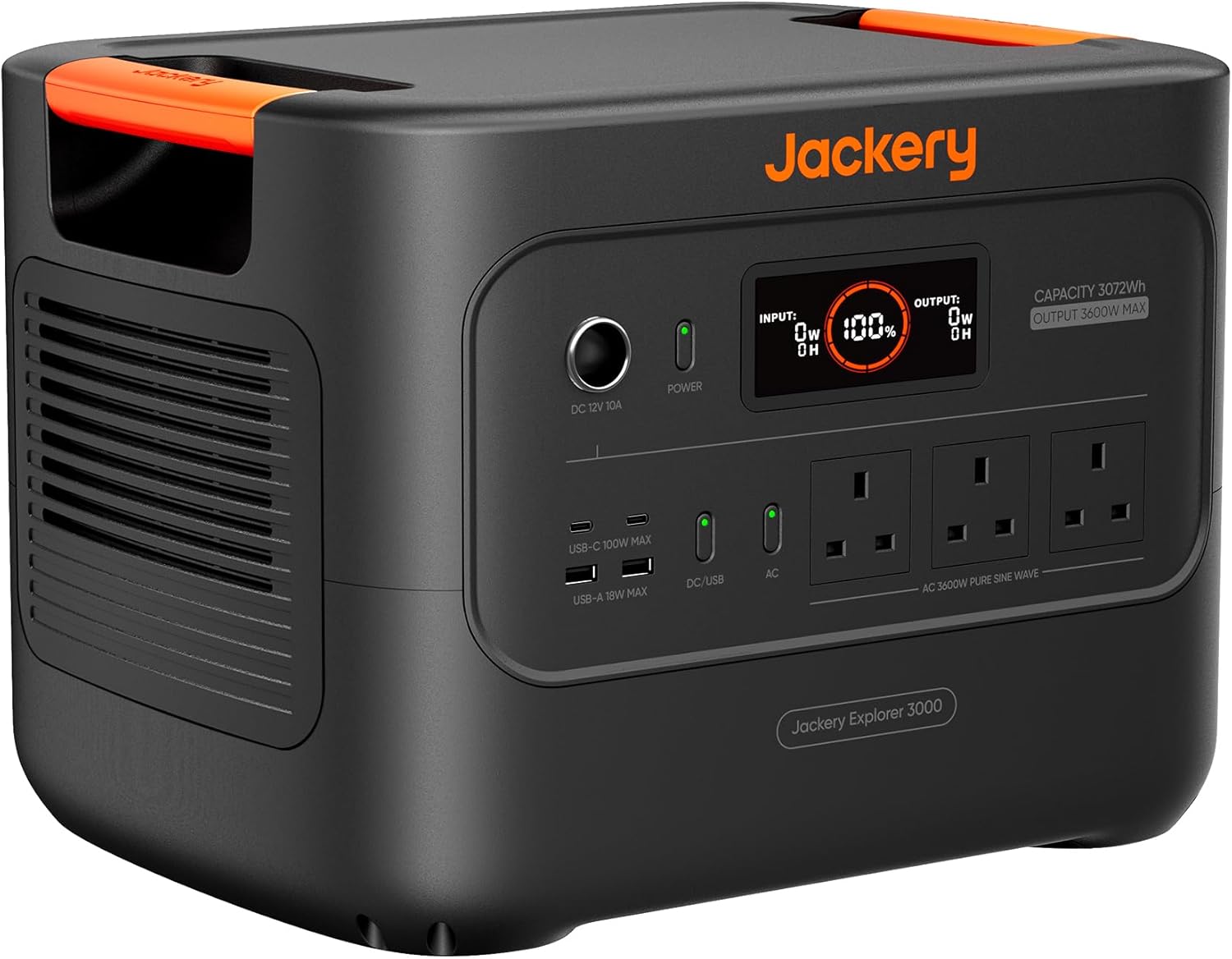
Jackery Explorer 3000 v2 Portable Power Station

Jackery

Explorer 3000 v2 Portable Power Station

£1,599

Capacity3072Wh
AC Output2990W continuous
Weight27kg
BatteryLiFePO4
Warranty5 Years
Solar PanelNot Included
View on Amazon
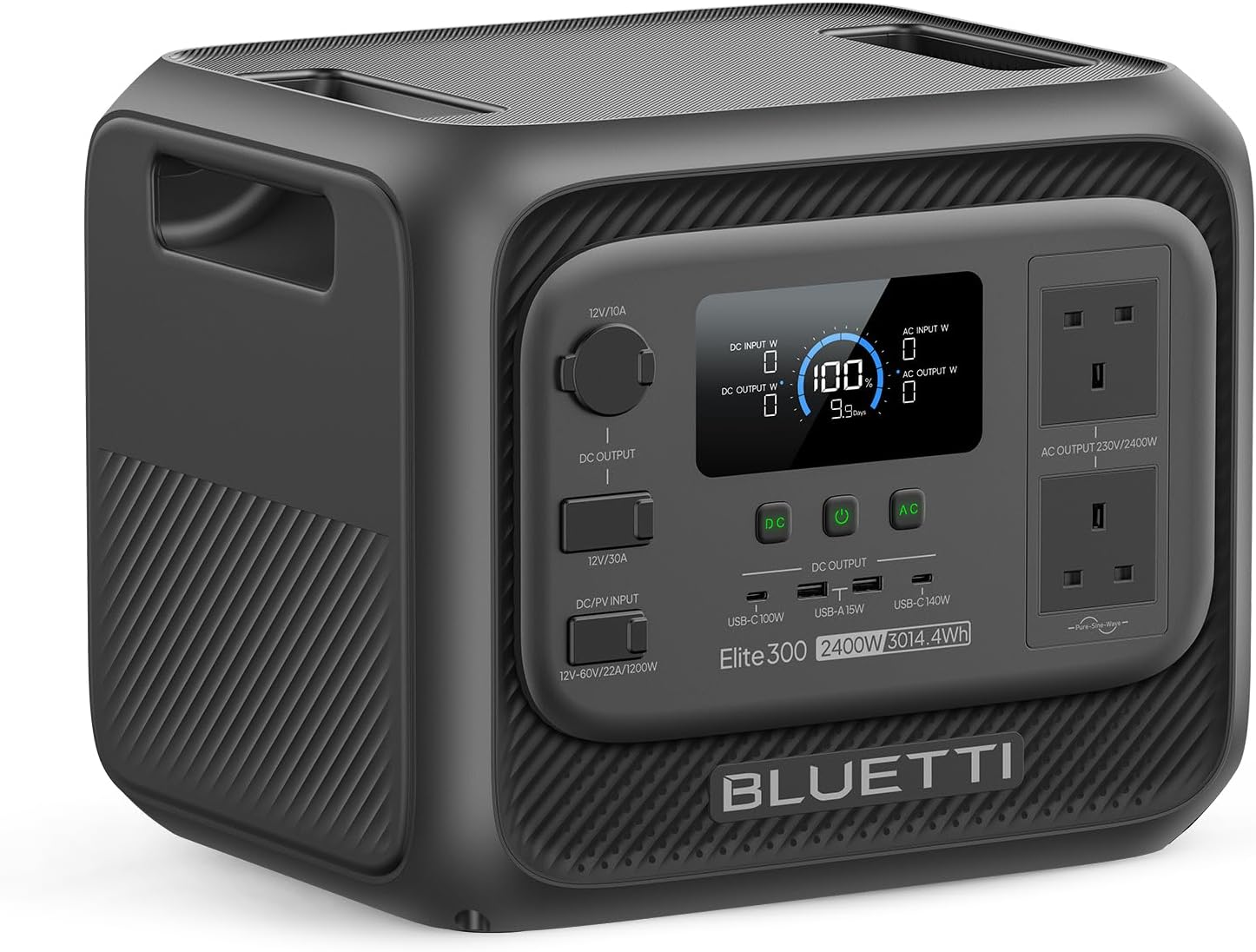
BLUETTI Elite 300 Portable Power Station

BLUETTI

Elite 300 Portable Power Station

£1,599

Capacity3014Wh
AC Output2400W (4800W surge)
Weight26.3kg
BatteryLiFePO4
WarrantyNot specified
Solar PanelNot Included
View on Amazon
Anker SOLIX F3000 Portable Power Station

Anker

SOLIX F3000 Portable Power Station

£1,799

Capacity3072Wh
AC Output3600W continuous
WeightNot specified
BatteryLiFePO4
WarrantyNot specified
Solar PanelNot Included
View on Amazon

Tier 4 — Side by Side Comparison

ProductPriceCapacityAC OutputWeightWarrantySolar PanelBuy
Jackery Explorer 3000 v2£1,5993072Wh2990W continuous27kg5 YearsNot IncludedBuy Now
BLUETTI Elite 300£1,5993014Wh2400W / 4800W26.3kgNot specifiedNot IncludedBuy Now
Anker SOLIX F3000£1,7993072Wh3600W continuousNot specifiedNot specifiedNot IncludedBuy Now

AC Output shown as Continuous W / Peak Surge W where available. All units LiFePO4 chemistry. Prices correct at 25/05/26 — verify on Amazon before purchase.

Frequently Asked Questions

Practical answers to the most common questions UK buyers ask before purchasing a solar battery or portable power station.

How long do solar batteries last? Click to Open

All units recommended on this page use LiFePO4 (Lithium Iron Phosphate) chemistry, which delivers between 3,000 and 6,000 full charge cycles before capacity degrades to 80 percent of original. At one full cycle per day, that equates to between 8 and 16 years of daily use.

Standard NMC lithium-ion batteries — which we do not recommend for indoor home use — typically deliver 500 to 1,000 cycles before meaningful degradation. The premium for LiFePO4 chemistry pays for itself significantly over the product lifespan. Most Tier 1 and Tier 2 brands on this page back their LiFePO4 units with a 5-year warranty as standard.

Can I run a kettle or microwave from a solar battery? Click to Open

Yes — provided the unit's continuous AC output rating meets or exceeds the appliance draw. A standard UK kettle draws between 2000W and 3000W. A microwave draws between 700W and 1200W depending on the model.

Any power station with a continuous output below 2000W will error out or shut down when a kettle is plugged in. Units in Tier 2, Tier 3, and Tier 4 of this page all clear the 2000W threshold. If running a kettle is a priority, check the continuous wattage figure on the spec card — not the peak surge figure, which is a brief tolerance rating and not a sustainable operating rating.

Boiling a full kettle consumes approximately 0.1kWh to 0.15kWh per cycle. A 1kWh battery can boil a kettle six to ten times before requiring recharge.

Do I need DNO approval or an electrician to install a solar battery? Click to Open

No. Portable solar batteries and power stations of the type listed on this page are classified as appliances under UK electrical regulations, not fixed installations. They do not require DNO (Distribution Network Operator) approval, Part P notification, or sign-off by a registered electrician.

You plug them into a standard 13A UK socket to charge from the mains, or connect them directly to a compatible solar panel via an MC4 or XT60 connector. No hardwiring, no building regulations notification, and no installer certification is required. This is one of the primary advantages of portable power stations over fixed home battery systems such as the Tesla Powerwall, which do require DNO notification under G99 regulations.

Can I leave a solar battery plugged in permanently? Click to Open

Yes, for units equipped with a UPS (Uninterruptible Power Supply) mode. All units in Tier 3 and Tier 4 of this page include UPS functionality, which means they can sit permanently connected to the mains and switch to battery output within 10 to 30 milliseconds of a grid interruption — fast enough to protect computers and sensitive electronics from data loss.

For units without UPS mode, permanent mains connection is still safe but will not provide seamless switchover during an outage. LiFePO4 chemistry is thermally stable and does not degrade significantly from being held at full charge, unlike NMC cells. Most quality units include battery management systems that prevent overcharging automatically.

What is the difference between capacity (Wh) and output (W)? Click to Open

These are two separate and equally important specifications that are frequently confused.

Capacity (Wh — Watt-hours) is how much total energy the battery stores. A 1000Wh battery holds 1000 watt-hours of energy. Running a 100W device continuously will drain it in approximately 10 hours, accounting for inverter efficiency losses.

Output (W — Watts) is how much power the unit can deliver at any one moment through its AC sockets. A unit with a 1500W continuous output can run any appliance drawing up to 1500W simultaneously. If you plug in a 2000W appliance, the unit will error out regardless of how much capacity remains in the battery.

Think of capacity as the size of the fuel tank, and output as the size of the engine. You need both to be correctly sized for your intended use.

Are solar batteries safe to use indoors? Click to Open

Yes — LiFePO4 portable power stations are safe for indoor residential use. They produce no combustion, no fumes, and no carbon monoxide. This is the primary safety advantage over petrol inverter generators, which must never be operated indoors due to lethal exhaust emissions.

LiFePO4 chemistry is thermally stable and does not enter thermal runaway — the failure mode responsible for battery fires in lower-quality NMC cells — under normal operating and charging conditions. All units on this page include battery management systems (BMS) that monitor cell temperature, voltage, and current in real time and shut down the unit if parameters exceed safe thresholds.

Standard indoor use guidance applies: keep units away from direct heat sources, ensure adequate ventilation around the unit during charging, and do not cover or enclose the unit during operation.

How much can I save on energy bills using a solar battery? Click to Open

Savings depend on three variables: how you charge the battery, how much stored energy you use during peak-rate hours, and the size of the unit relative to your daily consumption.

The most cost-effective approach for UK households is to charge the battery overnight on a flexible tariff such as Octopus Go, where electricity costs as little as 7p per kWh between 00:30 and 05:30, then discharge during peak daytime and evening hours when the standard unit rate exceeds 24p per kWh. A 1kWh unit cycled daily in this way saves approximately £60 per year on electricity costs alone, before accounting for any solar input.

Pairing a 1kWh battery with an 800W plug-in solar array in a south-facing UK garden can generate between 600kWh and 800kWh of free electricity per year, reducing grid dependency significantly. Use our savings calculator above to estimate the figures for your specific setup.

Which solar panel is compatible with my power station? Click to Open

Compatibility depends on two factors: the connector type on the power station's solar input port, and the maximum solar input wattage the unit accepts.

Most portable power stations use either an MC4 connector (the industry standard for solar panels) or a proprietary XT60 or Anderson connector. Units that use proprietary connectors typically require an adapter cable to work with third-party panels. Jackery and EcoFlow units use proprietary connectors; Anker and BLUETTI units vary by model.

The solar input wattage limit is equally important. A unit with a 200W maximum solar input will not charge faster if you connect a 400W panel — it will simply limit the input to 200W. Check the maximum solar input figure in the product specifications before purchasing a panel separately. For units where a panel is not included, we recommend matching panel wattage to the unit's maximum solar input rating for optimal charging speed.

See our other Guides