
Plug-In Solar Is Now Legal in the UK
Confirmed in law this month. Here is what actually changed, what a compliant kit has to include, and what you can do while you wait for 27 August.
On 16 July 2026, the UK government signed Statutory Instrument 2026/848 into law, amending the Plugs and Sockets etc. (Safety) Regulations 1994 to allow plug-in solar devices to connect to a standard UK socket for the first time. The instrument was laid before Parliament the following day, 17 July, and comes into force on 27 August 2026.
This is not a proposal, a consultation, or an intention. It is confirmed law, signed by Martin McCluskey, Minister for Energy Consumers at the Department for Energy Security and Net Zero. From 27 August, a compliant plug-in solar kit can legally be connected to a household socket without an electrician, provided it meets the technical requirements set out in the government's Plug-in Solar Device Interim Product Specification.
What has not happened yet is a confirmed retail launch date. Amazon, Lidl, Currys, B&Q, Asda, Screwfix and Wickes have all backed the change, and Amazon issued a fresh statement the day the law was confirmed. None have committed to an exact date kits will appear on shelves. If you have been following the legal status until now, this is the update to our earlier coverage of the legal position. Here is what the law actually requires, and what you can do to be ready before it does.
What Actually Changed
Until this month, plug-in solar sat in a genuine legal gap. Two separate sets of rules blocked it. The Plugs and Sockets etc. (Safety) Regulations 1994 did not allow a standard plug to be used for a device that generates electricity. The Electricity Safety, Quality and Continuity Regulations 2002 required any connection to a household circuit to meet British Standard requirements, principally BS 7671, which was written for fixed wiring, not something you plug in yourself.
SI 2026/848 amends both. It creates a specific exemption: a plug-in solar device that meets the government's Interim Product Specification can now use a standard plug and socket, provided it meets defined technical limits.
The legal definition of a compliant device
- Maximum rated AC output of 800 watts
- Connects using a standard plug and socket
- Operates in parallel with the electricity distributor's network
- Cannot import or store electrical energy, which is why batteries are excluded
One change is worth explaining carefully, since the detail matters. The Interim Product Specification permits one plug-in solar device per household final circuit, a genuine improvement on the earlier draft, which limited households to one device in total. But this permission does not yet apply in practice. The specification itself states that separate network connection rules, Engineering Recommendation G98, currently restrict households to one device per household regardless of how many circuits it has, and that this stays the case "unless and until" G98 is separately amended. So for now, one device per household is the real limit. The per-circuit rule exists in the technical spec, but a second document has to catch up before it actually applies. It is a similar principle to how we cover sizing across the wider solar solutions range, where the right setup depends on the property, not a single fixed rule.
The regulations were made on 16 July 2026, laid before Parliament on 17 July, and come into force on 27 August 2026. The full reasoning behind the final rules, including responses to the 466 submissions received during consultation, is set out in DESNZ's government response document.
The Real Spec: What A Compliant Kit Must Have
The confirmed final Plug-in Solar Device Interim Product Specification, version 2.0, runs to over 40 pages of technical detail. Here is what actually matters, taken directly from the document, not summarised from somewhere else. A lot of inaccurate detail is already circulating about this spec, so every figure below has been checked against the primary source.
A correction worth making clearly
Several sites are reporting that a compliant kit needs a 13A fuse. That is wrong, and it matters, since a 13A fuse would not protect an 800 watt circuit properly. The confirmed final specification, version 2.0, requires a BS 1362 fuse not exceeding 5A.
Power and current limits
- Maximum apparent power: 800VA, with maximum current capped at 3.5A
- Maximum combined PV module DC power: 2,000 watts, across up to four panels
- No more than two panels may be wired in series within any one string, to limit DC voltage and reduce arc fault risk
- Homes with total panel output above 960W should have their wiring professionally assessed before installing
Plug and connection requirements
- Must use a plug designed to BS 1363-1, with partially insulated pins
- Fitted with a non-rewireable moulded plug and a BS 1362 fuse not exceeding 5A
- Must include mechanical or electromechanical contact protection to prevent exposure to live pins
- Extension leads, multi-way adaptors and connecting more than one inverter to the same circuit are not permitted
Safety and disconnection
- Must automatically disconnect from the mains within 100 milliseconds of losing grid power
- Voltage at the plug pins must fall below 34V within 100 milliseconds of disconnection
- Outdoor components require an ingress protection rating of at least IP55, indoor components at least IP44
- Maximum residual DC current is capped at 5mA under normal operation and fault conditions
- The spec permits one device per household final circuit, but current network rules under Engineering Recommendation G98 still restrict this to one device per household overall, until G98 itself is amended
- Extension leads, multi-way adaptors, RCD adaptors and travel adaptors are all explicitly banned
Standards the equipment must meet
- Solar panels: BS EN IEC 61215 and BS EN IEC 61730
- Inverter: the BS EN IEC 62109 series
- Grid connection: Engineering Recommendation G98, and registration on the ENA Type Test Register before the product can be sold
Where you cannot install one
Version 2 of the specification adds fire safety restrictions that were not in the original draft. A compliant kit cannot be installed on:
- Aluminium composite material (ACM) or metal composite material (MCM) cladding
- High pressure laminate (HPL) cladding
- Timber cladding or timber balconies
- Any building currently subject to external wall remediation or building safety remediation works
Manufacturer instructions must also explicitly state that a plug-in solar device is not intended to be connected to, or used alongside, a battery storage system.
Mounting and installation
- Manufacturers must provide a structural analysis covering UK wind and snow loading
- Mounting must be reversible and non-permanent, not attached to the building's structure
- A minimum clearance from combustible materials must be specified by the manufacturer
- Users must notify their electricity distribution network operator before connecting or disconnecting the device
This is version 2.0 of the specification, published in July 2026, confirmed as the current standard referenced directly by SI 2026/848. The full document is available directly from DESNZ for anyone who wants the complete technical detail. For how this compares against your other options, our Home Power Options guide covers the full range, not just plug-in kits.

What Is Still Not Allowed
The new law is specific about what it permits, and equally specific about what it does not. Getting this wrong is not a technicality. Several of these limits exist because of real electrical safety testing, and ignoring them can mean a genuinely unsafe installation, not just a non-compliant one.
Battery storage
A plug-in solar device is explicitly not permitted to be connected to, or used alongside, a battery energy storage system. This law covers panels and an inverter only.
Extension leads and adaptors
Extension cables, multi-way adaptors, RCD adaptors and travel adaptors are all explicitly banned. The device must plug directly into a fixed socket.
More than one per household
The specification allows one device per circuit in principle, but current grid connection rules still cap this at one device per household until those rules are separately updated.
Certain cladding and buildings
Not permitted on ACM, MCM, HPL or timber cladding, timber balconies, or any building currently under external wall fire safety remediation.
Lighting or fixed appliance circuits
A device can only connect to a socket circuit. Lighting circuits, and spurs feeding fixed equipment like a cooker or boiler, are not permitted.
Self-certification
A manufacturer submitting a device for ENA registration is not, by itself, proof of compliance. The device has to be formally assessed and confirmed before it can legally be sold.
None of this makes plug-in solar impractical. It is a genuinely small, careful list once you know what it actually says, rather than what has been circulating about it. Off-grid battery power stations remain a completely separate, already-legal category, and stay unaffected by any of the above.
Who Is Backing It
Seven major retailers have publicly supported the change, several going back to the government's retail roundtable in June. On the day the law was confirmed, Amazon UK issued a fresh statement specifically about it, calling the announcement a practical step that gives households a straightforward way to generate their own power and work towards net zero, and saying it was looking forward to helping customers access the technology.
Lidl GB
Georgina Hall, Corporate Affairs Director, called it a positive step for households managing energy costs and supporting the UK's net-zero ambitions.
B&Q
Graham Bell, Chief Executive, welcomed the change, saying it will help households generate their own energy and reduce their bills.
Currys
Michelle Gorringe-Smith, Director of New Categories, said the retailer was delighted to work with government and expected meaningful bill savings for customers.
Amazon UK
John Boumphrey, Country Manager, points to Amazon's investment in over 40 UK solar and wind projects as part of its wider net-zero commitment.
Asda, Screwfix and Wickes have also backed the policy publicly, alongside the four above. Separately, EcoFlow, Lidl and Iceland Foods were named as government delivery partners earlier this year, in March and May, ahead of this month's confirmation.
What none of them have said
No retailer, including any of those above, has committed to an actual shelf date. Compliant products still need to pass type testing and ENA registration before they can legally be sold, and that process has not been completed by any manufacturer yet.
What To Do Before 27 August
Nothing can legally be plugged into a socket yet, and no compliant product has passed the registration process. That does not mean there is nothing useful to do while you wait.
Check Your Circuits Now
The specification requires you to know which sockets share a circuit before installing anything. You can work this out today by switching off each breaker in your consumer unit in turn and noting which sockets lose power together. If your consumer unit still uses old-style rewirable fuses rather than modern RCBOs, that is worth having checked by an electrician regardless of plug-in solar plans.
Start Off-Grid, Legally, Today
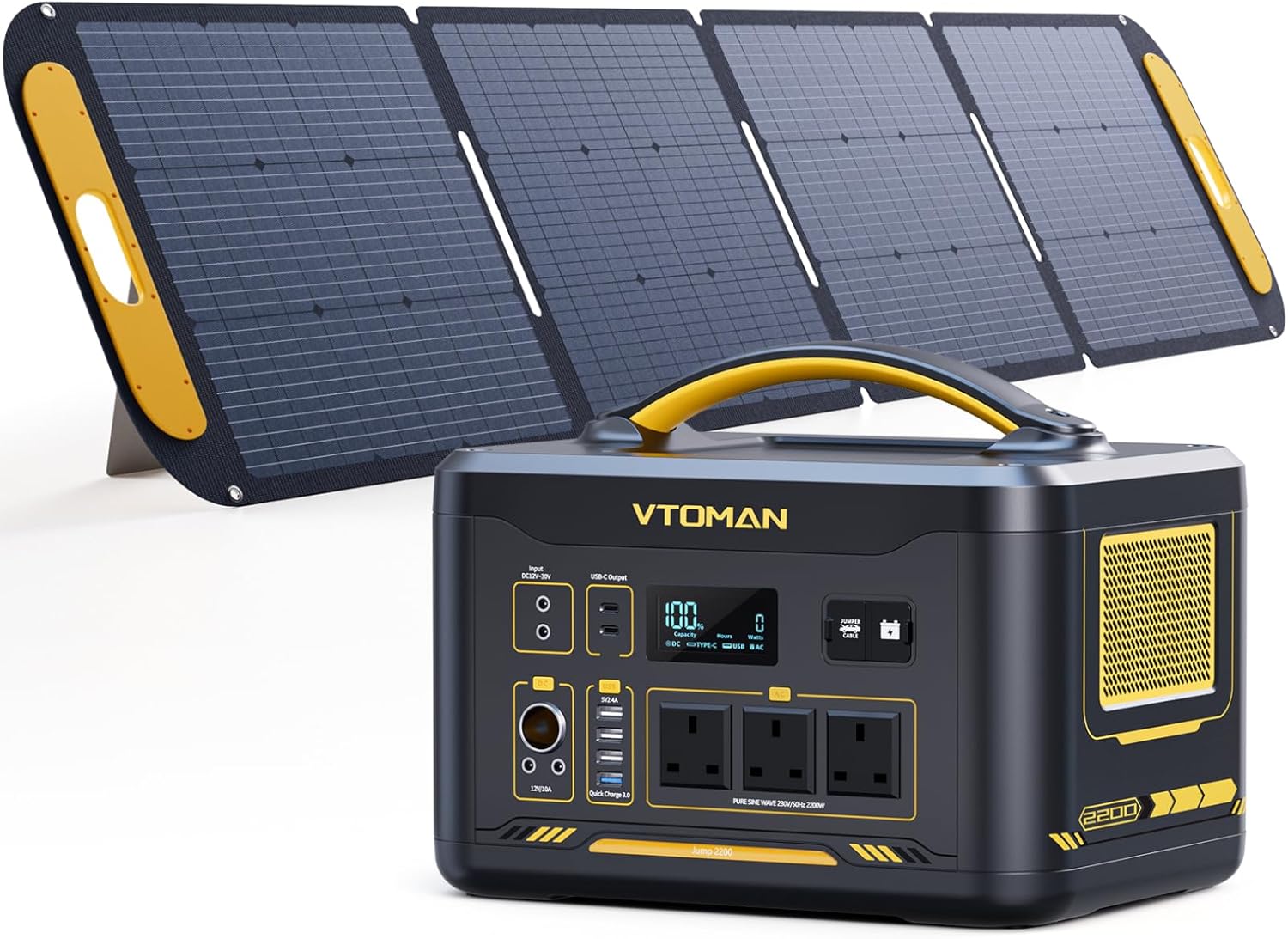
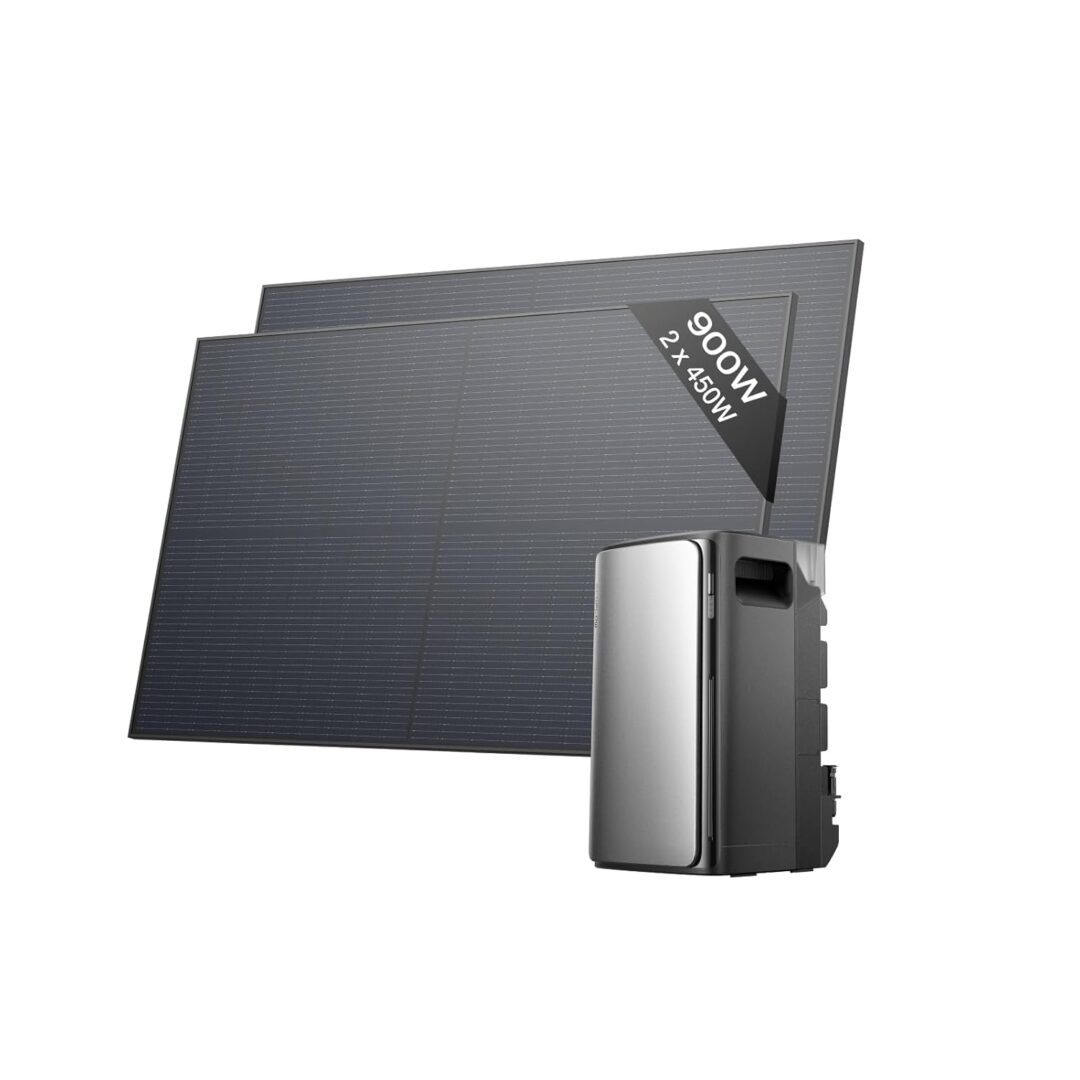
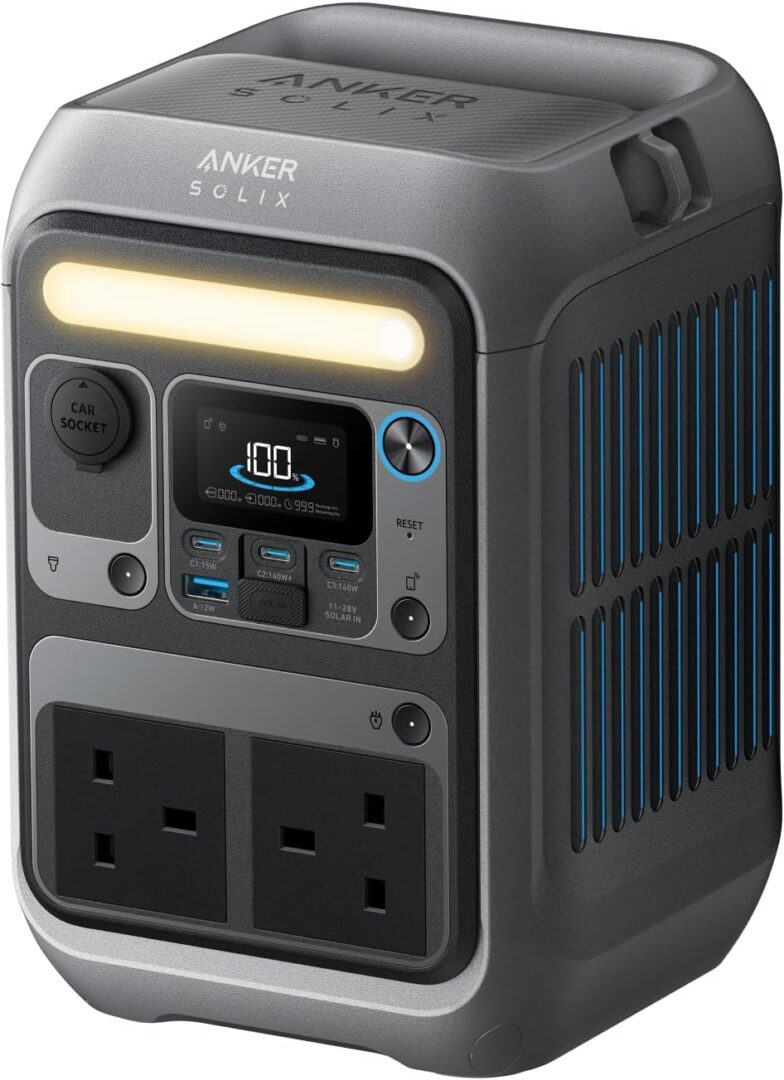
Portable power stations with their own solar panels are a completely different, already-legal category, since they never connect to your household wiring at all. They are worth having anyway, plug-in solar or not, and several of the same brands moving into plug-in solar already make them.

Thinking about pairing this with a heat pump?
Our Burnham energy plan breakdown covers the running cost side, including a free calculator that works out your own number.
See The Full BreakdownFrequently Asked Questions
Is plug-in solar legal in the UK right now?
What is the maximum output a plug-in solar kit can have?
Can I use a battery with a plug-in solar kit?
How many plug-in solar devices can I install?
Do I need an electrician to install one?
When will compliant plug-in solar kits actually go on sale?
Related Guides
Gemshore is a participant in the Amazon EU Associates Programme, an affiliate advertising programme designed to provide a means for sites to earn advertising fees by advertising and linking to Amazon.co.uk. As an Amazon Associate, Gemshore earns from qualifying purchases. Gemshore also participates in other affiliate programmes via the Awin network and earns commission on qualifying purchases made through links on this site, at no extra cost to you. Product prices and availability are accurate as of the date of publication and are subject to change.
Plug-In Solar Is Now Legal in the UK
📅 Last updated: